Understanding Business Automation in Depth
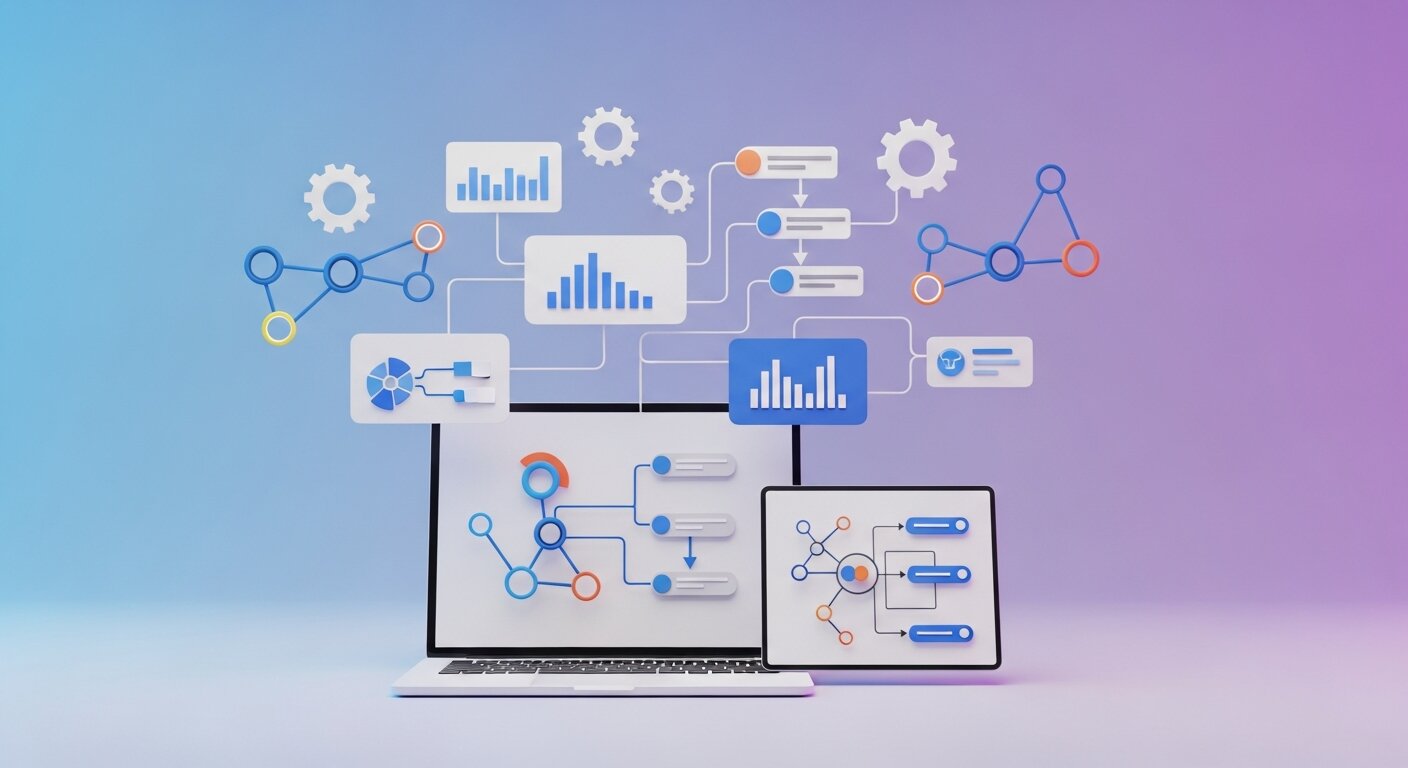
Business automation refers to leveraging technology to perform tasks that were previously completed manually. From repetitive data entry to complex customer service workflows, automation helps reduce human intervention, save time, and achieve consistency.
Automation extends beyond mere task completion—it transforms the way businesses operate. Marketing campaigns, supply chain management, customer engagement, financial reporting, and decision-making can all be streamlined with modern automation tools. By integrating automation, companies can focus on strategic growth, innovation, and customer-centric operations.
For instance, robotic process automation (RPA) allows businesses to handle repetitive data tasks accurately and efficiently, while AI-driven systems provide predictive insights that can optimize operations in real time. Automation is no longer a luxury; it is the backbone of scalable and efficient businesses.
What is business automation?
Business automation refers to the strategic use of technology to perform tasks and processes that were traditionally handled manually. This encompasses a wide range of activities, including data entry, customer service interactions, marketing campaigns, supply chain management, financial reporting, and even certain aspects of decision-making. The primary goal of automation is to minimize human intervention, reduce errors, save time, and ensure consistency across operations—highlighting the significant benefits of automation in business.
Automation can take many forms—from simple rule-based systems that handle repetitive tasks, like sending automated marketing emails or scheduling social media posts, to more advanced solutions such as robotic process automation (RPA) and AI-powered workflows that can analyze data, detect patterns, and even make recommendations. These examples illustrate some of the most impactful benefits of automation in business, as they streamline processes, increase accuracy, and free employees to focus on higher-value, strategic work.
Its versatility means it can be applied across virtually every industry, helping organizations improve productivity, scale processes seamlessly, respond quickly to changing market demands, and maintain a competitive edge in today’s fast-paced digital landscape.
How Automation Shapes Modern Marketing Strategies

Automation has revolutionized marketing, enabling businesses to engage with customers at the right moment, in the right way, without overburdening their teams. Email automation, customer segmentation, and behavior-based campaigns allow companies to deliver personalized experiences at scale. Platforms like HubSpot and Salesforce enable marketers to automate campaigns, track engagement, and analyze performance data without manual intervention. You can also explore content marketing plans with data entry to see automation in action.
Platforms like HubSpot, Marketo, and Salesforce enable marketers to automate campaigns, track engagement, and analyze performance data without manual intervention. Automated workflows can identify leads, nurture prospects, and even score potential clients based on behavior patterns. The result? Marketing teams can focus on strategy, creativity, and relationship building, while the system handles operational tasks seamlessly.
Interestingly, this also ties into personal branding. In today’s competitive environment, marketers and business leaders are increasingly leveraging automation tools to build and manage their personal brand online efficiently. Understanding what is a personal brand and automating the outreach or engagement process ensures that professionals maintain a consistent, high-quality presence across channels.
Automation in Financial and Operational Management

Automating financial processes, such as payroll, invoicing, and expense reporting, is critical for reducing errors and enhancing accuracy. Similarly, operational tasks like inventory management, order processing, and logistics can be optimized with ERP system automation. Real-time tracking, automated restocking alerts, and predictive analytics help businesses manage supply chains efficiently.
Similarly, operational tasks—inventory management, order processing, and logistics—can be optimized through automation. Real-time tracking systems, automated restocking alerts, and predictive analytics ensure that businesses can manage supply chains efficiently, reduce waste, and maintain optimal stock levels.
Companies that integrate automation into these areas often gain competitive advantages, as resources are redirected from mundane tasks to strategic initiatives that drive growth.
Top benefits of automation in business
Improved efficiency and productivity
One of the most significant advantages of automation is the improvement in efficiency. Automated systems work faster and more accurately than manual efforts. By automating mundane tasks, employees can focus on higher-value activities, boosting overall productivity.
Automating sales funnels ensures leads are captured and nurtured efficiently. Learn more in how to automate website data entry.
Example: A company that automates its sales funnel can ensure leads are captured, nurtured, and followed up with efficiently, leading to a more streamlined sales process. Automation tools like HubSpot or Salesforce make this possible.
Studies show that businesses using automation tools experience a 30% increase in productivity on average, helping companies accomplish more in less time.
Reduced operational costs
Manual processes can be expensive. They often require more staff, more time, and carry higher risks of costly human errors. Automation can minimize these expenses while maintaining or even improving accuracy.
Example: Automating routine accounting tasks such as invoicing and payroll reduces administrative costs. Tools like QuickBooks and Xero automate these functions, eliminating the need for repetitive, manual calculations.
By cutting operational costs, businesses can reinvest resources into growth initiatives or enhancing customer experiences.
Read our latest blog : Artificial Intelligence
Enhanced accuracy and reduced errors
Humans are prone to errors, and in certain tasks, even small mistakes can lead to significant repercussions. Automation ensures consistency and precision in repetitive tasks.
Example: Inventory management automation tools minimize overstocking or running out of inventory, issues that often result from human miscalculations. Tools like TradeGecko and Zoho Inventory provide real-time data and automatic restocking triggers.
A reduction in errors doesn’t just save money but also bolsters a company’s reputation for reliability and quality.
Better data management and insights
Data has become a central factor in decision-making, and businesses are generating more data than ever. Automation simplifies the collection, organization, and analysis of data, allowing businesses to extract actionable insights with ease.
Example: Marketing automation platforms like Marketo and Mailchimp can track campaign performance automatically, feeding businesses essential analytics on customer behavior and preferences. This data is crucial for tailoring strategies and building stronger customer relationships.
Automating data analysis provides faster, more accurate insights, giving businesses a competitive edge with informed, data-driven decisions.
Improved customer experience
Customer expectations are constantly evolving, and businesses can’t afford to lag in their responses or service. Automation enables 24/7 customer interactions, personalized communication, and faster resolution times.
Example: Chatbots, like those provided by Zendesk or Drift, use artificial intelligence to handle customer queries instantly, ensuring customers receive assistance around the clock. Additionally, email automation allows businesses to engage with customers at scale while maintaining personalization.
This seamless interaction not only retains customers but fosters loyalty and improves brand reputation.
Scalability and flexibility
Automation ensures that business operations can grow seamlessly. Unlike manual processes, automated systems can handle scaling demands without proportional increases in resources or costs.
Example: An e-commerce business experiencing seasonal demand spikes can rely on automated processes for order management, logistics, and customer service to handle increased activity without requiring additional temporary staff.
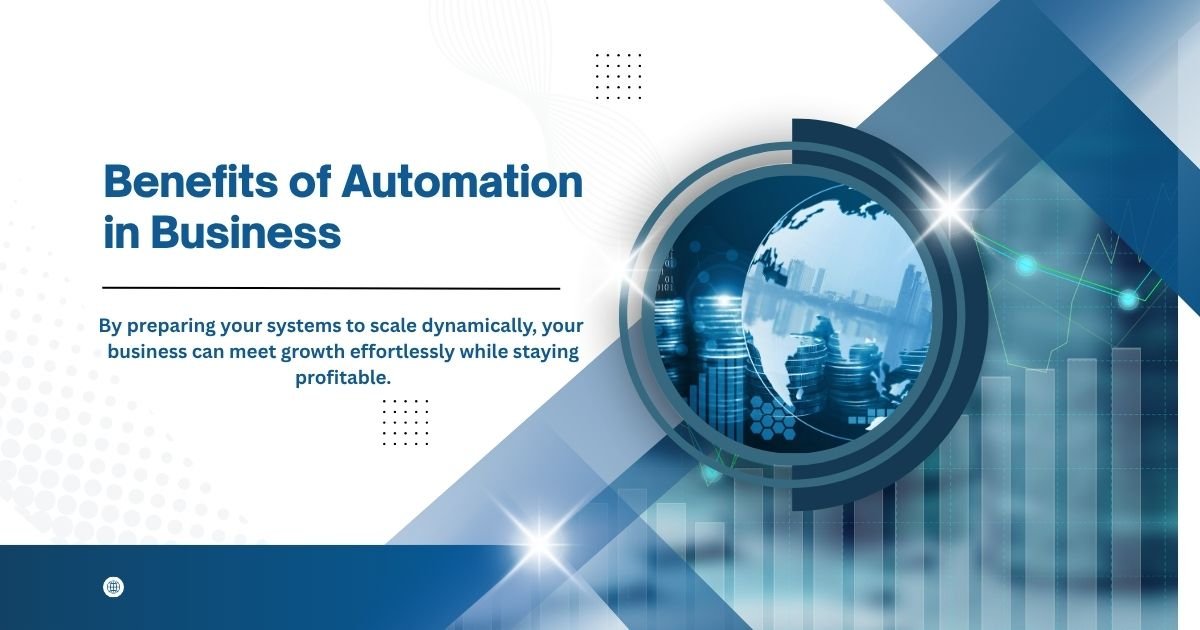
By preparing your systems to scale dynamically, your business can meet growth effortlessly while staying profitable.
Employee satisfaction and retention
Repetitive and mundane tasks often lead to employee dissatisfaction and burnout. Automation relieves employees of these duties, allowing them to engage in more meaningful and enjoyable work. This shift improves team morale and retention.
Example: Customer service teams can use automation to handle routine queries, freeing them to focus on complex cases that require personal attention. This balance keeps employees motivated and feeling valued.
Happier employees translate to better performance, stronger collaboration, and improved overall business results.
Strengthened compliance and governance
Businesses operating in highly regulated industries face stringent compliance requirements. Automation tools ensure adherence to regulations by providing comprehensive tracking, reporting, and error-proof documentation.
Example: Tools like SAP and Workday automate compliance monitoring, ensuring adherence to regulatory guidelines and reducing risks associated with audits or sanctions.
Through strengthened compliance, businesses can maintain trust with regulators, customers, and stakeholders.
Simple steps to implement automation in your business
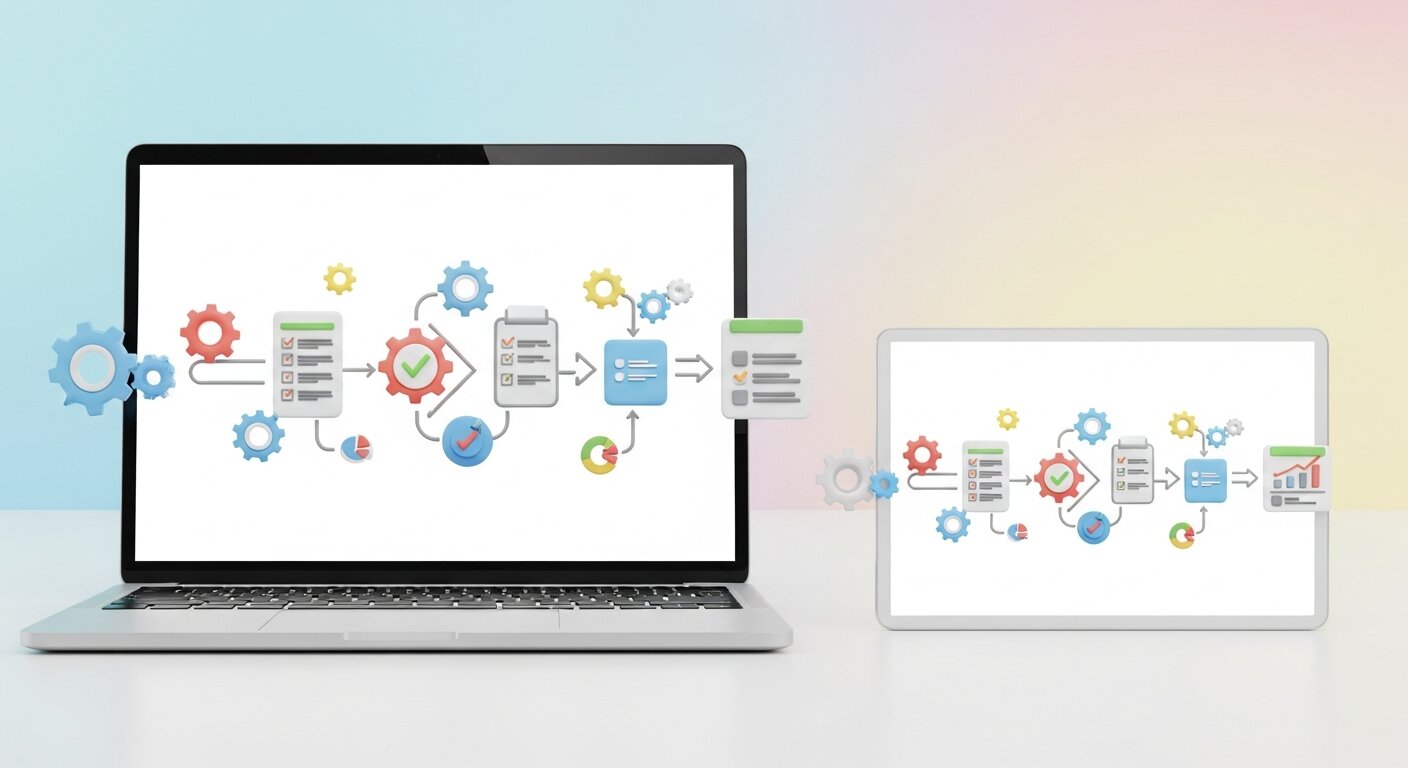
- Identify repetitive tasks: Start by pinpointing tasks that are time-consuming and manual. These often include data entry, email responses, or scheduling.
-
- Define goals: Clearly articulate what you want to achieve with automation. Better efficiency? Reduced errors? Lower costs? Clear goals will guide your strategy.
- Choose the right tools: Research and select automation tools or software that align with your business needs and goals.
- Train your team: Proper training will help employees understand the importance of automation and how to use the tools effectively.
- Monitor and refine: Automation is not a “set and forget” process. Continuously monitor its performance, gather feedback, and refine your approach for maximum benefits.
Automation is the cornerstone of modern business strategy. Companies that adopt automation can operate more efficiently, reduce costs, and adapt to market changes with unprecedented speed. Technologies like AI-powered AR vision transforming object recognition showcase how automation and AR can future-proof operations.
Is automation the future of business?
Automation is no longer just an optional tool—it has become a cornerstone of modern business strategy. Companies that adopt automation can operate more efficiently, reduce costs, and adapt to market changes with unprecedented speed. Understanding the benefits of automation in business is crucial for any organization looking to stay competitive. By automating repetitive and time-consuming tasks, businesses not only improve operational efficiency but also free their teams to focus on high-value, strategic activities, such as innovation, customer engagement, and long-term growth initiatives.
Beyond efficiency gains, automation provides actionable data insights, another key aspect of the benefits of automation in business. Automated systems can track performance, monitor trends, and provide predictive analytics that empower decision-makers to respond proactively to opportunities or challenges. This data-driven approach enhances accuracy, reduces human error, and enables businesses to make informed choices faster than ever before.
Successful implementation requires more than installing automation tools—it demands careful planning, selecting the right technologies, and ongoing staff training. Companies that integrate automation thoughtfully can scale operations seamlessly, improve customer experiences, and maintain a competitive edge. Ultimately, embracing the benefits of automation in business is not just about immediate efficiency—it’s about future-proofing the organization and positioning it for sustainable, long-term success.
Frequently Asked Questions (FAQs)
What is business automation?
Business automation is the use of technology to perform tasks that were previously done manually. It includes processes like marketing campaigns, customer service, data entry, and supply chain management, allowing businesses to operate more efficiently and consistently. By reducing manual effort and improving workflow accuracy, companies can better experience the long-term Benefits of Automation in Business, including scalability and improved performance.
What are the key benefits of automation for businesses?
The Benefits of Automation in Business include improved efficiency and productivity, reduced operational costs, enhanced data accuracy, stronger compliance, and better customer experiences. Automation also supports scalability, boosts employee satisfaction by reducing repetitive work, and enables more strategic, data-driven decision-making.
How can automation support personal branding?
Understanding what is a personal brand is the first step. Automation tools help individuals maintain a consistent online presence, schedule content, track engagement, and build authority without manually managing every interaction. These advantages reflect the broader Benefits of Automation in Business, as automation increases efficiency and consistency in professional branding efforts.
What types of tasks are best suited for automation?
Repetitive, rule-based tasks such as data entry, payroll, email marketing, customer support, and inventory management are ideal for automation. These tasks benefit most from improved speed, accuracy, and efficiency—core Benefits of Automation in Business that help organizations reduce errors and optimize workflows.
Can automation improve customer experience?
Absolutely. Automation enables instant responses through chatbots, personalized email campaigns, and predictive product recommendations. These capabilities improve customer satisfaction, loyalty, and engagement, further demonstrating the practical Benefits of Automation in Business in enhancing customer relationships.
Is automation suitable for small businesses?
Yes. Automation tools are scalable and can be tailored to the size and needs of any business. Even small businesses can leverage the Benefits of Automation in Business, such as increased efficiency, reduced errors, and more effective marketing strategies, without requiring large investments.
Does automation replace human employees?
No. Automation complements human work by handling repetitive tasks and administrative processes. This allows employees to focus on higher-value activities like creative problem-solving, strategic planning, and innovation—one of the most important Benefits of Automation in Business.
What is a personal brand, and why does it matter in the age of automation?
A personal brand is how others perceive your professional identity, shaped by your skills, experience, and online presence. In an automated world, managing your personal brand efficiently is critical for visibility and credibility. Leveraging automation ensures consistency and productivity, aligning with the broader Benefits of Automation in Business in building influence and long-term professional growth.