What Is Real‑Time Data Synchronization?
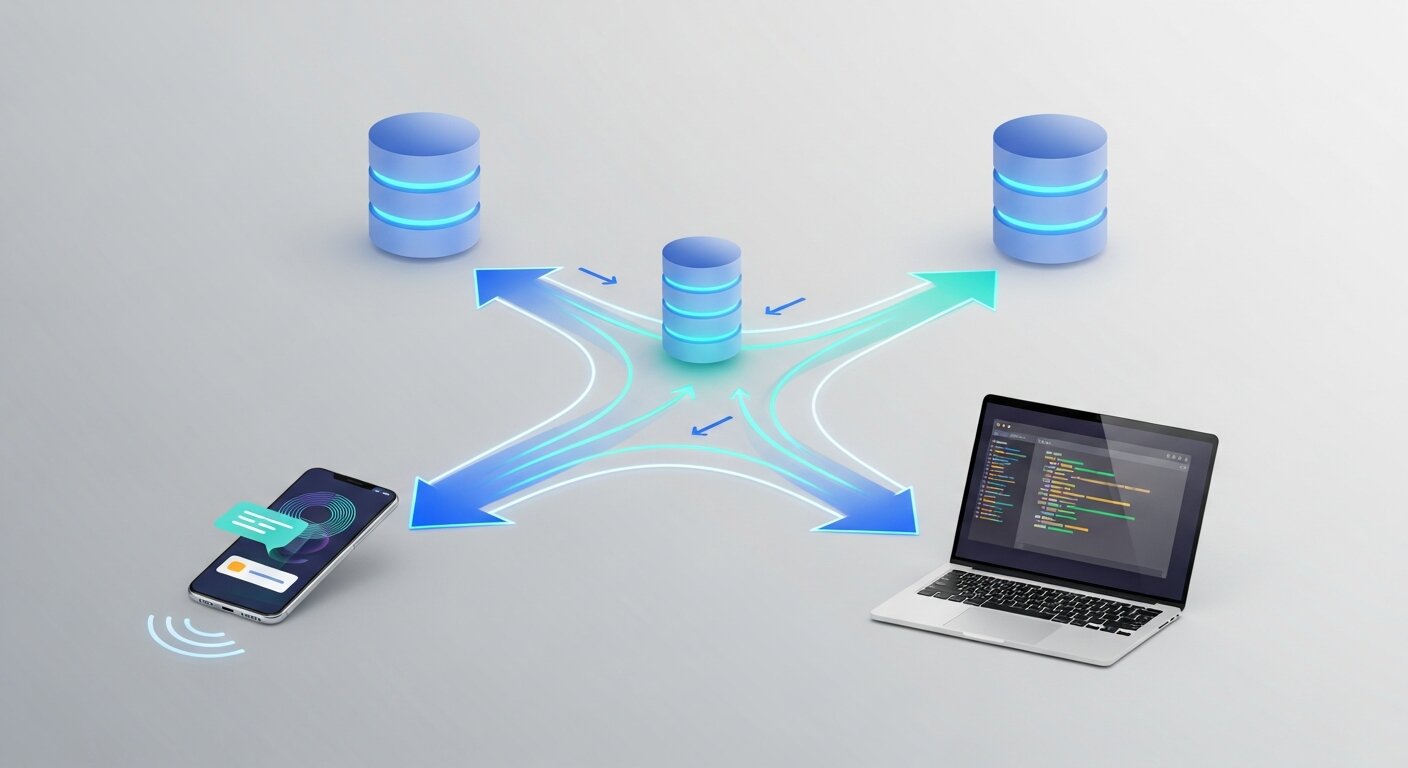
Real-time data synchronization is the process of automatically updating data across multiple systems almost instantaneously, ensuring that all platforms—whether databases, cloud storage, SaaS applications, or data pipelines—reflect the latest changes as soon as they occur. Unlike traditional batch ETL processes or scheduled data syncs, which update information at set intervals, real-time synchronization reduces latency to near zero. This ensures that users, applications, and analytics tools always work with the most current information. By eliminating manual interventions and minimizing the risk of outdated or inconsistent records, real-time data sync not only improves operational efficiency but also enables businesses to make faster, data-driven decisions, respond to critical events immediately, and maintain seamless experiences across connected systems.
Key benefits include:
- Zero latency: updates push through systems immediately
- Operational coherence: eliminates data silos and stale records
- Business agility: enables real-time decisions, alerts, and reporting
- Key Architectures & Technologies
Before diving into tools, let’s explore core synchronization methods:
Change Data Capture (CDC)
Change Data Capture (CDC) is a technique used to detect and capture changes made to data at the row level in a database. Whenever a record is added, updated, or deleted, CDC identifies the change and ensures it is replicated to downstream systems in near real-time. This makes it particularly useful for transactional environments such as e-commerce platforms, banking systems, or ERP applications, where timely updates are critical. Common applications of CDC include updating inventory levels as orders are processed, reflecting financial transactions in analytics systems immediately, and populating data warehouses with the latest information. By only capturing changes rather than copying entire datasets, CDC minimizes system load and network traffic while maintaining accurate, up-to-date data across multiple platforms. Companies can pair this with automated data entry forms in Excel for even greater efficiency.
Event-Driven Streaming
EEvent-driven streaming is a method of capturing, processing, and routing data in real time as it is generated. Rather than waiting for scheduled updates, this approach reacts instantly to events—such as a new customer order, a sensor reading, or a user interaction. Event-driven architectures often rely on streaming platforms like Apache Kafka, Apache Storm, or Apache Flink, which can handle high-throughput data streams and ensure that events are processed reliably and in order. This approach enables real-time analytics, alerting, and automated workflows. Use cases include live transaction monitoring, real-time recommendation engines, IoT data processing, and dynamic dashboards that need up-to-the-minute accuracy. Event-driven streaming is particularly valuable for organizations that need to react immediately to changes and make fast, informed decisions. Businesses interested in enhancing real-time workflows may also benefit from exploring Excel automation to save hours weekly.
- Kafka: backbone for high-throughput streams
- Storm/Flink: real-time processing and event enrichment
File-Based Sync
Uses peer-to-peer protocols (e.g., Syncthing, Unison) or cloud services (OneDrive, Dropbox) for real-time file synchronization.
Top Real‑Time Data Sync Tools
Stacksync
Highlights: true bi-directional sync, sub-second latency, no-code setup, enterprise-grade compliance. Ideal for syncing CRMs and ERPs.
Use Cases: real-time syncing between Salesforce and NetSuite, inventory and billing updates.
Considerations: may exceed needs for small teams.
Apache Kafka / Kafka Streams
Strengths: exceptional performance and throughput, vast ecosystem.
Usage: complex event pipelines and distributed log sync.
Challenges: steep learning curve and operational complexity.
Apache Flink
Advantages: unified batch/stream processing, stateful event-time features, Python support.
Ideal For: large-scale event-driven pipelines with analytical processing.
Drawbacks: high resource demands and learning overhead.
Apache NiFi
Built For: flexible data routing, transformations, and ETL.
Features: visual UI, built-in version control, and over 300 connectors.
Benefits: great for ingestion and routing across sources.
Limitations: less optimal for ultra-high throughput, low-latency pipelines.
SymmetricDS
Open Source CDC tool for multi-master database sync (MySQL, PostgreSQL, Oracle, SQL Server).
Strengths: asynchronous sync with low bandwidth tolerance; schedule-friendly.
Best Suited For: distributed databases with intermittent connectivity.
Syncthing
Peer-to-peer file sync, open-source and secure, decentralized.
Ideal For: syncing files in private or development environments without a central server.
Note: only handles file-level sync, not structured databases.
Unison
Bi-directional file sync, efficient block-level transfers, cross-platform.
Best For: two-machine setups where file conflicts are manually reviewed.
Less Ideal: large-scale or automated synchronization scenarios.
Choosing the Right Tool
| Need | Recommended Tool(s) |
|---|---|
| Enterprise, bi-directional sync | Stacksync |
| Massive event streaming pipelines | Kafka + Flink |
| Flow-based ETL or data routing | NiFi |
| Open source DB sync (CDC) | SymmetricDS |
| Private file sync, peer-to-peer | Syncthing, Unison |
Key Selection Criteria:
- Type of data (file, database, event stream)
- Desired latency (sub-second vs scheduled updates)
- Scale and complexity requirements
- Compliance and security needs
- Budget and technical capacity
For actionable strategies on scaling and automating workflows, see how to automate Excel data entry efficiently.
Best Practices for Real‑Time Sync

- Start Small: Begin with a single pipeline and scale gradually.
- Monitor Metrics: Track latency, throughput, and error/conflict rates.
- Governance: Implement error handling, alerting, and encryption layers.
- Scalable Design: Future-proof architecture for higher volumes and complexity.
- Audit Trails: Essential for compliance, recovery, and data integrity.
These practices ensure that data-driven decision-making is reliable and actionable across departments.
Real‑World Use Cases
- ERP + Sales Sync: Stacksync ensures orders appear instantly across systems.
- Log Analytics: Kafka → Flink pipelines feed dashboards and alert systems.
- Distributed File Sync: Syncthing manages logs or media across offices/devices.
- Database Replication: SymmetricDS replicates across geo-distributed PostgreSQL clusters.
Implementation Strategy for Real-Time Data Synchronization
Successfully implementing real-time synchronization requires more than simply choosing from popular Real-Time Data Sync Tools. It involves designing a system that balances speed, reliability, and scalability while ensuring data integrity. Organizations should begin by mapping data sources, identifying how information flows between systems, and defining acceptable latency thresholds. A clear architecture prevents bottlenecks and avoids unnecessary complexity later.
When deploying platforms like Apache Kafka or Apache NiFi, careful pipeline planning is essential. Streaming pipelines must be fault-tolerant, capable of retrying failed events, and able to maintain message ordering when required. For business-critical workloads such as CRM-ERP synchronization through solutions like Stacksync, consistency and accuracy matter more than raw speed. Organizations should also implement staging and testing environments before rolling out production sync to prevent cascading failures across connected systems.
Security must be embedded into implementation from the beginning. Encryption in transit, secure authentication, and role-based access controls help protect sensitive data as it moves across systems. Without these safeguards, even the most powerful Real-Time Data Sync Tools can introduce risk rather than efficiency.
Performance Optimization and Latency Management
Real-time synchronization depends heavily on minimizing latency while maintaining reliability. High-performance Real-Time Data Sync Tools must handle large volumes of data without causing lag, duplication, or system overload. Performance tuning often includes optimizing message batching, adjusting buffer sizes, and scaling processing nodes horizontally to distribute workload.
Streaming engines such as Apache Flink are particularly effective when low-latency event processing is required. However, optimization does not only involve the tool itself. Database indexing, efficient schema design, and network stability all influence synchronization speed. In many cases, reducing unnecessary data transfers and syncing only changed records significantly improves performance.
Monitoring latency in real time helps organizations detect slow pipelines before they affect operations. Metrics such as processing delay, throughput rate, and queue size provide insights into system health and ensure Real-Time Data Sync Tools continue operating at peak efficiency.
Data Consistency, Conflict Resolution, and Reliability
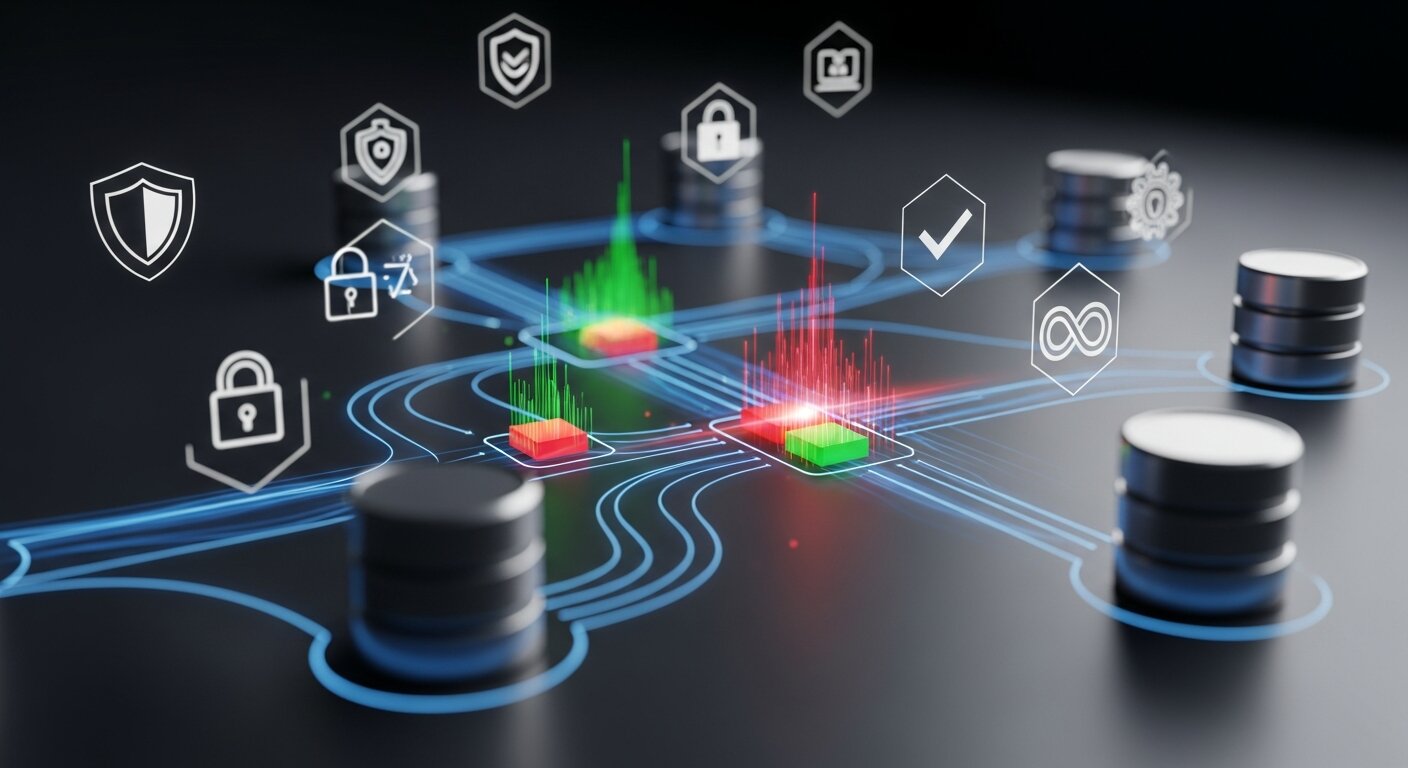
Maintaining consistency across multiple systems is one of the most challenging aspects of real-time synchronization. When multiple updates occur simultaneously, conflicts can arise, especially in bi-directional sync environments. Modern Real-Time Data Sync Tools address this by implementing version control, timestamp comparison, or rule-based conflict resolution.
Database synchronization tools like SymmetricDS help maintain consistency across distributed environments by ensuring updates propagate reliably even under unstable network conditions. Reliable systems also incorporate retry mechanisms, checkpointing, and transaction logging to prevent data loss during unexpected failures.
Reliability is closely tied to observability. Systems must generate logs and alerts for failed sync events, data mismatches, or delayed processing. Without visibility, even small inconsistencies can grow into serious operational issues over time.
Scalability and Future-Proof Architecture
As data volume grows, synchronization systems must scale without degrading performance. Choosing scalable Real-Time Data Sync Tools ensures that businesses can expand pipelines, add new data sources, and handle increasing workloads without redesigning their entire architecture. Horizontal scaling, distributed processing, and cloud-native deployment models all contribute to long-term sustainability.
Streaming ecosystems built on tools like Apache Kafka allow organizations to scale from small pipelines to enterprise-level data infrastructures. Similarly, flexible ingestion platforms such as Apache NiFi make it easier to add new connectors and routes as business needs evolve. Planning for scale early prevents costly migrations and ensures Real-Time Data Sync Tools continue delivering value as the organization grows.
Cost Considerations and ROI of Real-Time Data Sync

While real-time synchronization delivers significant value, organizations must evaluate cost versus benefit. Infrastructure, compute resources, storage, and maintenance all contribute to total ownership cost. Enterprise-grade Real-Time Data Sync Tools may require higher initial investment but often reduce long-term operational expenses by eliminating manual processes, reducing errors, and improving decision speed.
Return on investment becomes clear when businesses achieve faster reporting, improved customer experiences, and better operational visibility. Efficient synchronization reduces downtime, enhances automation, and supports data-driven decision-making, all of which contribute to measurable business growth.
Final Thoughts
Real-time data synchronization has become an essential part of modern business operations, especially for organizations that depend on timely, accurate information to drive decisions. By implementing the right tools, companies can ensure consistency and reliability across databases, cloud applications, and file systems, eliminating errors, reducing latency, and avoiding data silos. Beyond keeping data up-to-date, a well-planned real-time strategy supports streaming analytics, database replication, automated workflows, and collaborative processes across teams. This not only enhances operational efficiency but also enables faster, data-driven decision-making, improves customer experiences through timely insights, and creates a scalable infrastructure capable of adapting to growing data volumes and evolving business needs. Investing in a robust real-time synchronization framework ultimately positions organizations to stay competitive, agile, and prepared for the future of digital operations.
Frequently Asked Questions (FAQ)
What are Real-Time Data Sync Tools?
Real-Time Data Sync Tools are specialized platforms or software solutions designed to automatically synchronize data across multiple systems in near real time. These tools ensure consistency between databases, applications, cloud platforms, and file systems, without relying on slower, scheduled batch processes. By using Real-Time Data Sync Tools, businesses can maintain accurate and up-to-date information across all systems.
Why are Real-Time Data Sync Tools important for modern businesses?
Modern businesses require real-time insights, automation, and seamless user experiences. Real-Time Data Sync Tools help eliminate data silos, reduce latency, and keep all systems synchronized with the latest information. This capability enables faster, more accurate decision-making and ensures operational efficiency across the organization.
Which Real-Time Data Sync Tools are best for streaming data pipelines?
For high-throughput, event-driven architectures, Real-Time Data Sync Tools like Apache Kafka and Apache Flink are ideal. These platforms allow organizations to process, route, and analyze data in real time, supporting distributed systems and large-scale analytics pipelines efficiently.
Are Real-Time Data Sync Tools suitable for small businesses?
Yes, many Real-Time Data Sync Tools offer flexible deployment options suitable for small teams. Lightweight or managed solutions can provide real-time synchronization without the need for extensive infrastructure, while larger enterprises may adopt more complex CDC or streaming-based Real-Time Data Sync Tools.
What is the difference between real-time sync and batch processing?
Batch processing moves data at scheduled intervals, which can result in delayed updates or outdated records. Real-Time Data Sync Tools, on the other hand, update data immediately after changes occur. This ensures minimal latency, consistent information across systems, and faster response times for business-critical operations.
How do Real-Time Data Sync Tools handle data conflicts?
Most Real-Time Data Sync Tools use version tracking, timestamps, or rule-based conflict resolution to determine which update takes precedence. Advanced tools also offer audit logging and rollback mechanisms to maintain data integrity and ensure reliability across connected systems.
Can Real-Time Data Sync Tools work with cloud applications?
Absolutely. Modern Real-Time Data Sync Tools integrate seamlessly with cloud platforms, SaaS applications, and hybrid infrastructures. They enable smooth and secure data flow across distributed environments, making them essential for organizations operating in multi-cloud ecosystems.
Are Real-Time Data Sync Tools secure?
Yes, enterprise-grade Real-Time Data Sync Tools include encryption, authentication, and access control features. Proper configuration, monitoring, and governance ensure that sensitive data remains secure while moving between systems in real time.
How do I choose the right Real-Time Data Sync Tools for my business?
Selecting the right Real-Time Data Sync Tools depends on your data type, scale, latency requirements, and technical capabilities. Organizations managing large streaming pipelines may prefer platforms like Apache Kafka, while teams needing simple bi-directional sync may opt for Stacksync. Evaluating performance, integration options, and security features is critical to ensure long-term efficiency and reliability.
Do Real-Time Data Sync Tools improve data accuracy and reliability?
Yes, Real-Time Data Sync Tools enhance accuracy by instantly updating all connected systems whenever changes occur. This reduces manual errors, eliminates outdated records, and ensures consistent data across platforms. Many tools also include monitoring, logging, and automatic retry mechanisms to maintain reliability even during network disruptions.
Can Real-Time Data Sync Tools scale with growing data volume?
Modern Real-Time Data Sync Tools are built for scalability. Distributed streaming and processing platforms like Apache Flink allow businesses to handle growing data volumes and high-throughput pipelines without performance degradation, making these tools suitable for both small and enterprise-scale operations.