
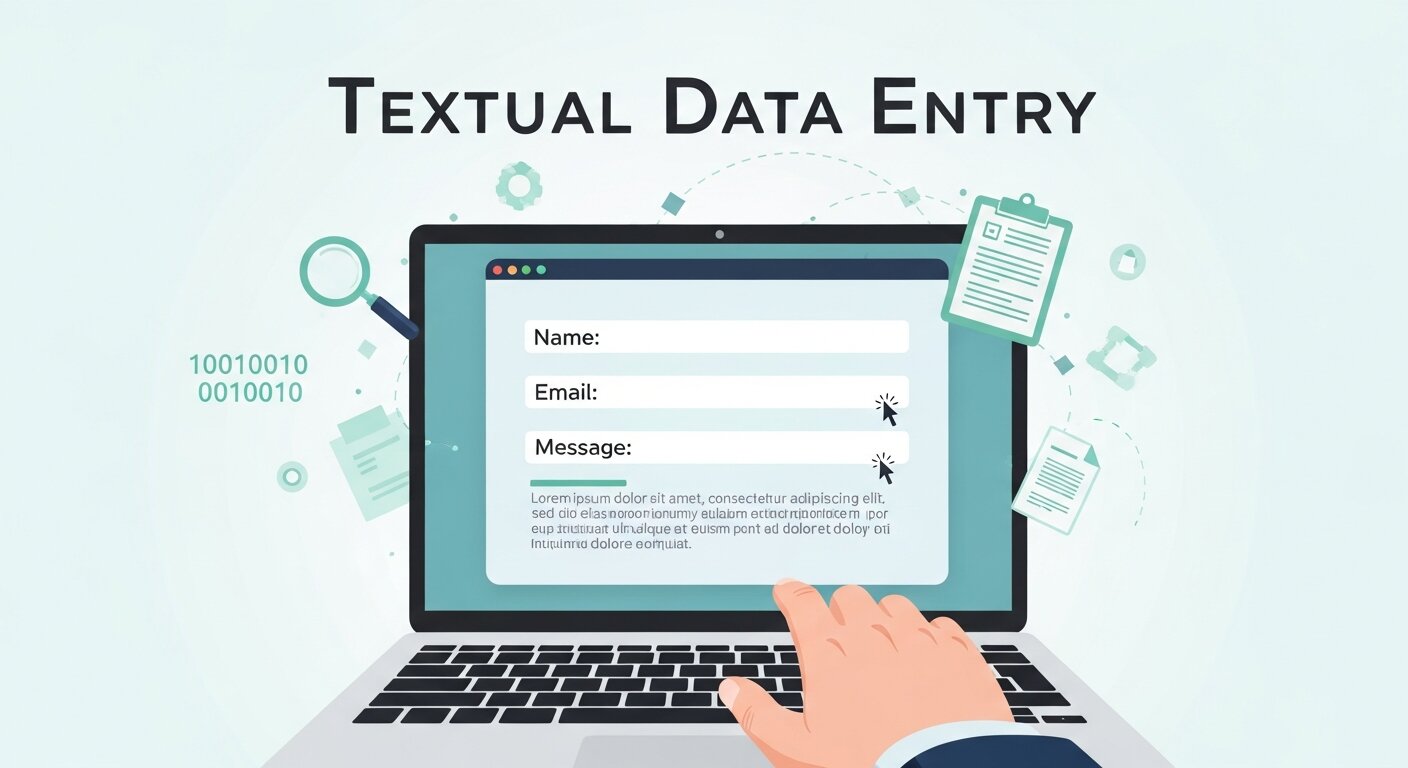
Mastering textual data entry is the cornerstone of modern business intelligence, transforming raw, unstructured information into organized, searchable digital assets that drive strategic decision-making and operational excellence.
This guide explores the evolution of textual data entry, from manual transcription to AI-driven automation. We cover essential quality protocols, ergonomic standards, industry-specific applications, and the emerging technologies like NLP and cloud computing that are redefining how global organizations manage their textual information.
Understanding the Core of Textual Data Entry
At its heart, textual data entry is the systematic process of transcribing or converting alphanumeric information into a digital format. While it may sound like a simple administrative task, it is actually the bedrock of the information economy. Without accurate textual data entry, CRM systems fail, financial records become unreliable, and large-scale research projects lose their integrity.
In the contemporary landscape, textual data entry encompasses more than just typing. It includes:
- Data Migration: Moving text from legacy systems to modern cloud databases.
- Transcription: Converting audio or handwritten notes into digital text.
- Data Enrichment: Adding specific tags or categories to existing text to make it “machine-readable.”
According to industry leaders at Ahrefs, the quality of your underlying data significantly impacts your digital footprint and SEO performance. High-quality textual data entry ensures that your metadata, product descriptions, and site content are consistent and error-free.
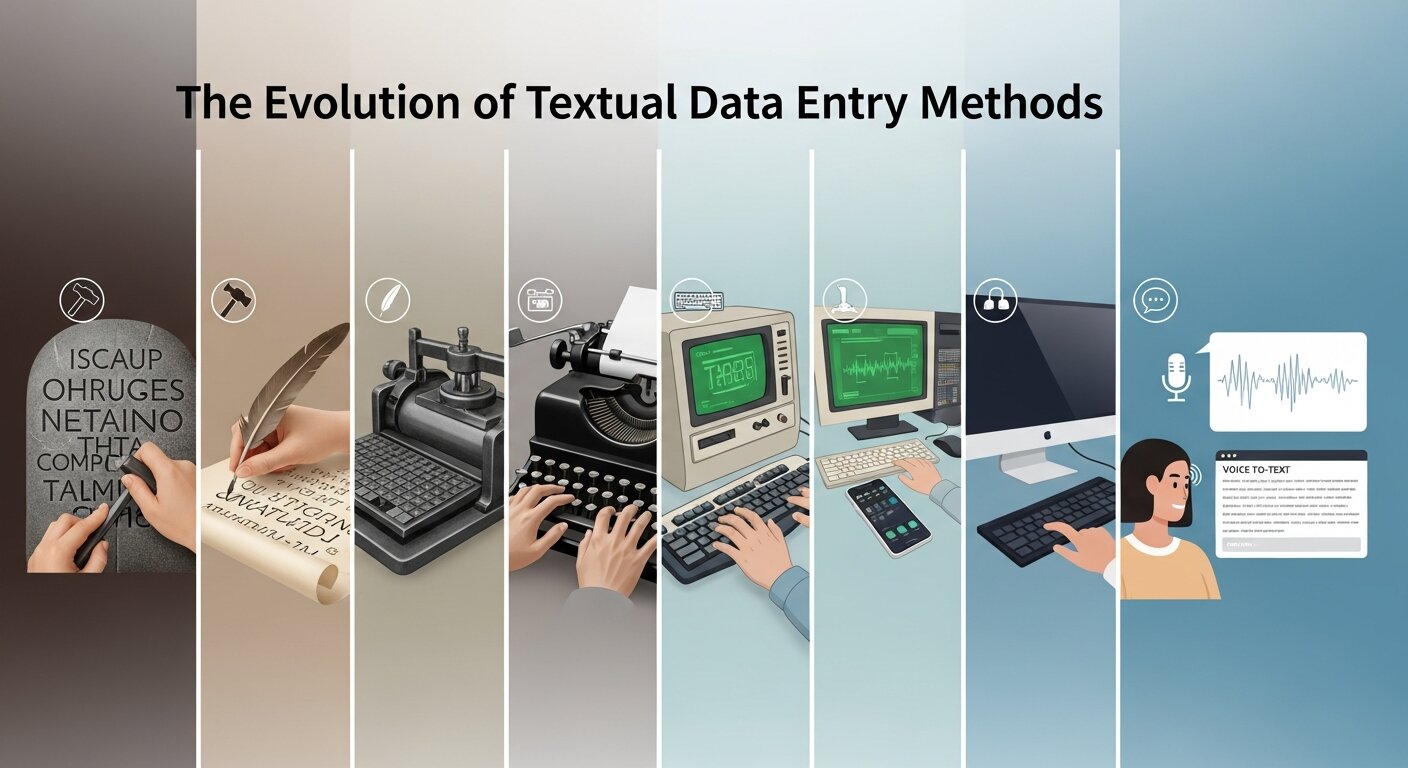
The Evolution of Textual Data Entry Methods
Traditional Manual Data Entry
Before the advent of sophisticated software, textual data entry was a labor-intensive process. A virtual assistant or dedicated data entry clerk would manually type information from paper forms into a database. This method is still used today for complex documents where human nuance is required, such as interpreting messy handwriting on a medical form or a manual invoice data entry task.
Semi-Automated Data Entry Solutions
The introduction of Optical Character Recognition (OCR) bridged the gap. These systems scan physical documents and “read” the text. However, OCR is rarely 100% accurate. This stage of textual data entry usually involves a “human-in-the-loop” process where an operator verifies the machine-generated text against the original source.
Fully Automated Data Entry Systems
Today, data entry automation software has reached new heights. By using artificial intelligence in business, companies can now automate the extraction of data from emails, PDFs, and web forms directly into systems like Hubspot data entry portals or automated data entry Xero workflows.
Critical Factors for Successful Textual Data Entry
To achieve a competitive advantage, businesses must look beyond mere speed. Success in textual data entry requires a holistic approach to quality and human factors.
Data Quality Assurance Protocols
The “Garbage In, Garbage Out” (GIGO) principle is particularly relevant here. High-quality textual data entry requires:
- Double-Key Verification: Two different people enter the same data; the system flags discrepancies.
- Field Validation: Preventing the entry of text where numbers should be (e.g., in a ZIP code field).
- Regular Audit Sampling: A quality lead reviews 5% of all entries to ensure standards are met.
Ergonomic Considerations for Data Entry Operators
Productivity in textual data entry is directly linked to the physical comfort of the staff. Implementing ergonomic keyboards, adjustable chairs, and blue-light-filtering monitors can reduce “keystroke fatigue,” which is the leading cause of errors in high-volume environments.
Technological Advancements Transforming the Industry

Artificial Intelligence and Machine Learning
Artificial intelligence in business has transformed textual data entry from a rote task into an intelligent process. Mastering real time data processing is now possible because ML algorithms can predict the next word or field, much like “Smart Compose” in Gmail. This is often referred to as text expansion software on steroids.
Mastering Automation in Excel Data Entry
Excel remains the world’s most popular data tool. Mastering automation in excel data entry involves using Power Query or VBA macros to automate excel spreadsheets, allowing for the rapid ingestion of thousands of rows of text with a single click. For small businesses, automation for small businesses starts here—moving away from typing every cell to using business process automation tools.
| Feature | Manual Data Entry | Automated Data Entry |
| Speed | 8,000–12,000 KPH | Instantaneous |
| Accuracy | 95–97% | 99%+ (with verification) |
| Scalability | Low (requires more staff) | High (requires more server power) |
| Complexity | High (human judgment) | Medium (rules-based) |
Textual Data Entry in Marketing and Webinars
A surprising area where textual data entry shines is in B2B lead generation and event management. When hosting a virtual event, the data collected from registration forms must be accurately entered into a CRM.
Webinar Lead Generation Strategies
During a successful webinar planning phase, marketers collect vast amounts of textual information. If you are a webinar host, you need to ensure that the “Question & Answer” transcripts are converted into actionable text for your sales team. This process of mastering real time data during a live event can be the difference between a hot lead and a cold one.
- Webinar in Resume: For professionals, listing “webinar moderation” or “data management for virtual events” can be a significant boost.
- Webinar Hosts Hear Me: Clear audio is required for the voice-to-text tools that automate the transcription of these sessions.
Industry-Specific Applications
Financial Services and Xero
In the financial world, manual invoice data entry is being replaced by automated data entry Xero integrations. When a business receives a text-heavy invoice, AI tools “read” the text and automatically categorize the expense, reducing the need for manual textual data entry.
Healthcare and HIPAA
In healthcare, textual data entry must be 100% accurate and compliant with privacy laws. Transcribing doctor’s notes or patient histories requires a high degree of specialization, often provided by a virtual assistant trained in medical terminology.
Best Practices for Optimizing Efficiency

To truly excel at textual data entry, organizations should adopt the following best practices:
- Standardized Templates: Never start from a blank page. Use templates to ensure textual data entry follows a predictable pattern.
- Automate Browser Data Entry: Use tools to automate browser data entry for repetitive tasks like filling out government forms or updating web directories.
- Real Time Data Transfer: Use APIs to ensure that once text is entered in one system, it reflects in all others instantly, achieving real time data transfer.
- Content Marketing Plan: Align your data entry with your content marketing plan. For instance, ensure your SEO keywords (found through tools like SEMrush) are consistently entered into your CMS metadata fields.
Measuring Success: Key Performance Indicators (KPIs)
You cannot manage what you cannot measure. For textual data entry, focus on:
- Keystrokes Per Hour (KPH): The classic measure of speed.
- Accuracy Rate: The percentage of entries without errors.
- Cost Per Entry: Total overhead divided by the number of records processed.
- Data Decay Rate: How quickly the entered text (like addresses or job titles) becomes outdated.
The Future: NLP and Blockchain
The future of textual data entry lies in Natural Language Processing (NLP). Instead of just “reading” characters, computers are beginning to understand the meaning of the text. This allows for automated CRM data entry where the system can read an email and automatically update a client’s “mood” or “intent” in the database.
Furthermore, blockchain for data integrity is emerging as a way to prove that the text entered into a system has not been tampered with, providing an immutable audit trail for legal and financial documents.
Advanced Strategies for Mastering Real-Time Data
In an era of instant gratification, mastering real-time data is no longer a luxury—it’s a requirement. Real-time textual data entry refers to the immediate processing of information as it is generated, such as live chat transcripts, social media feeds, or sensor-generated text.
Real-Time Data Transfer Protocols
To move text from a source (like a customer’s keyboard) to a database (like your CRM) without delay, businesses utilize real-time data transfer protocols.
- Webhooks: These allow one application to provide other applications with real-time information.
- APIs (Application Programming Interfaces): Essential for automated CRM data entry, ensuring that when a user registers for a virtual event, their text data is instantly available to the sales team.
Data Entry Automation Software Comparison
Choosing the right data entry automation software depends on your volume and technical stack.
| Software Category | Top Tools | Best For |
| General Automation | Zapier, Make.com | Connecting Hubspot data entry with email. |
| Financial/Accounting | Xero, QuickBooks | Automated data entry Xero for invoices. |
| OCR Specialists | Abbyy FlexiCapture, Docsumo | High-volume manual invoice data entry conversion. |
| Enterprise RPA | UiPath, Blue Prism | Automate browser data entry across legacy systems. |
Integrating Textual Data Entry into Marketing Analytics
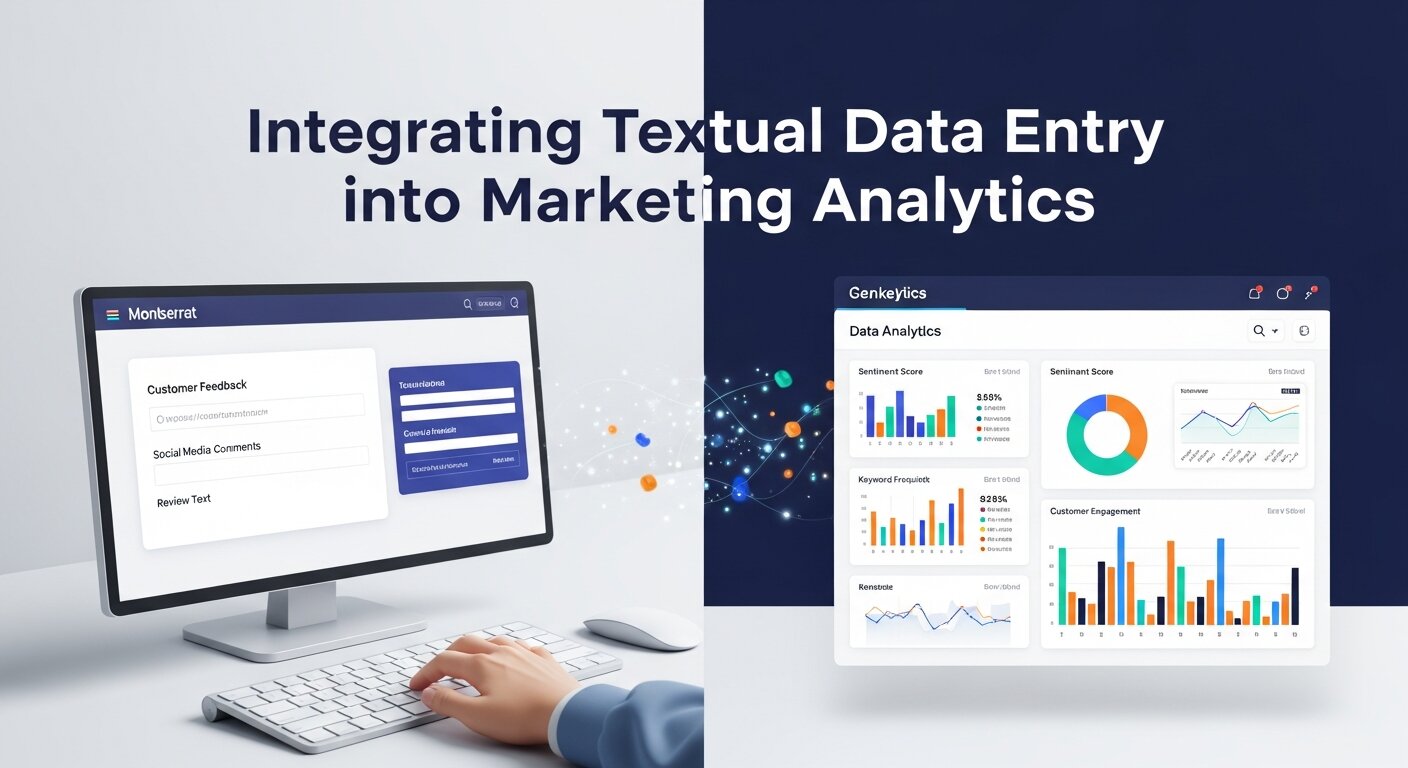
Modern marketing is fueled by text. From digital marketing analytics to customer journey mapping, the accuracy of your textual data entry defines your ROI.
Using Data for B2B Lead Generation
In B2B lead generation, the text captured in “Job Title” or “Company Size” fields determines how a lead is routed. If your textual data entry process is flawed—perhaps missing a capital letter or misspelling a company name—your automated CRM data entry might fail to match that lead with an existing account, leading to missed opportunities.
Marketing Analytics Tools and Textual Data
Tools mentioned by SEMrush rely on precise text inputs to track brand awareness and brand positioning strategy.
- Event Marketing Analytics: If you are running Salesforce webinars, the textual feedback from attendees must be categorized to measure the power of behavior webinars.
- Sentiment Analysis: Advanced artificial intelligence in business can scan the text entered in customer reviews to determine brand perception in marketing.
The Human Element: Virtual Assistants and Training
While we talk extensively about automation for small businesses, the human element remains vital. A virtual assistant often acts as the final gatekeeper for data quality.
The Role of a Virtual Assistant in Data Workflows
A virtual assistant doesn’t just type; they perform context-aware interpretation. For example, in medical coding, they ensure that the text entered aligns with strict healthcare regulations.
Training for Technical Proficiency
To improve textual data entry speed, operators should focus on:
- Text Expansion Software: Using shortcuts for common phrases (e.g., typing “addr” to instantly expand into a full corporate address).
- Mastering Automation in Excel Data Entry: Moving beyond basic typing to using Flash Fill and Power Pivot.
Virtual Events and the “Data-First” Approach
The rise of virtual eventeering and webinars has created a new frontier for textual data entry.
Successful Webinar Planning and Data
During the evolution of webinars, we moved from simple broadcasts to interactive experiences. This interactivity generates text:
- Poll Results: Must be exported and cleaned.
- Chat Logs: Need to be scanned for B2B lead generation signals.
- Follow-Up Emails: Personalized based on the text data collected during the session.
Using the right platform for webinar hosting is crucial. Some platforms offer better video analytics market trends and text export features than others, making the subsequent textual data entry much smoother.
The Future of Brand Strategy and Data

Your brand voice strategy and brand personality in marketing are communicated through text. If your internal textual data entry regarding customer preferences is accurate, your brand marketing becomes much more personalized.
- Emotional Marketing: Using text data to understand the “why” behind a purchase.
- Ethical Branding: Ensuring that the text data you collect is stored securely and used transparently, fostering brand resilience strategies.
Conclusion
Optimizing your textual data entry processes is no longer an optional back-office improvement; it is a strategic imperative. By leveraging artificial intelligence in business, maintaining high quality-assurance standards, and integrating data entry automation software, your organization can turn raw information into a powerful engine for growth and innovation.
FAQs
1. What is the difference between manual and automated textual data entry?
Manual entry relies on humans typing data into a system, while automated entry uses software (like OCR or AI) to extract and input data without human intervention.
2. How does AI improve textual data entry?
AI uses Natural Language Processing to understand context, identify errors, and even predict data fields, significantly increasing speed and accuracy.
3. What are the best tools for mastering automation in excel data entry?
Power Query, VBA macros, and specialized Excel add-ins are the most effective tools for automating repetitive text tasks in spreadsheets.
4. How can small businesses afford data entry automation software?
Many SaaS platforms like Hubspot or Xero offer built-in automation features that are cost-effective for automation for small businesses.
5. What is “Double-Key Verification” in textual data entry?
It is a quality control process where two different operators enter the same data. The system compares the two entries and flags any differences for review.
6. Can I include “Webinar in Resume” if I managed the data entry for an event?
Absolutely. Managing the textual data entry and lead flow for a virtual event is a highly valued skill in digital marketing and event management.
7. How do I automate website data entry?
You can use browser extensions, RPA (Robotic Process Automation) tools, or custom Python scripts to automate website data entry and form filling.
8. What is the typical accuracy rate for textual data entry?
Manual entry usually averages 95–97%, while optimized automated systems can exceed 99% accuracy.
9. Is voice-to-text considered a form of textual data entry?
Yes, it is an evolving method where spoken words are converted into digital text, often used in medical and legal fields for fast documentation.
10. How does textual data entry affect SEO?
Accurate entry of metadata, alt text, and structured data is essential for search engines to crawl and index your content correctly, as noted by experts at Backlinko.