
In today’s data-driven business environment, organizations face mounting pressure to process vast quantities of information swiftly and accurately. Traditional manual data entry methods often struggle to keep pace, leading to high error rates, slow turnaround times, and elevated operational costs. With unstructured data growing exponentially—from scanned documents and emails to web forms—companies must adopt smarter approaches today to remain competitive.
AI agents and no-code tools are reshaping how teams handle routine data workflows by combining intelligent automation with user-friendly interfaces. AI agents leverage advanced natural language processing and computer vision to autonomously read, interpret, and extract data fields, learning from human corrections over time. Conversely, no-code platforms democratize automation, enabling business users to architect end-to-end data pipelines without writing a single line of code. This article offers a detailed exploration of how AI agents and no-code tools work together in today’s digital landscape, drawing on best practices from leading institutions such as the National Institute of Standards and Technology and resources available at Data.gov.
The Rise of AI Agents in Data Entry
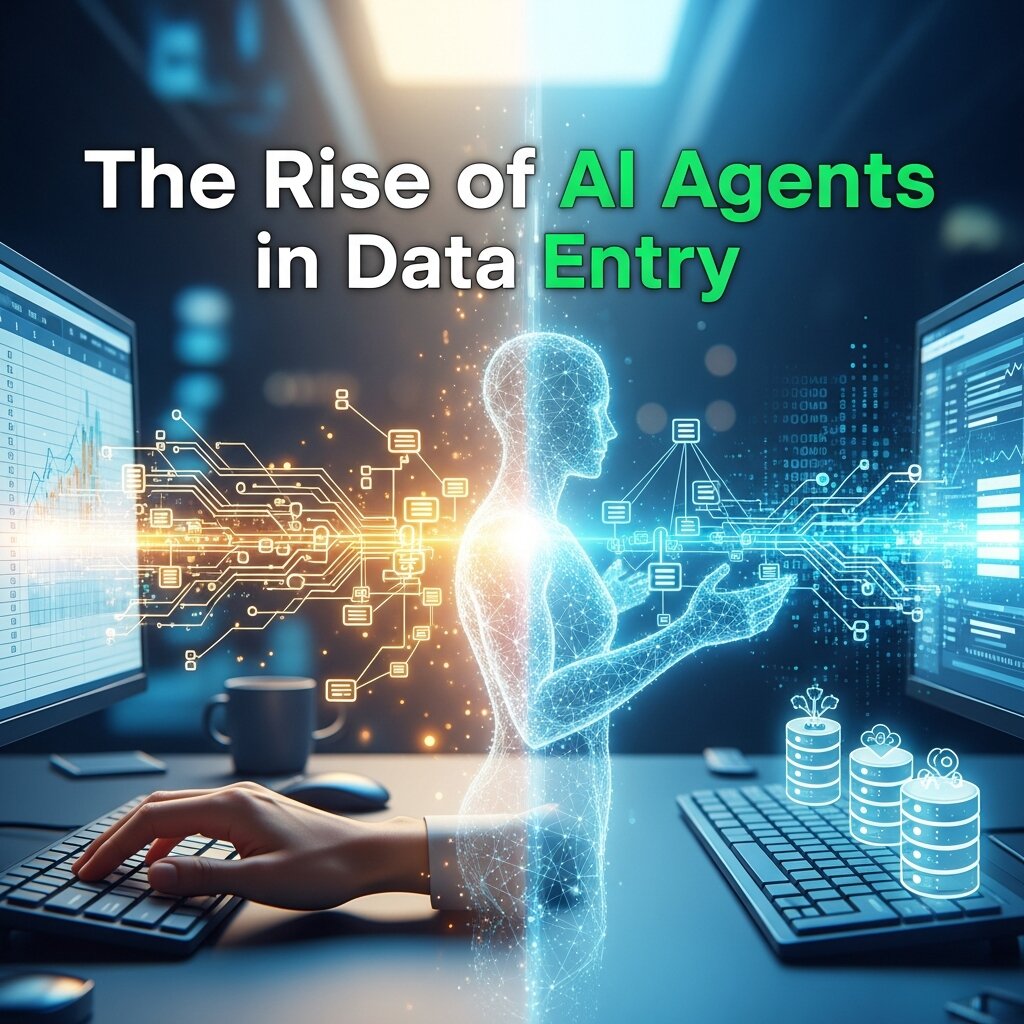
In the era of intelligent automation, AI agents and no-code tools are redefining how data entry operates. AI agents are software entities that operate autonomously to execute predefined or adaptive tasks, mimicking human decision-making in data workflows. Powered by breakthroughs in machine learning, natural language processing (NLP), and computer vision (CV), these agents can ingest a variety of documents—ranging from scanned invoices and contracts to emails and web forms—and automatically extract relevant fields with impressive precision. In today’s digital landscape, organizations harness AI agents to reduce reliance on manual data entry, minimize typographical errors, and accelerate processing cycles.
Unlike rule-based systems that falter when faced with unstructured inputs, AI agents continually learn from corrections, adapting to new templates and terminology. For instance, a financial institution may deploy an AI agent trained on loan applications to identify applicant names, income details, and credit history attributes. Over successive processing runs, the agent refines its extraction logic based on verified outputs, boosting accuracy rates above 95 percent. Similarly, healthcare providers employ computer vision models to interpret handwritten physician notes, transforming freeform text into structured electronic health record (EHR) entries.
Key components of modern AI agents include optical character recognition (OCR) modules, NLP algorithms, and training pipelines. OCR engines convert images or PDFs into machine-readable text, while NLP models classify, tokenize, and validate extracted phrases. Advanced frameworks such as transformer-based architectures empower agents to comprehend context, disambiguate similar terms, and detect anomalies. Research from institutions like the National Institute of Standards and Technology underscores the importance of rigorous evaluation when selecting OCR and NLP engines to ensure compliance with industry standards.
By integrating feedback loops into processing pipelines, AI agents become self-improving systems. Human reviewers validate flagged entries, correcting misidentified fields and enriching the training dataset. This supervised loop enhances both precision and recall, reducing exception rates over time. As a result, organizations can achieve continuous process improvement with minimal manual intervention. Moreover, AI agents contribute to governance and auditability. Detailed logs capture each decision point, enabling traceability for compliance with regulations such as GDPR or HIPAA. With configurable validation rules and automated verifications against predefined criteria, intelligent agents help maintain data integrity throughout the lifecycle.
For enterprises deploying AI agents and no-code tools together, the agents represent the intelligence layer that drives data extraction. However, initial adoption often requires careful planning around data preparation, access permissions, and system architecture. Data scientists and IT teams collaborate to curate representative datasets, ensuring the AI agent encounters diverse input formats during training. They apply techniques like data augmentation—adding noise or distortions to training images—to bolster the agent’s robustness against low-resolution scans or complex document layouts.
To accelerate development, many organizations leverage pretrained models provided by leading AI research labs. Cloud-based platforms offer OCR and NLP services via APIs, enabling rapid prototyping without in-house model training. Popular services from major cloud providers adhere to industry best practices, including data encryption in transit and at rest, role-based access control, and regular vulnerability assessments. When choosing a vendor, consider their compliance certifications—such as ISO 27001 or FedRAMP—to align with organizational security requirements.
Another trend is the integration of AI agents with real-time data streams. For example, e-commerce platforms process customer feedback in near real time by deploying agents that scan chat logs or social media mentions. By extracting sentiment metrics and key themes, businesses can proactively respond to issues, enhancing customer satisfaction. This dynamic application underscores how AI agents extend beyond batch processing, enabling continuous data capture and analysis in today’s fast-paced markets.
Democratizing Automation with No-Code Platforms
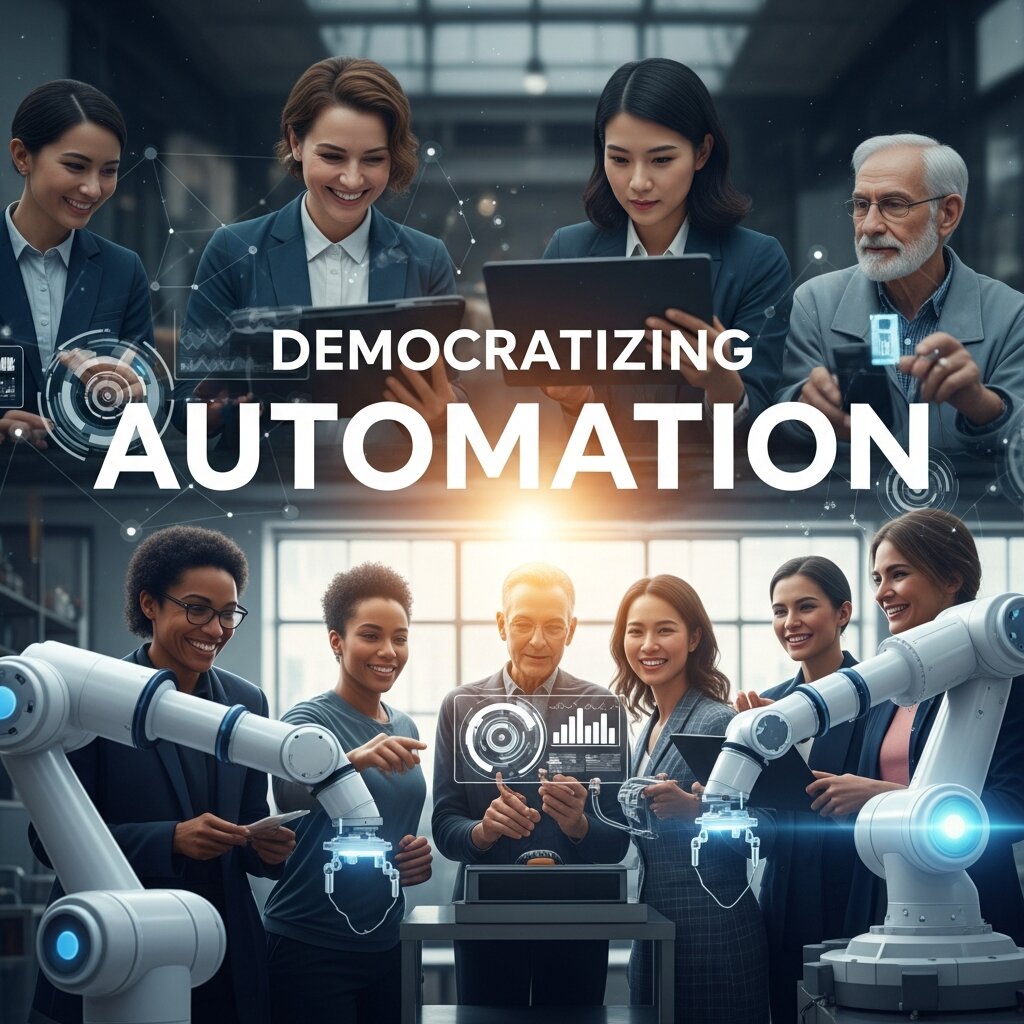
When combined with AI agents and no-code tools, no-code platforms empower citizen developers to build complex automation workflows without writing code. These environments feature intuitive drag-and-drop interfaces where users assemble triggers, data processing nodes, and integrations into cohesive pipelines. In today’s digital landscape, no-code solutions dramatically reduce development time, enabling teams to deliver value faster and iterate on workflows in response to evolving requirements.
Central to no-code automation for data entry are connectors—modular components that link AI agents, OCR services, databases, cloud storage, and enterprise applications. A typical workflow begins when a document is ingested via email trigger or cloud folder watch. An AI agent module extracts text, which then flows into data transformation nodes for validation, normalization, and enrichment. Finally, the processed records are routed to systems such as ERP, CRM, or analytics platforms through dedicated connectors, ensuring seamless end-to-end data movement.
One of the most compelling aspects of no-code tools is the reduction of development cycles. Whereas traditional custom coding can take weeks or months, no-code implementations can be delivered in days. This speed to value matters in today’s digital landscape, where market conditions shift rapidly and competitive differentiation often hinges on operational efficiency. According to research from industry leaders, organizations that adopt no-code techniques report up to 70 percent reductions in solution delivery times and a 60 percent decrease in maintenance overhead.
Security and governance in no-code environments also benefit from built-in best practices. Many platforms enforce standardized authentication protocols such as OAuth 2.0, encrypt data both in transit and at rest, and maintain comprehensive audit logs. Administrators can assign granular permissions to citizen developers, ensuring that only authorized users can create, modify, or deploy workflows. Advanced platforms even incorporate policy-as-code, allowing IT teams to define compliance guardrails that automatically validate workflows against corporate standards.
To illustrate the power of no-code, consider a mid-sized insurance firm that historically relied on manual entry of policy applications. Non-technical team members used a no-code platform to integrate an AI agent for OCR, map extracted fields to a database schema, and configure error-handling routines for exceptions. With minimal training, the business users deployed a fully automated pipeline that processed thousands of applications daily, cutting processing times by 80 percent. This success story exemplifies how combining AI agents and no-code tools eradicates the traditional barriers between business requirements and technical execution.
As no-code platforms mature, they increasingly provide advanced features such as version control, collaborative development environments, and integrated testing sandboxes. Additionally, marketplaces offer reusable workflow templates, custom connectors, and certified modules curated by platform vendors or community experts. By leveraging these resources, teams can accelerate proofs-of-concept and rapidly scale successful pilots into enterprise-wide solutions.
Hybrid Architectures: AI Agents, RPA, and Legacy Integration
Hybrid architectures that merge AI agents and no-code tools with robotic process automation (RPA) and legacy systems unlock significant value. RPA bots excel at scripting interactions with graphical user interfaces, automating repetitive system transactions in ERPs, CRMs, or proprietary software. However, these bots typically rely on rigid, rule-based logic and struggle with unstructured inputs. By integrating AI agents into RPA pipelines, companies achieve a harmonious blend of cognitive intelligence and transactional execution.
When a document or digital asset arrives, an AI agent first processes the unstructured data, performing OCR, natural language understanding, and field extraction. The cleaned and validated data is then handed off to an RPA bot, which executes system-level operations: entering data into user interfaces, triggering workflows in enterprise applications, or interacting with legacy terminal screens. This hybrid model addresses the limitations of pure RPA while preserving investments in existing infrastructure, ensuring a return on prior automation efforts.
Integration best practices for hybrid workflows include robust error handling, retry logic, and detailed logging. Architects should define semantic models that map AI-extracted data fields to specific system parameters, ensuring consistency across multiple endpoints. Where direct API access is available, consider bypassing the UI layer to improve reliability. Conversely, when APIs are unsupported—such as with legacy mainframes or custom web portals—RPA provides a resilient means of data injection. By leveraging a mix of connectors and user interface automation, organizations maintain continuity while modernizing data intake processes.
Moreover, hybrid solutions can support both batch and real-time scenarios. In batch mode, AI agents accumulate a queue of documents or transactions, processing them during off-peak hours to optimize resource usage. In contrast, real-time processing allows immediate action—vital for use cases like fraud detection in financial services or patient data capture in healthcare triage. Configurable triggers enable workflows to respond to events such as file uploads, email receipt, or message queue notifications.
Security considerations are pivotal in hybrid deployments. Ensure that credential management adheres to enterprise standards, using secure vaults or identity management solutions to store service accounts. Encryption, multi-factor authentication, and least-privilege access policies mitigate risks related to unauthorized system access. Additionally, compliance frameworks like FedRAMP and HIPAA require end-to-end encryption and audit trails, which both AI agent logs and RPA runbooks can generate.
As marketplace offerings evolve, we see consolidated platforms that natively support AI agents and RPA under one roof. These integrated suites reduce the complexity of maintaining separate tools and deliver seamless user experiences. For organizations seeking incremental modernization, adopting a hybrid architecture today provides a future-proof foundation. By marrying AI agents and no-code tools with established automation tactics, companies can accelerate digital transformation at scale while safeguarding existing technology assets.
Real-World Advantages: Benefits and Industry Use Cases

Automating data entry with AI agents and no-code tools delivers a rich spectrum of benefits, spanning cost reduction, enhanced accuracy, operational agility, and compliance. Across industries, organizations that embrace these technologies realize ROI within months, transforming manual tasks into high-speed digital processes.
In finance, banks and lending institutions deploy AI-powered data capture to process loan applications, invoices, and account statements. Agents extract critical data points—such as customer identifiers, transaction amounts, and risk indicators—from diverse document types, routing validated records into core banking systems. This acceleration of the underwriting process not only improves customer satisfaction but also tightens risk management by flagging anomalies in real time.
Healthcare providers use AI agents to automate patient intake and claims management. By scanning intake forms, insurance cards, and medical records, agents populate electronic health record (EHR) platforms with minimal human intervention. Claims processors benefit from improved accuracy in coding CPT and ICD-10 fields, reducing claim denials and accelerating reimbursement cycles. The integration of automated data workflows supports compliance with regulatory frameworks outlined by the Centers for Medicare & Medicaid Services (CMS).
E-commerce and retail sectors deploy AI agents and no-code tools to streamline order processing and customer feedback analysis. Order forms, purchase receipts, and return requests are funneled into automated pipelines that extract customer details, inventory SKUs, and return reasons. With dynamic routing, orders are fulfilled more quickly, and return patterns are analyzed to optimize supply chain responses.
Government agencies digitize public records, permit applications, and survey data using a combination of AI agents and no-code orchestration. Initiatives on platforms like Data.gov demonstrate how digital capture reduces backlog and expands citizen access to services. From tax filings to voter registrations, automated data entry processes enhance transparency and reduce administrative overhead.
- Increased Accuracy: AI-based extraction minimizes typos, misclassifications, and duplicate entries.
- Faster Turnaround: 24/7 operation of bots accelerates processing speeds, shortening cycle times by up to 90 percent.
- Cost Savings: Labor costs decline as staff shift focus from repetitive work to strategic analysis.
- Scalability: Elastic infrastructure supports fluctuating workloads, enabling organizations to meet peak demand without additional headcount.
- Governance & Compliance: Comprehensive audit trails and validation rules enforce data integrity and regulatory adherence.
Consider the case of a multinational manufacturing conglomerate that implemented an AI-driven data entry solution for supply chain documentation. By processing bills of lading, customs declarations, and quality certificates automatically, the firm reduced manual processing headcount by 50 percent and slashed exception rates by 75 percent. The transparent audit logs supplied by both the AI agents and the no-code platform facilitated regulatory inspections and internal compliance reviews.
Strategic Implementation: Steps, Best Practices, and Common Pitfalls
When embarking on a data entry automation journey with AI agents and no-code tools, a structured strategy ensures smooth adoption and maximized ROI. The following roadmap outlines critical steps and best practices to guide organizations in today’s digital landscape:
- Identify High-Impact Processes: Assess data-intensive workflows that are repetitive, time-consuming, and prone to human error. Prioritize processes with clear business metrics—such as processing time or error rate—to quantify improvements.
- Select the Right Technology Stack: Evaluate AI OCR and NLP engines based on accuracy benchmarks and training flexibility. Review no-code platforms for user-centric design, prebuilt connectors, and governance capabilities.
- Develop a Pilot Project: Design a small-scale proof-of-concept to validate core assumptions. Configure a minimal viable workflow that ingests sample documents, applies AI-driven extraction, and writes outputs to a target system.
- Train and Refine AI Models: Use labeled datasets representative of real-world inputs to train OCR and NLP models. Incorporate human-in-the-loop feedback where exceptions are flagged for correction.
- Implement Governance and Security Controls: Define access policies, role-based permissions, and audit log requirements. Utilize encryption, credential vaults, and secure API gateways to protect sensitive data.
- Scale Across the Enterprise: Expand automation to additional processes and departments. Employ template-based workflows and version control to maintain consistency.
- Optimize Continuously: Leverage performance insights to identify bottlenecks and apply targeted optimizations. Encourage cross-functional collaboration on process improvement.
Best Practices:
- Start Small and Iterate: Avoid overengineering by beginning with simple workflows and incrementally adding complexity.
- Maintain Data Quality: Pre-clean source documents to standardize formats and eliminate noise before processing.
- Engage Stakeholders Early: Involve end-users and compliance teams to drive adoption and address concerns.
- Define Clear SLAs: Establish service-level agreements for processing times and error-handling procedures.
- Foster a Learning Culture: Provide training and support for citizen developers to build confidence in no-code environments.
Common Pitfalls to Avoid:
- Neglecting Change Management: Insufficient user training can lead to resistance and underutilization of automation capabilities.
- Overlooking Governance: Lack of robust controls may cause data drift, compliance gaps, and audit failures.
- Underestimating Data Variability: Failing to test models on diverse datasets can result in unexpected errors when the system is live.
By following these structured steps, organizations can mitigate risks, accelerate deployments, and fully harness the combined potential of AI agents and no-code tools. In this year (2026), such strategic implementation sets the foundation for more advanced hyperautomation initiatives.
FAQ
What are AI agents in data entry?
AI agents are autonomous software entities that leverage machine learning, NLP, and computer vision technologies to ingest, interpret, and extract data from unstructured documents. They learn from human feedback to improve accuracy and efficiency over time.
How do no-code platforms integrate with AI agents?
No-code platforms offer drag-and-drop interfaces and prebuilt connectors that allow users to incorporate AI agent modules—such as OCR and NLP services—into automated workflows without writing code. This integration democratizes automation, enabling business users to deploy end-to-end data pipelines rapidly.
What are common pitfalls when automating data entry?
Common pitfalls include neglecting change management, overlooking governance controls, and underestimating the variability of input data. Organizations should engage stakeholders early, enforce compliance guardrails, and test AI models on diverse datasets to mitigate these risks.
Conclusion
In conclusion, AI agents and no-code tools represent a powerful combination that is transforming data entry from a labor-intensive chore into a strategic enabler of digital innovation. By leveraging advanced OCR and NLP capabilities, AI agents autonomously extract and validate information from diverse document types, while no-code platforms democratize the orchestration of these agents into end-to-end workflows. The integration of these technologies with RPA and legacy systems creates hybrid architectures that preserve existing investments, accelerate time-to-value, and deliver robust governance and compliance.