
Running a company requires juggling countless tasks, from managing customer relationships to executing marketing campaigns. Managing everything manually drains time, energy, and resources. Software solutions step in to handle repetitive work, freeing up human talent for strategic thinking. Finding the right tools can completely transform how your team operates.
When you implement software to handle routine tasks, you unlock a new level of productivity. Teams spend fewer hours copying data between applications or sending manual follow-up emails. This shift reduces human error and accelerates growth. As organizations expand, these systems handle increased workloads without requiring proportional increases in headcount.
Choosing the right software provider is critical to your success. The market is flooded with options, making it difficult to identify which platforms deliver real value. This guide explores the best brands for automation, breaking down the top choices for small businesses and large enterprises. You will learn which platforms offer the most robust features, seamless integrations, and reliable support to help your business thrive.
The Value of Implementing Software Solutions
 Every organization, regardless of size, benefits from streamlining its operations. Startups need to stretch limited resources, while large corporations must maintain consistency across massive departments. Automation bridges the gap between limited human capacity and ambitious business goals.
Customer expectations are higher than ever. People want immediate responses, personalized communication, and flawless service. Delivering this manually is virtually impossible. Automated systems trigger immediate responses, track user behavior, and personalize messaging at scale. This level of responsiveness builds trust and loyalty, directly impacting revenue.
One major advantage is the ability to implement automated branding. Consistent messaging, visual identity, and tone across all channels are vital for brand recognition. Software tools ensure your marketing materials, email templates, and social media posts adhere to your brand guidelines automatically. This eliminates discrepancies and presents a unified front to your audience, strengthening your market position.
Top Automation Brands for Small Businesses
 Small businesses need intuitive, cost-effective tools that integrate easily with their existing workflows. The best brands for automation in this category focus on user-friendliness and immediate return on investment.
Zapier: The Ultimate Workflow Connector
Zapier is a household name for a reason. It acts as the glue between thousands of different web applications. Small business owners often use a patchwork of different tools—one for email, another for invoicing, and a third for customer support. Zapier allows these disconnected apps to talk to each other.
You can set up “Zaps” to trigger actions based on specific events. For example, when a new lead fills out a form on your website, Zapier can automatically add their contact information to your CRM, subscribe them to your mailing list, and send a notification to your sales team via Slack. This eliminates data entry and ensures no lead falls through the cracks.
Mailchimp: Marketing and Automated Branding
Mailchimp started as a simple email marketing tool but has evolved into a comprehensive platform. It is particularly valuable for small businesses looking to establish a strong digital presence. The platform offers intuitive drag-and-drop builders for emails, landing pages, and social media ads.
Where Mailchimp truly shines is its automated branding capabilities. Its AI-powered creative assistant pulls your logo, brand colors, and fonts directly from your website to generate cohesive, on-brand designs automatically. You can set up complex email drip campaigns that nurture leads based on their interactions with your content, ensuring your brand stays top-of-mind without manual intervention.
HubSpot: The All-in-One Growth Platform
HubSpot offers a powerful suite of marketing, sales, and customer service tools. While they serve enterprise clients, their starter packages are highly accessible for small businesses. HubSpot’s CRM acts as the central hub for all customer data, providing a single source of truth for your entire team.
The platform excels at inbound marketing automation. You can create workflows that score leads based on their engagement, route high-value prospects to specific sales representatives, and send personalized follow-up emails. HubSpot’s intuitive interface makes it easy to visualize these workflows and adjust them as your strategy evolves.
Leading Automation Brands for Enterprises
Large corporations face complex challenges. They require highly customizable, secure, and scalable solutions capable of processing massive volumes of data. The best brands for automation at the enterprise level offer sophisticated architecture and deep integrations with legacy systems.
Salesforce: Powering Global Operations
Salesforce is the undisputed titan of enterprise CRM and sales automation. It provides unparalleled customization, allowing massive organizations to tailor the platform to their exact specifications. Salesforce goes far beyond basic contact management, offering predictive analytics, artificial intelligence, and extensive reporting.
Enterprise teams use Salesforce to automate complex sales pipelines, manage global customer support networks, and align marketing efforts across multiple regions. Its robust API allows it to integrate with virtually any proprietary system an enterprise might use, making it the backbone of global business operations.
UiPath: Robotic Process Automation
UiPath leads the market in Robotic Process Automation (RPA). While marketing and sales tools handle customer-facing tasks, RPA focuses on internal operations. UiPath deploys software robots to emulate human actions interacting with digital systems.
These bots can read screens, extract data, navigate legacy software, and perform complex calculations. Enterprises use UiPath to automate highly repetitive back-office processes like invoice processing, employee onboarding, and regulatory compliance reporting. This technology drastically reduces operational costs and virtually eliminates processing errors.
Marketo: Advanced Marketing Architecture
Marketo, owned by Adobe, provides enterprise-level marketing automation. It is designed for complex B2B marketing environments with long sales cycles and multiple decision-makers. Marketo excels at account-based marketing (ABM), allowing teams to target specific high-value accounts with highly personalized campaigns.
The platform offers advanced lead scoring, sophisticated revenue attribution modeling, and deep integration with CRM systems like Salesforce. Enterprise marketers rely on Marketo to manage massive, multi-channel campaigns, execute detailed automated branding strategies, and prove the exact return on investment for every marketing dollar spent.
Key Considerations When Evaluating Platforms
Selecting the right software requires careful evaluation of your current needs and future goals. Rushing into a decision can result in wasted capital and frustrated employees.
First, audit your existing workflows. Identify the most time-consuming bottlenecks and manual tasks your team performs daily. Look for platforms that specifically address these pain points. A tool might offer hundreds of features, but if it does not solve your primary problem, it is not a good fit.
Second, consider the integration ecosystem. The most powerful software is useless if it cannot communicate with the tools your team already uses. Review the native integrations offered by the platform and check if it supports open APIs for custom connections.
Finally, evaluate the user interface and learning curve. Complex enterprise software requires dedicated training and change management. Small business tools should be intuitive enough for non-technical users to adopt quickly. Choose a platform that aligns with your team’s technical proficiency and the resources you have available for training.
The Role of AI in Modern Automation
Artificial intelligence is rapidly transforming how automation tools function. While traditional automation follows fixed rules, AI-powered systems can analyze data, predict outcomes, and make intelligent decisions. This allows businesses to go beyond simple task automation and move toward predictive and adaptive workflows. For example, AI can identify customer behavior patterns and trigger highly personalized marketing campaigns at the perfect time. It can also optimize internal operations by forecasting demand, detecting anomalies, and recommending improvements. As AI continues to evolve, businesses that adopt these advanced automation capabilities will gain a competitive edge. Integrating AI with automation tools is no longer optional for forward-thinking companies aiming to scale efficiently.
Challenges Businesses Face When Adopting Automation
Despite its benefits, implementing automation comes with challenges. Many organizations struggle with selecting the right tools due to the overwhelming number of options available. Integration issues can arise when new platforms do not align with existing systems. Additionally, employees may resist change, especially if they fear job displacement or lack proper training. There is also the risk of over-automation, where businesses automate processes without fully understanding them, leading to inefficiencies. Budget constraints can further complicate adoption, particularly for smaller companies. To overcome these obstacles, businesses must develop a clear strategy, invest in training, and gradually implement automation solutions while continuously monitoring performance and making necessary adjustments.
How Automation Improves Customer Experience
Automation plays a crucial role in enhancing customer experience. With automated systems in place, businesses can respond to customer inquiries instantly, reducing wait times and improving satisfaction. Chatbots, automated email responses, and personalized recommendations create a seamless and engaging user journey. These tools also ensure consistency in communication, which builds trust and reliability. By analyzing customer data, automation platforms can deliver tailored content and offers, making interactions more relevant. This level of personalization was once impossible to achieve manually at scale. As customer expectations continue to rise, businesses that leverage automation effectively will stand out by providing faster, smarter, and more personalized experiences.
The Future Trends in Business Automation
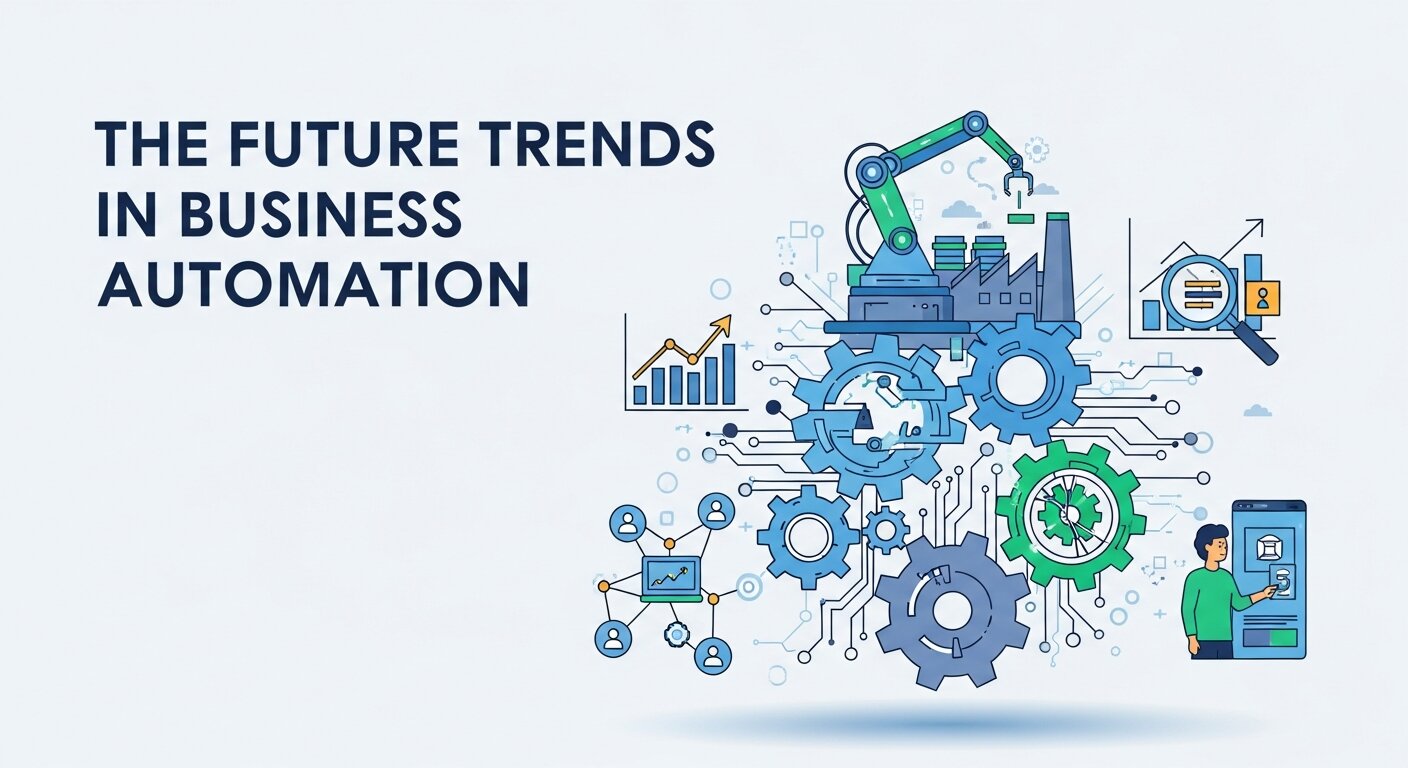
The future of automation is shaped by emerging technologies and evolving business needs. Hyperautomation, which combines AI, machine learning, and robotic process automation, is becoming a dominant trend. Businesses are also adopting low-code and no-code platforms, allowing non-technical users to build automation workflows بسهولة. Cloud-based automation solutions are gaining popularity due to their scalability and flexibility. Additionally, the integration of Internet of Things (IoT) devices is expanding automation into physical environments, such as smart manufacturing and logistics. As these trends continue to develop, organizations must stay updated and adapt quickly. Embracing future-ready automation strategies will ensure long-term growth and resilience in an increasingly competitive landscape.
Measuring the ROI of Automation Tools
Understanding the return on investment (ROI) of automation is essential for making informed decisions. Businesses need to evaluate both tangible and intangible benefits when assessing performance. Tangible gains include reduced labor costs, increased productivity, and faster task completion. Intangible benefits, such as improved employee satisfaction and enhanced customer experience, also contribute significantly to long-term success. To measure ROI effectively, companies should set clear objectives before implementing automation tools and track key performance indicators over time. Regular analysis helps identify areas for improvement and ensures that automation investments deliver expected results. By continuously optimizing processes, businesses can maximize the value of their automation strategies.
Frequently Asked Questions
What is automation software?
Automation software refers to tools that perform repetitive tasks without human intervention. These platforms handle processes like data entry, email responses, workflow management, and customer tracking, allowing businesses to operate more efficiently.
Why is automation important for businesses?
Automation saves time, reduces human error, and increases productivity. It allows teams to focus on strategic tasks instead of manual work, ultimately improving overall business performance and growth.
Which automation tools are best for small businesses?
Popular options for small businesses include tools like Zapier for workflow automation, Mailchimp for marketing automation, and HubSpot for managing customer relationships and sales processes.
What is the difference between automation and AI?
Automation focuses on executing predefined tasks based on rules, while AI (Artificial Intelligence) can learn from data and make decisions. Many modern automation tools combine both for smarter workflows.
How much does automation software cost?
Costs vary widely depending on the platform and features. Some tools offer free plans with limited functionality, while enterprise-level solutions can require significant investment based on scale and customization.
Can automation tools integrate with existing software?
Yes, most leading automation platforms offer integrations with popular tools like CRMs, email services, and project management systems. Some also provide APIs for custom integrations.
Is automation software secure?
Reputable automation brands implement strong security measures such as encryption, user access control, and compliance with data protection regulations. Always review a platform’s security policies before use.
How long does it take to implement automation?
Implementation time depends on the complexity of your workflows. Simple automations can be set up in minutes, while more advanced systems may take weeks or months to fully deploy.
What tasks can be automated in a business?
Common tasks include email marketing, lead generation, customer support responses, invoicing, data syncing, and social media scheduling.
How do I choose the right automation tool?
Start by identifying your biggest workflow bottlenecks. Then compare tools based on features, ease of use, integrations, scalability, and pricing to find the best fit for your needs.
Streamline Your Path to Success
Implementing the right software fundamentally shifts how a business operates. By removing the burden of manual, repetitive tasks, you empower your team to focus on creativity, strategy, and building genuine customer relationships. Whether you are a small startup trying to maximize your resources or a global enterprise managing complex operations, the right tools exist to accelerate your growth.
Review your internal processes this week. Identify three manual tasks that consume the most time for your team. Research the platforms mentioned above, sign up for a few free trials, and start testing. Taking the first step toward optimizing your workflows will set the foundation for long-term scalability and success.