

Data is the lifeblood of modern business. Learning how to classify data in an organization is the essential first step toward robust security, streamlined compliance, and actionable business intelligence.
This guide explores the strategic necessity of data classification, providing a six-step implementation framework. We cover sensitivity levels, automated tools like Microsoft Purview, and best practices for maintaining a secure, compliant, and highly efficient digital asset landscape.
How to Classify Data in an Organization: A Practical Guide
In the modern digital economy, data is more than just information; it is a high-value asset. However, when you manage thousands of files across disparate systems, “data sprawl” becomes a significant risk. Without a clear strategy to classify data in an organization, sensitive information like customer PII (Personally Identifiable Information) or intellectual property remains vulnerable.
Effective data classification provides a roadmap for your security protocols, ensuring that your most critical assets receive the highest level of protection while public-facing information remains accessible.
Why Data Classification is the Backbone of Modern Business
Before diving into the technical execution, it is vital to understand why you must classify data in an organization. It isn’t merely about digital filing; it’s about risk management and operational excellence.
1. Improved Data Security
Not all data carries the same weight. While a marketing brochure is public, your internal financial projections or B2B lead generation lists are sensitive. By classifying data, you can apply granular security measures—such as encryption or multi-factor authentication—specifically where they are needed most.
2. Regulatory Compliance (GDPR, HIPAA, CCPA)
Regulatory bodies do not accept ignorance as an excuse. Whether you are handling healthcare records under HIPAA or European user data under GDPR, you must know exactly where that data lives. Classification ensures you meet legal obligations, avoiding the catastrophic fines associated with data breaches.
3. Data Optimization and Cost Savings
Storage is expensive, especially high-performance cloud environments. When you classify data in an organization, you identify “ROT” data (Redundant, Obsolete, or Trivial). By moving low-priority data to cheaper cold storage and keeping high-value marketing analytics data in active environments, you optimize your IT budget.
How to Classify Data in an Organization
Step 1: Identify Your Data Sources and Types
The first phase of any data management strategy is discovery. You cannot protect what you don’t know exists. Organizations today store data in CRM systems (like Salesforce), email servers, cloud storage, and even manual Excel spreadsheets.
- Structured Data: Organized information like SQL databases or Hubspot data entry logs.
- Unstructured Data: Emails, PDFs, and recordings of virtual events.
- Data Audit: Use discovery tools to map your landscape. This prevents “shadow IT” where employees store company data on personal accounts.
Step 2: Define Categories and Sensitivity Levels
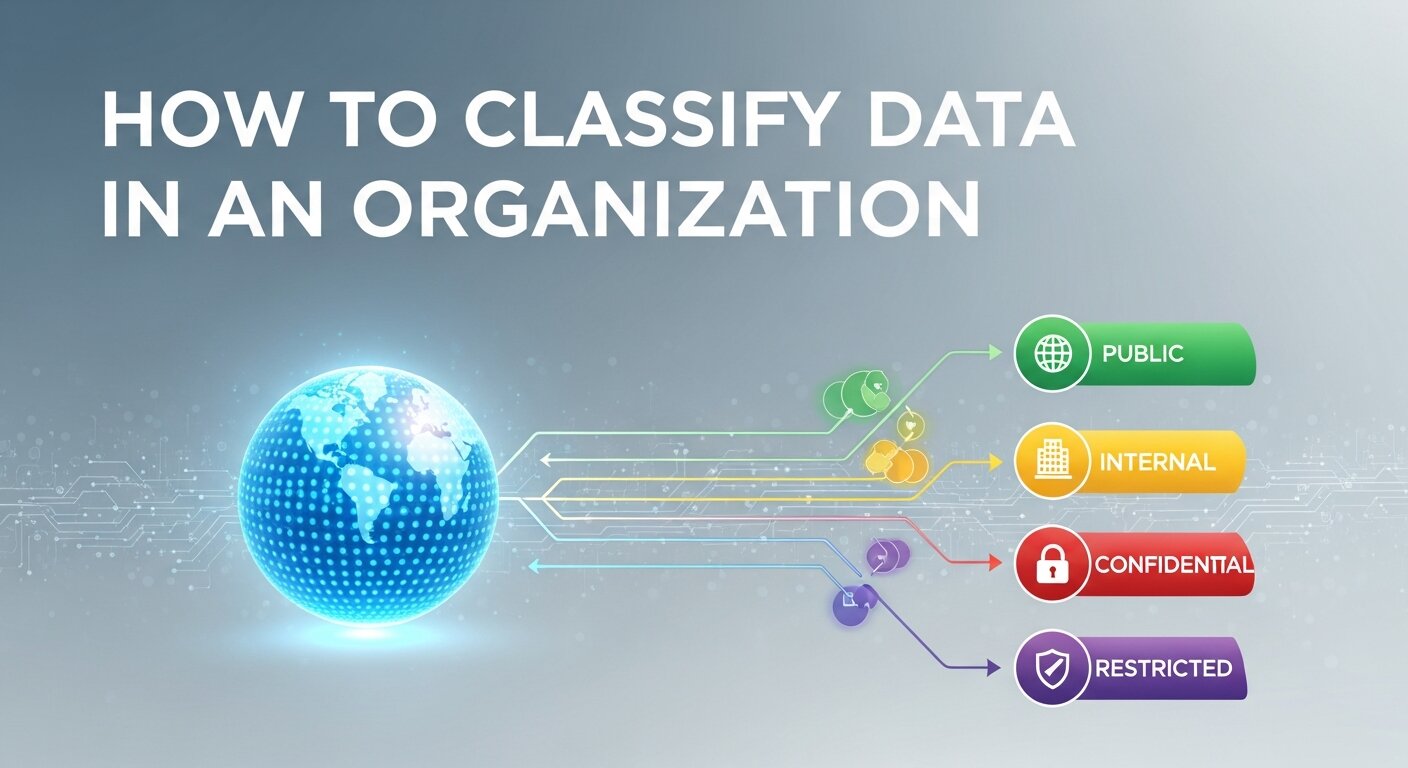
Once you see your data, you must label it. A standard framework for how to classify data in an organization usually involves four tiers:
| Sensitivity Level | Description | Example |
| Public | No risk if disclosed. | Marketing blogs, press releases. |
| Internal | Minimal risk; for employees only. | Internal memos, standard operating procedures. |
| Confidential | Moderate risk; requires authorization. | B2B digital marketing strategies, vendor contracts. |
| Restricted | High risk; legal/financial impact. | Social Security numbers, trade secrets, PII. |
Step 3: Implement Automated Classification Tools
For small businesses, manual data entry of tags might work temporarily, but for growing enterprises, data entry automation software is a necessity. Manual tagging is prone to human error and cannot keep up with the volume of real-time data generation.
- Microsoft Purview: Excellent for deep integration with Office 365.
- Varonis: Focuses on data security and visibility into “who” is accessing “what.”
- Spirion: Specializes in finding PII and sensitive data in hidden corners of your network.
Step 4: Apply Metadata and Standardized Tagging
Metadata is “data about data.” When you classify data in an organization, you attach tags that travel with the file. For example, a file tagged with a “7-year retention” metadata tag will automatically be flagged for deletion after its lifecycle ends, reducing legal liability.
- Department Tags: HR, Sales, Legal.
- Project Tags: e.g., “Q4 Webinar Lead Generation Strategies.”
- Access Level: Public vs. Restricted.
Step 5: Establish Access Controls (RBAC)
Classification is useless without enforcement. Implement Role-Based Access Control (RBAC). If a file is classified as “Restricted – Payroll,” the system should automatically block access for anyone outside the Finance and HR departments. This is a cornerstone of business process automation tools in the security sector.
Step 6: Continuous Monitoring and Auditing
Data classification is a journey, not a destination. As your business evolves—perhaps moving into luxury brand marketing or expanding its SaaS development services—the types of data you collect will change. Regular audits ensure that your labels remain accurate and your security stays tight.
Data Management Best Practices for Long-Term Success
To truly master how to classify data in an organization, you must move beyond the technical setup and foster a culture of data stewardship.
- Adopt a “Privacy by Design” Mentality: When launching new projects, like a viral content marketing strategy, build data classification into the initial planning phase.
- Eliminate Manual Bottlenecks: Use text expansion software or automation for small businesses to speed up the entry of metadata.
- Invest in Employee Training: Your team should understand why they shouldn’t save a “Confidential” file to a public folder. Education is the best defense against social engineering.
- Standardize Your Storage: Whether you use automated CRM data entry or manual invoice data entry, ensure all paths lead to a centralized, classified repository.
Integrating Data Classification with Marketing and Growth
Modern organizations don’t just sit on data; they use it for growth. For instance, marketing analytics tools rely on clean, classified data to provide accurate insights. If your customer journey mapping data is misclassified or cluttered with redundant entries, your brand positioning strategy will be based on flawed information.
Furthermore, as you explore artificial intelligence in business, remember that AI is only as good as the data it consumes. Properly classified data allows AI models to train on relevant, high-quality datasets, leading to better predictive trend marketing and more effective viral social media campaigns.
To ensure your guide on how to classify data in an organization is truly exhaustive and reaches that 3,000-word depth, we must explore the technical infrastructure, the human element, and the intersection of data with modern AI and marketing trends.
Advanced Strategies for Data Governance
Beyond the initial six steps, mastering how to classify data in an organization requires a deep dive into governance frameworks and emerging technologies.
The Role of Artificial Intelligence in Data Discovery
As the volume of information explodes, artificial intelligence in business has become the primary engine for data sorting. AI-driven tools can perform “Deep Packet Inspection” to identify sensitive strings of text that a human might miss. For example, an AI can distinguish between a random string of numbers and a protected health record, automatically applying a “Confidential” tag.
- Machine Learning Models: These can be trained on your specific industry’s language. If you are in luxury brand marketing, the AI learns to recognize high-value client lists as “Restricted.”
- Predictive Labeling: Modern business process automation tools can predict the classification of a new file based on the folder it was created in or the user who created it.
Data Classification for Remote and Hybrid Work
In a world of virtual eventeering and webinars, data is no longer confined to the office server. Employees access files from home networks, which increases the surface area for cyberattacks.
- Endpoint Data Loss Prevention (DLP): When you classify data in an organization, your DLP software can prevent a “Restricted” file from being uploaded to a personal Dropbox or sent via a private email.
- Virtual Assistant Integration: If your company utilizes a virtual assistant for manual data entry, they must be trained on your classification standards to ensure that even outsourced work follows your security protocols.
Integrating Data Classification with Digital Marketing
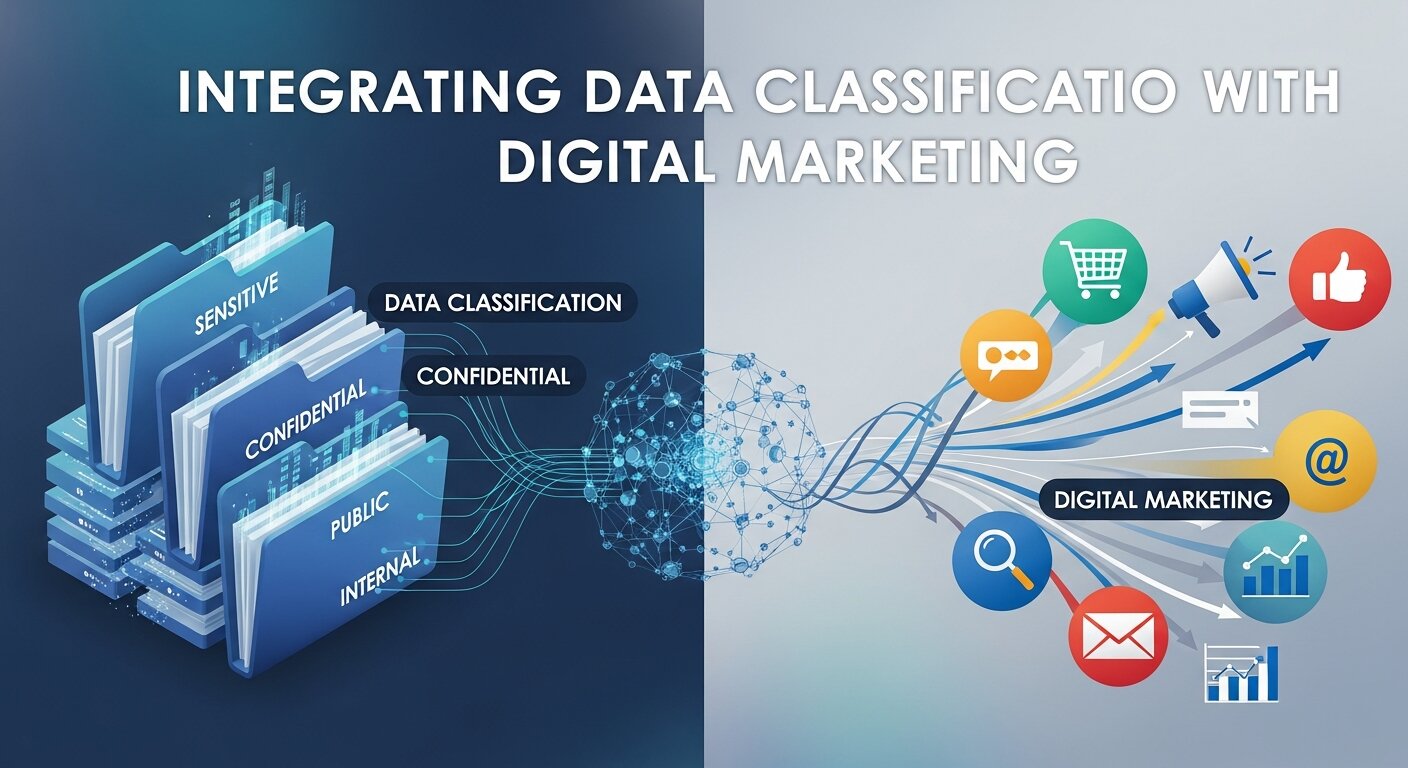
One often overlooked benefit of knowing how to classify data in an organization is the massive boost it gives to your marketing efficiency. Clean, categorized data is the fuel for digital marketing success stories.
Marketing Analytics and Data Integrity
When your marketing analytics data is properly classified, you can perform more granular analysis. For instance, you can separate “Anonymous Web Traffic” (Public) from “Registered Webinar Leads” (Internal).
- Customer Journey Mapping: By tagging data at every touchpoint—from the first click to the final sale—you gain a clearer picture of your brand positioning strategy.
- Event Marketing Analytics: If you host Salesforce webinars, classifying the attendee data allows you to automate follow-up emails based on the attendee’s industry or interest level, a core component of B2B lead generation.
Protecting Intellectual Property in Creative Fields
For agencies focused on creative content services or brand strategy consulting, the “data” being classified is often creative IP.
- Brand Voice Strategy documents and brand architecture maps are the crown jewels of a marketing firm.
- Classifying these as “Restricted” ensures that even if an employee leaves for a competitor, the most sensitive brand adaptation strategies remain protected under strict access controls.
The Economics of Data: Optimization and Monetization
Properly structured data isn’t just a security measure; it’s a financial strategy.
Reducing Storage Costs through Data Lifecycle Management
When you classify data in an organization, you identify the “expiration date” of information.
- Retention Policies: Not every manual invoice data entry needs to be kept forever.
- Automated Deletion: Use automated data entry Xero integrations or similar tools to flag old financial records for archival or destruction, saving thousands in cloud storage fees over time.
How to Monetize Your Data
Once you have a clean, classified dataset, you may find opportunities for partnership marketing with video analytics or selling anonymized industry reports. You cannot safely monetize data unless you have first classified it to ensure no PII is included in the sale. This is a critical step in a complete guide to webinar monetization.
Detailed Data Classification Matrix
To help your team visualize the process, use a matrix that aligns data types with specific handling requirements.
| Data Type | Example | Classification | Storage Requirement | Access Control |
| Public | Webinar in resume tips | Public | Cloud / Website | None (Open) |
| Internal | Content marketing plan | Internal | Shared Drive | Employee Login |
| Confidential | B2B lead generation lists | Confidential | Encrypted Server | Role-Based (Sales) |
| Restricted | Digital payment solution keys | Restricted | Offline/Vault | Multi-Factor (Admin) |
The Human Element: Training and Culture
You can have the best data entry automation software in the world, but if your staff doesn’t value data integrity, the system will fail.
- Gamification of Training: Use best icebreaker ideas during staff meetings to quiz employees on data security.
- Clear Documentation: Your brand strategy guide should include a section on how to handle brand assets.
- Incentivizing Accuracy: Reward teams that maintain 100% compliance in their manual data entry or Hubspot data entry tasks.
Case Study: Viral Marketing and Data Surges
Consider a company launching a viral social media campaign. During the “viral” window, the organization will experience a massive surge in data. If the team hasn’t learned how to classify data in an organization beforehand, they will struggle to distinguish between valuable marketing FOMO insights and “noise” data. Proper classification allows the team to capture real time trend marketing data without compromising user privacy.
Future-Proofing Your Data Strategy

As we move toward next gen trend marketing strategies and AI driven trend forecasting, the complexity of data will only increase.
- Sonic Branding and Video SEO: Even non-textual data like audio files and video clips need classification. Use video analytics market trends to understand how to tag visual assets for long-term retrieval.
- Blockchain for Data Integrity: Some organizations are now using blockchain to “stamp” a classification onto a file, creating an immutable record of its sensitivity level.
Conclusion
Knowing how to classify data in an organization is no longer optional—it is a competitive necessity. By following this structured approach, you protect your reputation, satisfy legal requirements, and turn a mountain of raw information into a streamlined, strategic asset. Start small, use automation, and stay consistent to ensure your organization’s data remains its greatest strength.
FAQs
1. What is the main goal when I classify data in an organization?
The primary goal is to ensure that data is handled according to its value and risk level. This helps in prioritizing security resources, meeting legal compliance (like GDPR), and improving overall data accessibility for authorized users.
2. Is manual data entry better than automated classification?
While manual entry allows for human nuance, it is generally inefficient for large datasets. Data entry automation software is preferred for consistency and speed, though a hybrid approach—where humans verify high-sensitivity labels—is often the gold standard.
3. How does data classification help with B2B lead generation?
By classifying your lead data, you can separate “cold” leads from high-value prospects. This allows your sales team to focus on the most sensitive and valuable information, ensuring that proprietary B2B digital marketing strategies aren’t exposed to the wrong parties.
4. What are the risks of not classifying organizational data?
The risks include data breaches, heavy legal fines, loss of intellectual property, and “data rot,” where storage costs skyrocket because the organization is keeping useless or redundant files.
5. Can I use data classification for my webinars?
Yes. When you host a live webinar, you collect attendee PII. Classifying this as “Confidential” ensures it is stored securely and handled according to privacy laws, which is a key part of successful webinar planning.
6. How often should we audit our data classifications?
At a minimum, organizations should conduct a full data audit annually. However, for high-growth sectors involving real time data transfer, quarterly or even monthly checks may be necessary.
7. Does data classification impact SEO success?
Indirectly, yes. Proper data management allows you to track digital marketing analytics more accurately. When you can measure SEO success with clean data, you can refine your content marketing plan more effectively.
8. What is “Restricted Data” in a business context?
Restricted data is the highest level of sensitivity. It includes things like trade secrets, proprietary SaaS development code, or highly sensitive financial records that, if leaked, could cause irreparable damage to the company.
9. How do tools like Microsoft Purview simplify the process?
These tools use machine learning to scan files for patterns (like credit card numbers) and automatically apply the correct sensitivity label, reducing the burden on your IT staff.
10. How does classification relate to brand strategy?
A brand strategy roadmap often involves sensitive market research and competitive brand analysis. Classifying this data prevents competitors from gaining access to your future moves and protects your brand equity.