Growing a business brings a unique set of challenges. One of the most common hurdles is maintaining a cohesive brand identity across multiple channels, regions, and campaigns. As your team expands and your marketing output multiplies, keeping every social media post, email newsletter, and pitch deck perfectly aligned with your brand guidelines becomes incredibly difficult.
Many marketing teams try to solve this problem by acting as brand police. Designers spend hours reviewing assets created by other departments. Marketers waste valuable time hunting down the correct font files. This manual approach severely bottlenecks productivity. It forces highly skilled creative professionals to spend their days doing repetitive administrative tasks instead of focusing on high-level strategy and design.
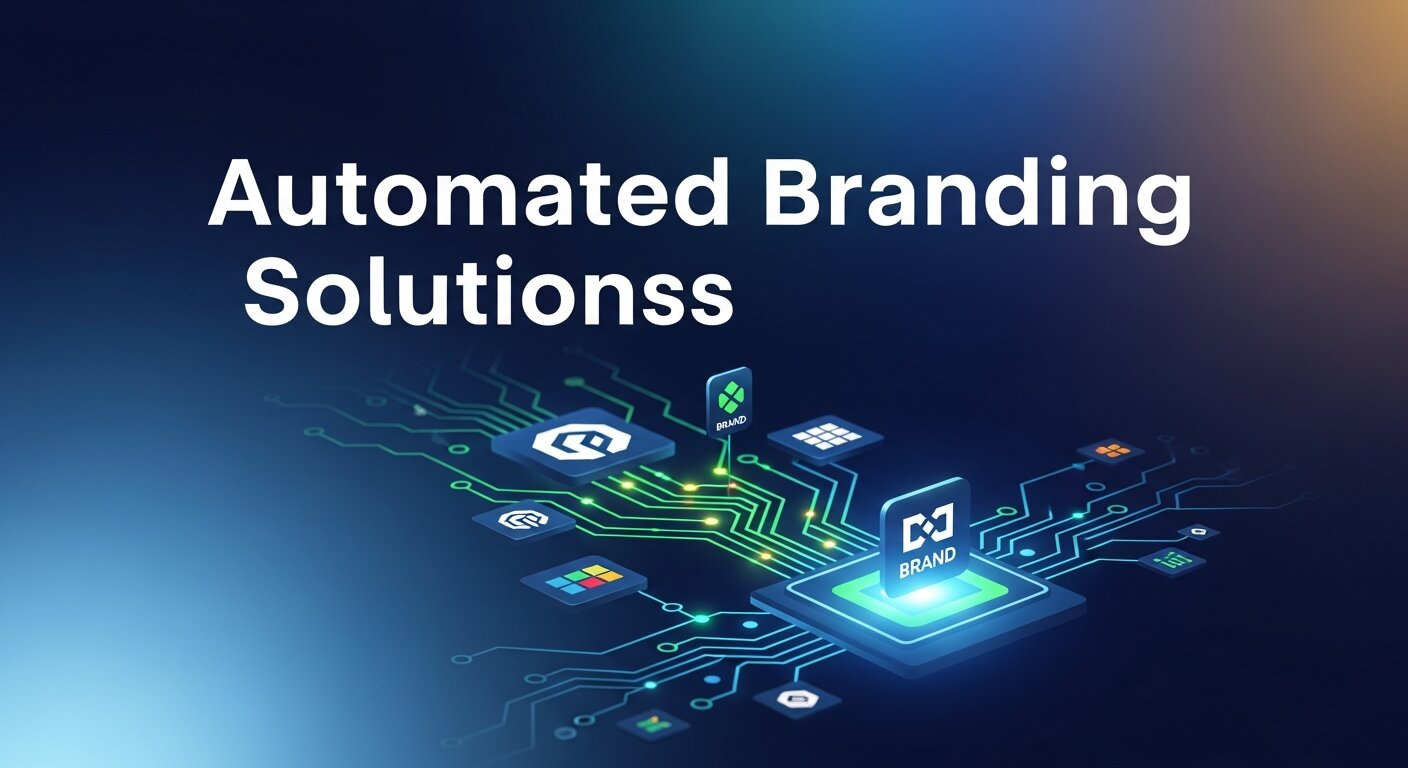
Automated branding solutions offer a better way forward. By leveraging software to enforce design rules and generate assets, companies can decentralize content creation without losing control over their identity. Teams across the entire organization can generate on-brand materials instantly.
This guide explores how automated branding works, the specific benefits it brings to growing organizations, and the steps you can take to implement these systems effectively. You will learn how to empower your team to create faster, while keeping your brand identity stronger than ever.
What is Automated Branding?
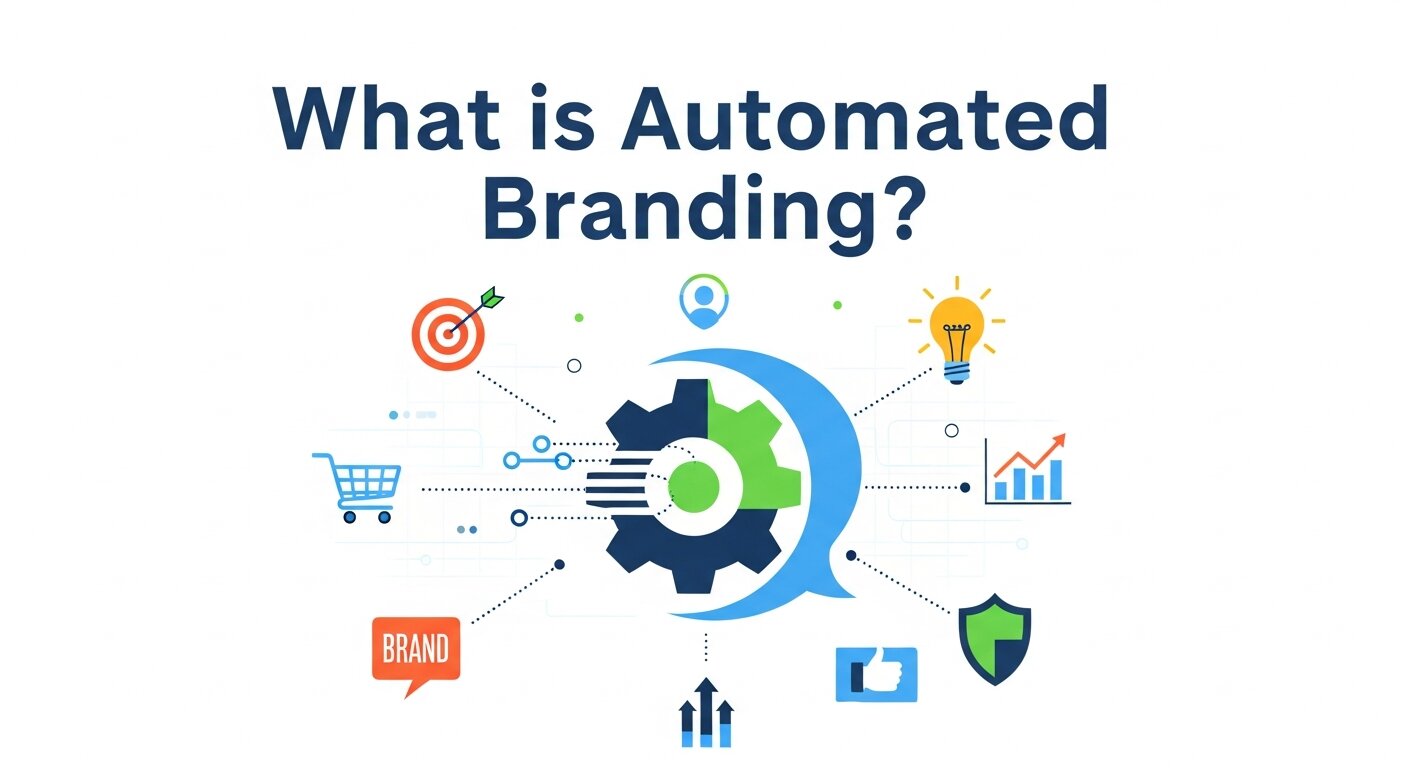
Automated branding is the practice of using software platforms and artificial intelligence to manage, create, and distribute brand assets. Instead of relying on manual design work for every single piece of collateral, organizations set up intelligent templates and centralized rules. When a sales rep needs a custom presentation or a regional marketer needs a localized social media graphic, the software generates it automatically according to the established brand guidelines.
This shift changes the fundamental role of the design team. Rather than creating every asset from scratch, designers build the foundational systems. They define the parameters for how logos, colors, typography, and imagery can interact. The software then takes over the repetitive execution.
The Shift from Manual to Automated Processes
Historically, a marketer would send a brief to a designer for a simple banner ad. The designer would create the ad, send it back for review, make minor text edits based on feedback, and finally export the file. This cycle could take days. With automated branding solutions, the marketer simply types their approved copy into a smart template. The software instantly scales the text, applies the correct brand colors, and exports the banner in multiple sizes. A process that once took days now takes minutes.
The Core Components of Automated Branding Solutions
To understand how these platforms streamline workflows at scale, you need to look at the underlying technology. Most modern platforms rely on three core pillars to function effectively.
Dynamic Template Generation
Static templates have existed for years, but they often break when users input too much text or swap out an image. Dynamic templates are different. They contain built-in logic. If a user types a long headline, the font size automatically scales down to fit the designated area perfectly. If a user uploads a photo, the template automatically applies the correct brand filters and crops it to the right aspect ratio. This logic ensures that non-designers cannot accidentally create something that looks off-brand.
Centralized Digital Asset Management (DAM)
You cannot automate brand creation if your assets are scattered across local hard drives and confusing cloud folders. A robust DAM system is a critical component of automated branding. It acts as the single source of truth for all approved logos, icons, fonts, and photography. When you update a logo in the DAM, that change automatically cascades down to all connected templates. Everyone in the organization always has access to the most current files.
AI-Driven Content Adaptation
Artificial intelligence is rapidly expanding the capabilities of brand automation. AI can now analyze a single piece of creative and automatically adapt it for entirely different formats. You can upload a horizontal YouTube thumbnail, and the AI will intelligently re-compose the elements to create a vertical Instagram Story and a square Facebook post. The system recognizes the focal point of the image and the hierarchy of the text, ensuring the design remains effective regardless of the dimensions.
Why Your Business Needs Automated Branding
Investing in new software requires a clear business case. Transitioning to automated branding solutions provides measurable returns across several different areas of your organization.
Unbreakable Brand Consistency
Brand equity is built through repetition. When a customer sees your messaging, it should look and feel immediately recognizable. Manual asset creation leaves too much room for human error. Automated systems lock down critical design elements. A sales representative cannot accidentally use the wrong shade of blue because the system simply does not allow it. This strict enforcement guarantees that your brand looks professional and cohesive at every single touchpoint.
Unmatched Speed to Market
Opportunities in digital marketing move fast. If a relevant trend goes viral on social media, you need to capitalize on it immediately. Waiting for a designer to clear their backlog means missing the window of opportunity. Automated branding empowers your front-line employees to act quickly. A social media manager can generate an on-brand graphic and publish it within five minutes. This agility gives you a significant advantage over competitors bogged down by slow approval processes.
Significant Cost Reduction
Hiring a massive design team to handle basic asset localization and formatting is expensive. By automating the repetitive tasks, you maximize the output of your existing team. You reduce the need for external freelance support for basic formatting jobs. The software handles the busywork, allowing your creative team to dedicate their expensive billable hours to high-value campaigns that actually drive revenue.
Implementing Automated Branding Solutions Successfully
Purchasing a software license is only the first step. Rolling out an automated system across a large organization requires careful planning and change management.
Audit Your Current Brand Assets
Before you can build templates, you must organize your foundational elements. Conduct a comprehensive audit of your current brand guidelines. Gather all approved logo files, establish your primary and secondary color palettes in exact hex codes, and collect all necessary typography files. Discard any outdated assets to ensure they do not accidentally make their way into your new system.
Choose the Right Platform
The market for automated branding solutions is growing, and different platforms cater to different needs. Some focus heavily on enterprise-level DAM integrations, while others prioritize user-friendly template builders for small teams. Evaluate your specific bottlenecks. Do you struggle more with finding files, or with generating social graphics? Select a platform that specifically addresses your biggest operational pain points.
Train Your Team for Adoption
People are often resistant to learning new software. To ensure high adoption rates, you must demonstrate how the tool makes their jobs easier. Hold targeted training sessions for different departments. Show the sales team how to generate pitch decks instantly. Show the HR team how to create recruitment flyers without waiting for marketing approval. When employees realize they no longer have to wait days for a simple design request, they will eagerly adopt the new workflow.
Common Pitfalls to Avoid During Transition
Transitioning to automated systems can occasionally hit speed bumps. Being aware of these common mistakes will help you navigate the implementation phase smoothly.
One major mistake is locking down templates too tightly. If you restrict every single element, users will feel frustrated by the lack of flexibility and may revert to going rogue and making their own unapproved designs. Find a balance. Lock down the critical brand elements like logos and fonts, but give users enough freedom to swap images and edit copy so the collateral actually serves their specific needs.
Another pitfall is failing to establish a maintenance schedule. Brands evolve. You will introduce new campaign colors, update your messaging, and retire old photography. Appoint a system administrator responsible for routinely auditing the automated platform to ensure the templates and assets accurately reflect your current brand identity.
Real-World Use Cases of Automated Branding
Automated branding solutions are already transforming how modern businesses operate across different industries. In e-commerce, companies use automated templates to instantly generate product ads in multiple sizes for platforms like Instagram, Facebook, and Google. In education, institutions create consistent course materials and promotional banners without relying on design teams for every update. Even SaaS companies use these systems to produce onboarding emails, pitch decks, and feature announcements at scale. Marketing agencies also benefit by managing multiple client brands through centralized systems, reducing turnaround time significantly. These real-world applications show how automation is not just a productivity tool but a strategic advantage that helps businesses scale faster while maintaining complete brand consistency.
Integration with Marketing and Sales Workflows
One of the biggest advantages of automated branding solutions is their ability to seamlessly integrate into existing marketing and sales workflows. Instead of disrupting operations, these tools enhance productivity by connecting directly with CRM systems, email marketing platforms, and content management tools. Sales teams can generate customized presentations or proposal decks instantly, while marketing teams can launch campaign creatives without waiting for design approval. This integration eliminates communication gaps between departments and reduces project delays. It also ensures that every customer-facing asset remains aligned with brand guidelines. As a result, teams can collaborate more efficiently, respond to opportunities faster, and maintain a unified brand presence across all touchpoints.
Future of Automated Branding Technology
The future of automated branding is moving toward deeper artificial intelligence integration and fully adaptive brand systems. Instead of relying only on predefined templates, future platforms will analyze audience behavior and automatically adjust visuals, messaging, and layouts in real time. Hyper-personalization will become a standard feature, allowing brands to deliver unique experiences to each user based on preferences and engagement history. Voice and generative AI tools will also play a major role in creating dynamic brand content instantly. Additionally, augmented reality and immersive media will extend branding beyond screens into interactive environments. As these technologies evolve, businesses that adopt early will gain a significant competitive advantage in speed, creativity, and customer engagement.
Frequently Asked Questions (FAQ)
1. What are automated branding solutions?
Automated branding solutions are software tools that help businesses create, manage, and distribute brand assets automatically. They use templates, rules, and sometimes AI to ensure all content stays consistent with brand guidelines.
2. How do automated branding tools improve consistency?
These tools enforce predefined brand rules such as colors, fonts, logos, and layouts. This eliminates human error and ensures that every piece of content looks uniform across all channels.
3. Can non-designers use automated branding platforms?
Yes, most platforms are designed for ease of use. Non-designers can create professional-looking assets by simply inputting text or images into pre-approved templates.
4. What is a Digital Asset Management (DAM) system?
A DAM system is a centralized platform where all brand assets like logos, images, and fonts are stored, organized, and accessed by teams. It ensures everyone uses the latest approved files.
5. Is automated branding suitable for small businesses?
Absolutely. Small businesses benefit greatly by saving time, reducing costs, and maintaining a professional brand image without needing a large design team.
6. Does automated branding replace designers?
No, it complements designers by removing repetitive tasks. Designers can focus more on strategy, creativity, and building scalable brand systems.
7. How long does it take to implement automated branding?
Implementation time varies depending on the organization. Small teams may set it up in a few days, while larger companies may take weeks or months to fully integrate the system.
8. What are the main benefits of automated branding solutions?
Key benefits include improved brand consistency, faster content creation, reduced costs, and better collaboration across teams.
9. Are automated branding tools customizable?
Yes, most platforms allow customization of templates, workflows, and permissions to match your specific brand and business needs.
10. What should I consider before choosing a platform?
You should evaluate your team’s needs, ease of use, integration capabilities, scalability, and whether the platform supports your current workflow and brand requirements.
Take the Next Step Toward Effortless Brand Management
Scaling a brand identity used to require an army of designers and endless patience. That is no longer the case. By embracing automated branding solutions, you can eliminate the friction between your creative guidelines and your daily marketing execution.
Your organization generates data, content, and collateral faster than ever. It is time for your brand management processes to catch up. Start by auditing your current workflows and identifying where manual design tasks are slowing your team down. Research the platforms available, secure buy-in from your creative leads, and begin building the infrastructure that will allow your brand to scale seamlessly.