Artificial intelligence is no longer just a futuristic concept; it is the engine driving today’s global economy. This guide explores exactly how artificial intelligence is transforming modern business operations, strategy, and innovation for a competitive future.
This comprehensive guide examines how artificial intelligence is transforming modern business by streamlining operations, enhancing customer experiences, and fueling data-driven decision-making. We cover key applications across marketing, HR, and cybersecurity, address implementation challenges, and provide actionable tips for integrating AI to maximize ROI and stay ahead in the marketplace.
Understanding Artificial Intelligence in Business
To truly grasp how artificial intelligence is transforming modern business, we must first demystify what AI actually is in a corporate context. At its core, AI refers to the simulation of human intelligence processes by computer systems. These processes include learning (the acquisition of information and rules for using the information), reasoning (using rules to reach approximate or definite conclusions), and self-correction.
For decades, business intelligence relied on static reports and historical data. Today, how artificial intelligence is transforming modern business is evident in the shift toward predictive and prescriptive analytics. It is not just about what happened; it is about what will happen and how we should react.
The Core Technologies of Business AI
Several subsets of AI are currently reshaping the corporate landscape:
- Machine Learning (ML): This is the backbone of most business AI. ML algorithms allow software to become more accurate at predicting outcomes without being explicitly programmed to do so. For instance, how artificial intelligence is transforming modern business logic can be seen in Netflix’s recommendation engine, which learns from user behavior to suggest content.
- Natural Language Processing (NLP): NLP enables machines to understand and interpret human language. This technology powers the chatbots that handle customer service inquiries and the sentiment analysis tools that track brand reputation.
- Computer Vision: This field enables computers to derive meaningful information from digital images, videos, and other visual inputs. In manufacturing, computer vision is used for quality control, spotting defects that human eyes might miss.
- Robotic Process Automation (RPA): While not always “pure” AI, RPA combined with cognitive technologies is a massive force. It handles repetitive tasks like data entry, allowing human workers to focus on strategy.
When we ask how artificial intelligence is transforming modern business, the answer lies in the convergence of these technologies. They are not operating in silos; they are integrated into comprehensive platforms that drive efficiency and innovation.
Key Ways AI Is Reshaping Business
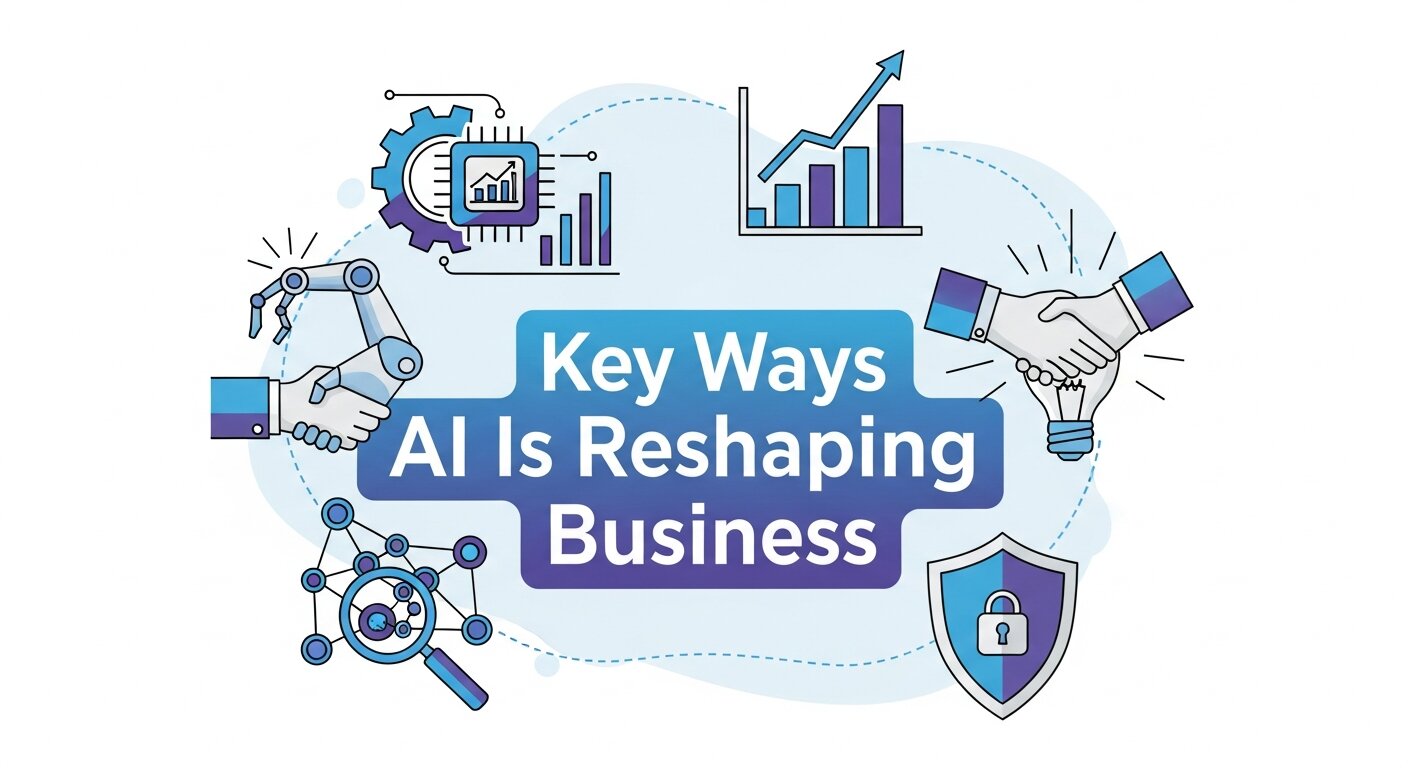
The impact of AI is pervasive, touching every department from the mailroom to the boardroom. Here is a detailed look at how artificial intelligence is transforming modern business across seven critical areas.
1. Enhancing Decision Making with Data-Driven Insights
The most significant shift in how artificial intelligence is transforming modern business is the transition from intuition-based to data-based decision-making. Executives no longer need to rely on gut feelings. According to sources like Google Analytics, data volume is exploding, and human analysts simply cannot process it all.
AI systems can crunch terabytes of data in seconds to identify patterns and anomalies. For example, in the financial sector, AI algorithms analyze market trends, news sentiment, and economic indicators to make split-second trading decisions.
Real-World Application:
Supply chain managers use predictive analytics to forecast demand surges. By analyzing weather patterns, social media trends, and historical sales data, they can optimize inventory levels, reducing both waste and stockouts. This is a prime example of how artificial intelligence is transforming modern business logistics into a precision science.
2. Improving Customer Experiences
Customer expectations are at an all-time high. Consumers want immediate answers, personalized recommendations, and seamless interactions. How artificial intelligence is transforming modern business customer service is through hyper-personalization and 24/7 availability.
- Chatbots and Virtual Assistants: Modern chatbots are indistinguishable from humans in many interactions. They handle routine queries instantly, freeing up human agents for complex issues.
- Personalization Engines: Companies like Spotify and Amazon set the gold standard here. By analyzing past behavior, AI predicts what a customer wants next. This level of curated experience is exactly how artificial intelligence is transforming modern business relationships from transactional to relational.
Takeaway: If you aren’t using AI to personalize your customer journey, you are likely falling behind competitors who are.
3. Driving Marketing Strategies and Personalization
Marketing has arguably seen the most creative disruption. How artificial intelligence is transforming modern business marketing strategies involves moving from “spray and pray” tactics to surgical precision targeting.
Tools like SEMrush and Ahrefs utilize AI to help marketers understand search intent and competition. AI analyzes consumer behavior across channels to determine the best time to send an email, the most effective ad copy, and the ideal platform for engagement.
Impact on Content Creation:
Generative AI is now writing product descriptions, drafting social media posts, and even generating video content. This allows marketing teams to scale their output without compromising quality. How artificial intelligence is transforming modern business marketing is by enabling mass personalization—sending a unique message to millions of people simultaneously.
4. Streamlining Operations Through Automation
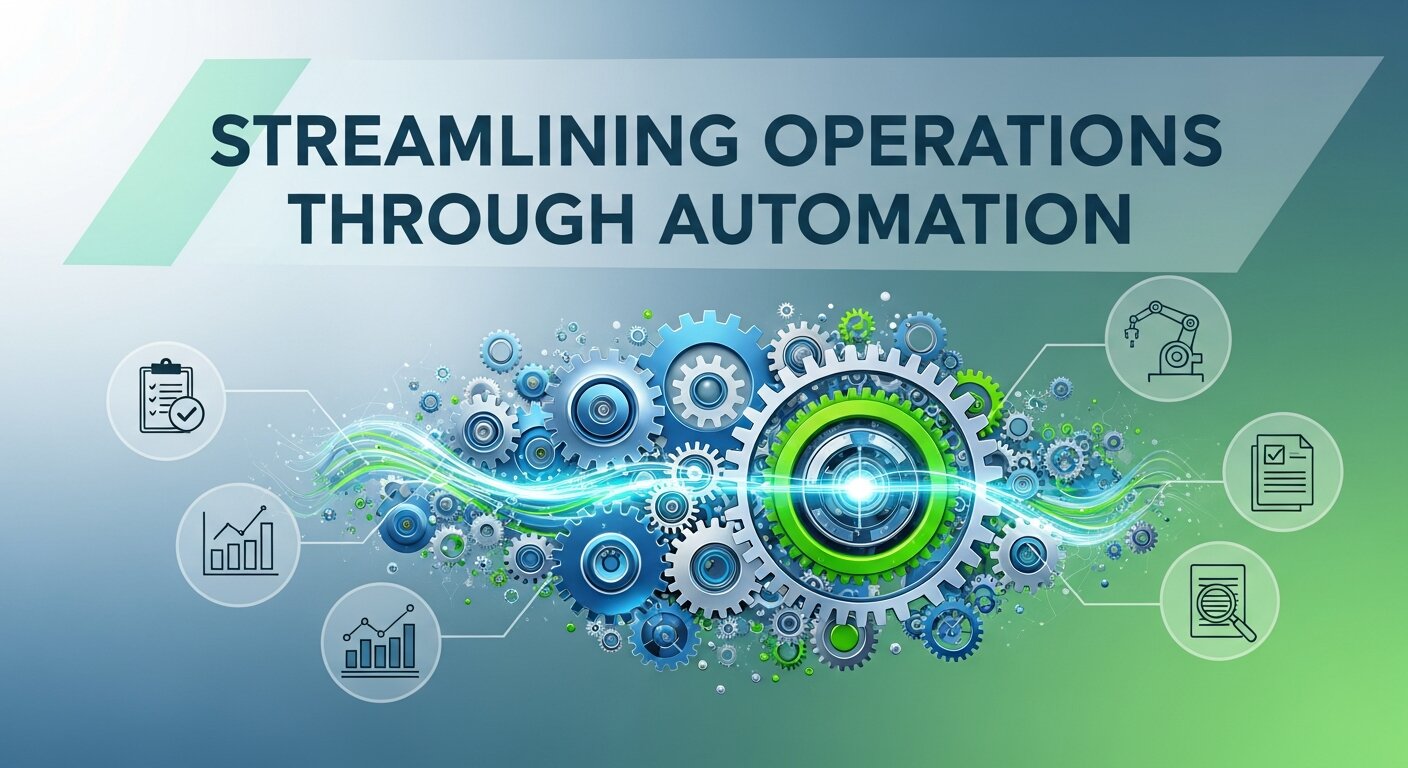
Efficiency is the name of the game. How artificial intelligence is transforming modern business operations is best viewed through the lens of automation. This goes beyond simple assembly lines. We are talking about “intelligent automation.”
Robotic Process Automation (RPA) handles high-volume, repetitive tasks. For example, in the insurance industry, claims processing used to take days. Now, AI-driven systems can verify documents, assess damage through computer vision, and approve payouts in minutes.
- Data Entry Automation: As highlighted by niche experts like Data Entry Ninja, automating data entry reduces human error to near zero.
- Workflow Optimization: AI monitors workflows to identify bottlenecks. If a specific approval process always delays projects by two days, the AI flags it and suggests a streamlined alternative.
This operational efficiency is a cornerstone of how artificial intelligence is transforming modern business profitability.
5. Innovating Product and Service Development
Innovation is no longer just a creative process; it is a data-driven one. How artificial intelligence is transforming modern business R&D involves using machine learning to predict which products will succeed before they are even built.
In the pharmaceutical industry, AI is shortening drug discovery timelines by years. Algorithms simulate how different molecules interact, identifying promising candidates for new medicines much faster than traditional lab testing.
Consumer Feedback Loops:
AI tools scrape the web for customer reviews and social media mentions to understand pain points with current products. This real-time feedback loop ensures that new iterations directly address market needs. This responsiveness is a key element of how artificial intelligence is transforming modern business competitiveness.
6. Enhancing Recruitment and Human Resources Management
Finding the right talent is difficult, but how artificial intelligence is transforming modern business HR practices is making it easier. AI-powered recruitment tools can scan thousands of resumes in seconds, ranking candidates based on skills and experience that match the job description.
- Bias Reduction: While algorithms must be carefully audited, properly tuned AI can reduce unconscious bias in hiring by focusing purely on data points rather than demographics.
- Employee Retention: AI analyzes employee engagement data to predict churn. If productivity drops or engagement scores lower, HR is alerted to intervene before valuable talent leaves.
This strategic application of technology shows how artificial intelligence is transforming modern business culture and workforce management.
7. Mitigating Risks and Enhancing Cybersecurity
As businesses go digital, cyber threats grow. How artificial intelligence is transforming modern business security is by shifting from reactive to proactive defense. Traditional firewalls work based on known rules. AI, however, establishes a baseline of “normal” network behavior and spots anomalies in real-time.
If a user who normally logs in from New York at 9 AM suddenly downloads terabytes of data from a distinct location at midnight, AI flags it immediately. Financial institutions use this for fraud detection, saving billions annually. This protective capability is a critical aspect of how artificial intelligence is transforming modern business sustainability.
Challenges of Implementing AI in Business
While the benefits are clear, the path to adoption is not without hurdles. Understanding how artificial intelligence is transforming modern business also means acknowledging the friction points.
High Initial Investment
Quality AI solutions are not cheap. Custom machine learning models require significant investment in infrastructure and talent. However, the cost of not adopting AI—and becoming obsolete—is often higher.
Data Privacy and Ethics
With great power comes great responsibility. How artificial intelligence is transforming modern business ethics is a hot topic. Companies must navigate GDPR, CCPA, and other privacy regulations. There is also the “black box” problem, where AI makes a decision that humans cannot explain. Transparency is crucial.
The Skills Gap
There is a shortage of data scientists and AI specialists. Companies often struggle to find the talent needed to build and maintain these systems. Upskilling current employees is becoming a necessity to bridge this gap.
Cultural Resistance
Employees often fear that AI will replace them. A major part of how artificial intelligence is transforming modern business leadership involves change management—assuring teams that AI is a tool to augment their capabilities, not replace their livelihoods.
Tips for Successfully Using AI in Business
To leverage how artificial intelligence is transforming modern business, organizations need a strategic approach. Here are actionable tips to ensure success.
Start Small and Scale Fast
Do not try to overhaul your entire business overnight. Start with a pilot project, such as automating a specific data entry task or deploying a chatbot on a landing page. Prove the ROI, then expand.
Invest in Data Infrastructure
AI is only as good as the data it feeds on. Before buying expensive AI tools, ensure your data is clean, organized, and accessible. Data silos are the enemy of AI success.
Focus on Human-AI Collaboration
The most effective examples of how artificial intelligence is transforming modern business involve humans and machines working together. Use AI to handle the mundane, analytical tasks, freeing your humans to do what they do best: be creative, empathetic, and strategic.
Monitor and Measure
Establish clear KPIs. Are you trying to reduce call wait times? Increase conversion rates? Automate inventory? regularly review performance against these metrics to ensure the technology is delivering value.
Partner with Experts
You don’t have to build everything in-house. Platforms like Wikipedia offer vast resources on the history and theory, but for implementation, partner with established AI vendors or consultants who understand your industry.
Conclusion
The evidence is overwhelming: how artificial intelligence is transforming modern business is not a temporary trend but a fundamental shift in the corporate paradigm. From the way we make decisions to how we protect our digital assets, AI is the new standard for operational excellence.
Businesses that embrace this transformation will find themselves leaner, faster, and more attuned to their customers’ needs. Those that resist risk obsolescence. The question is no longer if you should use AI, but how fast you can integrate it to unlock new value. By understanding how artificial intelligence is transforming modern business, you can position your organization at the forefront of this technological revolution, ready to capitalize on the opportunities of tomorrow.
FAQs:
1. How is artificial intelligence transforming modern business primarily?
How artificial intelligence is transforming modern business is primarily through automation, predictive analytics, and enhanced personalization. It allows companies to process vast amounts of data to make smarter decisions, automate repetitive tasks to save costs, and create highly tailored experiences for customers.
2. Will AI replace human jobs in modern business?
While AI will automate routine and repetitive tasks (like data entry or basic customer support), it is more likely to augment human roles rather than replace them entirely. The transformation lies in shifting human focus toward creative, strategic, and interpersonal tasks that machines cannot replicate.
3. What industries are being most affected by AI?
AI is reshaping every industry, but the impact is most visible in healthcare (diagnostics), finance (fraud detection and trading), retail (inventory and personalization), and manufacturing (predictive maintenance). How artificial intelligence is transforming modern business in these sectors serves as a blueprint for others.
4. Is AI expensive for small businesses to implement?
Initially, AI was the domain of tech giants. However, thanks to SaaS (Software as a Service) platforms, small businesses can now access affordable AI tools for email marketing, chatbots, and accounting. The barrier to entry has lowered significantly.
5. How does AI improve customer service?
AI improves customer service through 24/7 chatbots and virtual assistants that can resolve common queries instantly. Furthermore, AI analyzes customer sentiment and history to provide agents with real-time suggestions, making human interactions more effective.
6. What is the role of data in AI transformation?
Data is the fuel for AI. Without clean, historical data, machine learning algorithms cannot learn or make accurate predictions. Understanding how artificial intelligence is transforming modern business requires acknowledging that data management is now a core business competency.
7. Can AI help with business marketing?
Absolutely. AI tools like Backlinko highlight how SEO and content strategies are evolving with AI. AI helps in identifying target audiences, optimizing ad spend, generating content ideas, and personalizing email campaigns to increase open rates.
8. What are the risks of using AI in business?
The main risks include data privacy breaches, algorithmic bias, and over-reliance on technology without human oversight. Mitigating these risks involves strict governance frameworks and continuous monitoring of AI systems.
9. How does AI help in decision making?
AI removes guesswork. By analyzing historical trends and current market data, AI provides predictive insights. Executives can use these insights to forecast sales, anticipate market shifts, and allocate resources more efficiently.
10. How can I start implementing AI in my business today?
Start by identifying pain points in your current workflows. Is it slow customer response times? Inaccurate inventory? Choose one