If you’ve ever wondered how some brands seem to appear everywhere at once, gaining recognition that would have taken a decade just a few years ago, the answer often involves artificial intelligence working behind the scenes. From generating logos to monitoring brand sentiment across millions of social posts, AI is reshaping how businesses build and protect their identities.
This post breaks down practical AI-powered branding strategies you can use to accelerate growth, sharpen your brand recognition, and stay ahead of competitors. Whether you run a startup or manage marketing for an established company, you’ll find tactics worth testing.
What is AI-powered branding?
AI-powered branding is the practice of using artificial intelligence tools to create, manage, and grow a brand. This includes everything from designing visual assets and writing copy to tracking how people perceive your brand online.
Traditional branding relies heavily on human intuition, manual research, and slow feedback loops. AI changes that equation. Machine learning models can analyze customer data at scale, spot patterns humans might miss, and produce branded content in seconds rather than days.
The result is a faster, more responsive approach to building a brand. Instead of guessing what resonates with your audience, you can use data to guide nearly every decision—from the colors in your logo to the tone of your social media captions.
Why AI matters for brand growth
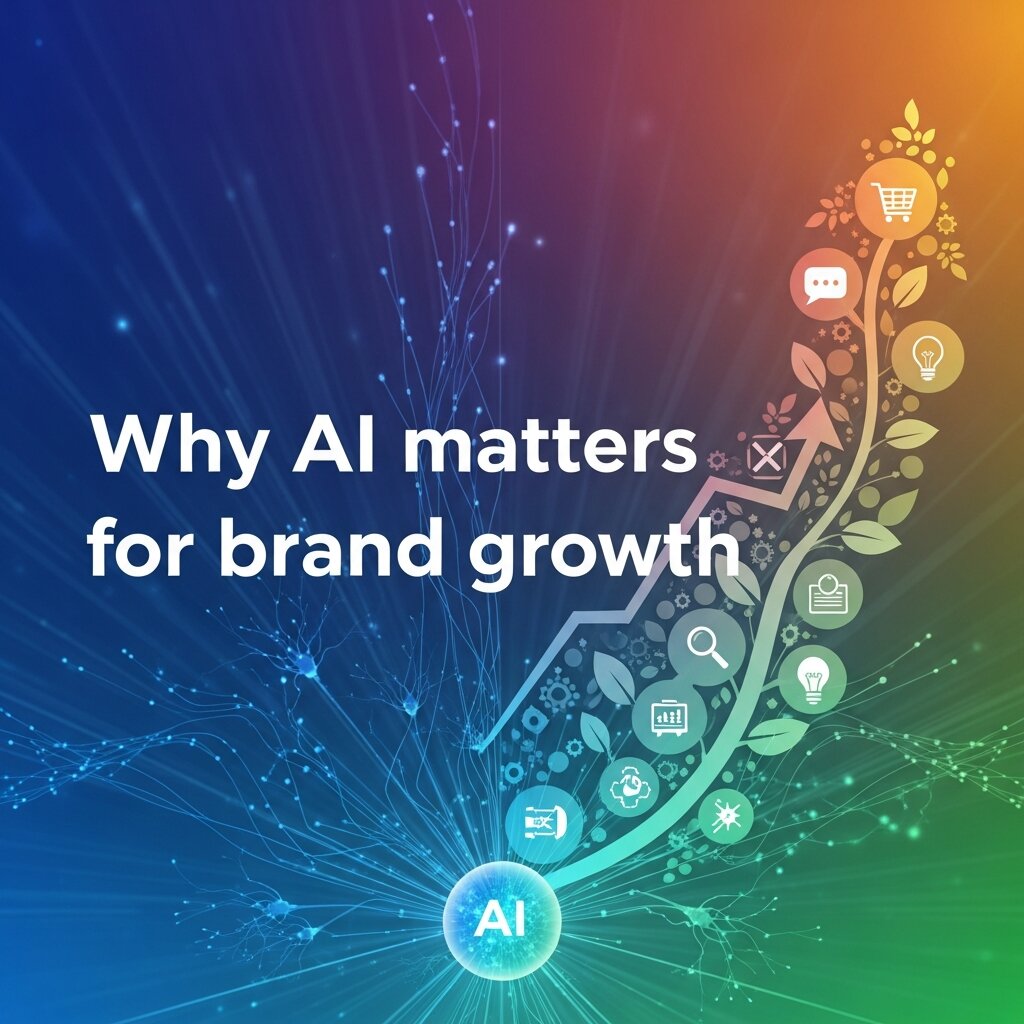
Speed and consistency are two of the biggest challenges in branding. AI tackles both head-on.
When you’re trying to grow quickly, you need to produce a lot of content across many channels. Doing this manually stretches teams thin and often leads to inconsistency. AI tools help maintain a single, cohesive brand voice and look, even as output increases.
There’s also the matter of cost. Hiring a full creative team, a research department, and a social listening crew is expensive. AI-powered tools let smaller teams punch well above their weight, accessing capabilities that were once reserved for large enterprises with deep pockets.
Finally, AI helps you stay relevant. Markets move fast, and consumer preferences shift constantly. With automated brand tracking and real-time analysis, you can adapt your messaging before trends pass you by.
Core AI-powered branding strategies
Let’s get into the strategies that actually move the needle. Each of these can be implemented independently, but they work best as part of a connected branding system.
Generate visual assets at scale
Logos, social graphics, ad creative, packaging mockups—visual identity is the most recognizable part of any brand. AI design tools can now produce high-quality variations of these assets in minutes.
Tools like Midjourney, Adobe Firefly, and Canva’s AI features let you experiment with dozens of design directions quickly. You can test different color palettes, layouts, and styles, then refine the ones that perform best. This rapid iteration helps you land on a strong visual identity faster than traditional design cycles allow.
The key is to give the AI clear creative direction. The better your prompts and brand guidelines, the more on-brand and useful the output will be.
Create consistent brand copy
Words carry your brand voice. AI writing tools help you produce blog posts, product descriptions, email campaigns, and social captions that all sound like they came from the same source.
To keep things consistent, feed the AI your brand voice guidelines, examples of past content, and key messaging points. Many platforms now let you save a brand voice profile, so every piece of generated copy stays aligned with your tone—whether playful, authoritative, or somewhere in between.
This is especially valuable for companies scaling content across multiple markets or languages, where keeping a unified voice manually becomes nearly impossible.
Personalize customer experiences
Recognition isn’t just about being seen—it’s about being remembered for the right reasons. AI lets you personalize how customers experience your brand at scale.
By analyzing browsing behavior, purchase history, and engagement data, AI can tailor product recommendations, email content, and even website layouts to individual users. A shopper browsing home automation brands, for example, can be served content and offers specific to smart home products they’ve shown interest in.
This kind of personalization builds stronger emotional connections. When customers feel a brand understands their needs, they’re more likely to return and recommend it to others.
Monitor your brand reputation automatically
You can’t manage what you can’t measure. Automated brand tracking tools scan social media, review sites, news outlets, and forums to tell you exactly how people talk about your brand.
These tools use sentiment analysis to flag whether mentions are positive, negative, or neutral. They can alert you to a sudden spike in negative chatter, helping you respond before a small issue becomes a full crisis. Platforms like Brandwatch, Mention, and Sprout Social offer this kind of real-time monitoring.
Beyond crisis management, automated brand management gives you ongoing insight into how your reputation evolves. You’ll learn which campaigns land, which products generate buzz, and where your messaging falls flat.
Analyze competitors with AI
Knowing what your competitors are doing helps you carve out your own space. AI tools can track competitor content, ad spend, keyword strategies, and social performance, then surface insights you can act on.
Instead of manually checking competitor channels, you get automated reports highlighting gaps and opportunities. Maybe a rival is ignoring a key audience segment, or a particular content format is driving their engagement. These insights help you position your brand more sharply.
How different industries use AI branding
AI-powered branding isn’t one-size-fits-all. Different sectors apply these strategies in ways that suit their unique challenges.
In retail and e-commerce, brands lean heavily on personalization and visual content generation to stand out in crowded marketplaces. Tech companies, including home automation brands, use AI to communicate complex products simply and to track fast-moving customer sentiment around new features.
Service businesses often focus on reputation management, using automated brand tracking to maintain trust and respond quickly to feedback. Meanwhile, media and entertainment brands use AI to test creative concepts and predict which content will resonate before they invest in full production.
The common thread is that AI helps each industry move faster and make decisions backed by data rather than guesswork.
Building an AI branding workflow
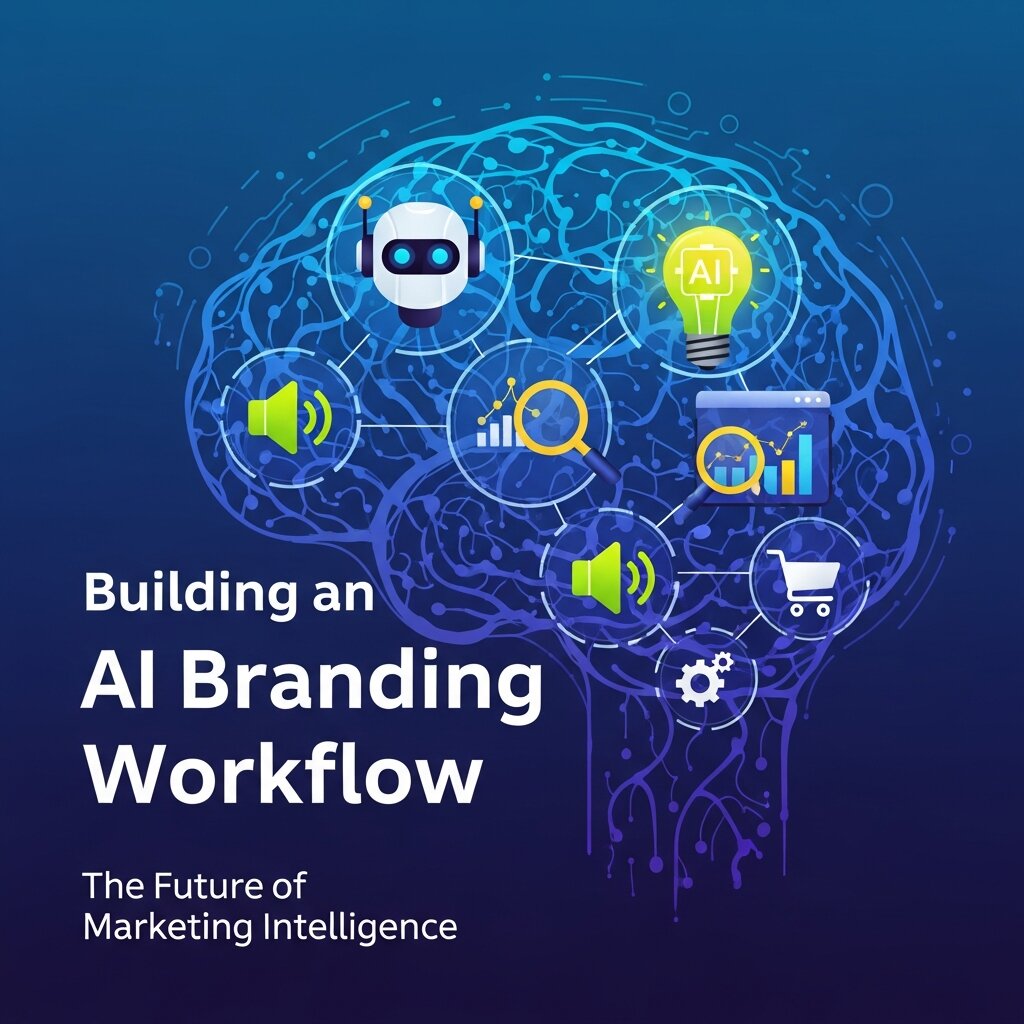
Adopting AI-powered branding works best when you treat it as a system rather than a collection of disconnected tools. Here’s a practical way to structure your workflow.
Start with strategy. Define your brand voice, visual guidelines, and core messaging. AI amplifies whatever direction you give it, so a strong foundation matters more than ever.
Next, choose tools that fit your specific needs. You might use one platform for content creation, another for design, and a third for automated brand management. Look for tools that integrate well together to avoid juggling disconnected systems.
Then, build feedback loops. Use brand tracking data to see what’s working, and feed those insights back into your content and design decisions. This creates a cycle of continuous improvement that gets sharper over time.
Finally, keep humans in the loop. AI handles speed and scale beautifully, but human judgment ensures your brand stays authentic and emotionally resonant. The best results come from pairing AI efficiency with human creativity.
Common mistakes to avoid
Even powerful tools can backfire when used carelessly. Watch out for these pitfalls.
Relying too heavily on automation can strip the personality from your brand. If everything sounds robotic or generic, audiences will notice. Always review and refine AI-generated content before it goes live.
Another mistake is ignoring your data. Automated brand tracking only helps if you actually act on what it tells you. Collecting insights and then leaving them in a dashboard wastes the technology’s potential.
Finally, don’t chase every new tool. The market is flooded with AI products, and adopting too many at once creates chaos. Pick a focused set that solves your real problems and master them before expanding.
Measuring the impact of AI branding
To know whether your AI-powered branding efforts are paying off, track the right metrics. Brand awareness, measured through reach and mention volume, shows whether more people are discovering you. Sentiment scores reveal how those people feel about your brand.
Engagement metrics—likes, shares, comments, and click-through rates—indicate whether your content connects. Conversion rates tie everything back to business results, showing how branding translates into sales or sign-ups.
Compare these numbers before and after implementing AI tools. The improvements in efficiency, consistency, and recognition often become clear within a few months.
AI-Powered Brand Storytelling at Scale
Every successful brand has a story, but consistently telling that story across dozens of channels can be challenging. AI helps businesses scale their storytelling efforts while maintaining a consistent message and voice.
Modern AI tools can generate content ideas, draft campaign concepts, create social media posts, and adapt messaging for different audiences without losing the core brand narrative. For example, a company launching a new product can use AI to create blog posts, email campaigns, video scripts, and social content that all reinforce the same key message. This consistency strengthens brand identity and ensures customers receive a unified experience regardless of where they interact with the brand.
When combined with human creativity and strategic oversight, AI-powered storytelling helps brands stay visible, relevant, and memorable in increasingly crowded markets.
Using AI to Understand Audience Insights
Strong brands are built on a deep understanding of their audiences. AI makes it easier to uncover customer preferences, behaviors, and emerging trends by analyzing large volumes of data in real time.
Through website analytics, customer feedback, purchase history, and social media conversations, AI can identify patterns that reveal what matters most to your audience. These insights help businesses refine their messaging, develop more relevant products, and create marketing campaigns that resonate with specific customer segments.
Instead of relying solely on surveys or assumptions, brands can use AI-driven insights to make informed decisions that align with customer expectations. This data-backed approach improves engagement, strengthens customer relationships, and supports long-term brand growth.
FAQ: AI-Powered Branding
1. What is AI-powered branding?
AI-powered branding is the use of artificial intelligence tools to create, manage, and optimize brand identity, messaging, customer experiences, and reputation management. It helps businesses make data-driven branding decisions faster and more efficiently.
2. How can AI help improve brand recognition?
AI can analyze customer behavior, generate consistent content, personalize marketing campaigns, and monitor brand sentiment. These capabilities help businesses create memorable experiences that strengthen brand recognition and loyalty.
3. Can AI create branding assets like logos and visuals?
Yes. AI-powered design tools can generate logos, social media graphics, ad creatives, packaging concepts, and other visual assets. While AI speeds up the design process, human oversight is still important to ensure quality and brand alignment.
4. Does AI replace branding professionals?
No. AI is most effective as a support tool rather than a replacement. It handles repetitive tasks, data analysis, and content generation, while human professionals provide creativity, strategic direction, and emotional understanding.
5. What are the benefits of automated brand tracking?
Automated brand tracking helps businesses monitor online mentions, customer sentiment, reviews, and social conversations in real time. This allows companies to identify trends, manage reputation, and respond quickly to potential issues.
6. How does AI support personalized branding?
AI analyzes customer data such as browsing behavior, purchase history, and engagement patterns to deliver personalized recommendations, content, and experiences that resonate with individual users.
7. Is AI-powered branding suitable for small businesses?
Absolutely. Many AI tools are affordable and scalable, allowing small businesses to access branding capabilities that were once only available to large enterprises with substantial marketing budgets.
8. What metrics should businesses track when using AI-powered branding?
Key metrics include brand awareness, engagement rates, sentiment scores, website traffic, conversion rates, customer retention, and share of voice. These indicators help measure branding effectiveness and growth.
9. What are the risks of relying too heavily on AI for branding?
Overreliance on AI can lead to generic messaging, inconsistent quality, and a loss of authenticity. Businesses should review AI-generated outputs carefully and maintain human involvement in strategic decisions.
10. How can a company get started with AI-powered branding?
Begin by identifying a specific branding challenge, such as content creation, social listening, or customer personalization. Implement one AI tool, measure its impact, refine your process, and gradually expand your AI-powered branding efforts as you gain experience.
Putting AI-powered branding to work
AI-powered branding gives businesses a genuine edge: faster content creation, sharper insights, and the ability to maintain consistency at scale. The companies seeing the biggest gains aren’t the ones with the most tools—they’re the ones using AI thoughtfully, with a clear strategy and a human touch guiding every decision.
Start small. Pick one area—maybe content creation or automated brand tracking—and test how AI improves your results. Once you see the impact, expand into other parts of your branding system. Over time, these incremental wins compound into stronger recognition and faster growth.