
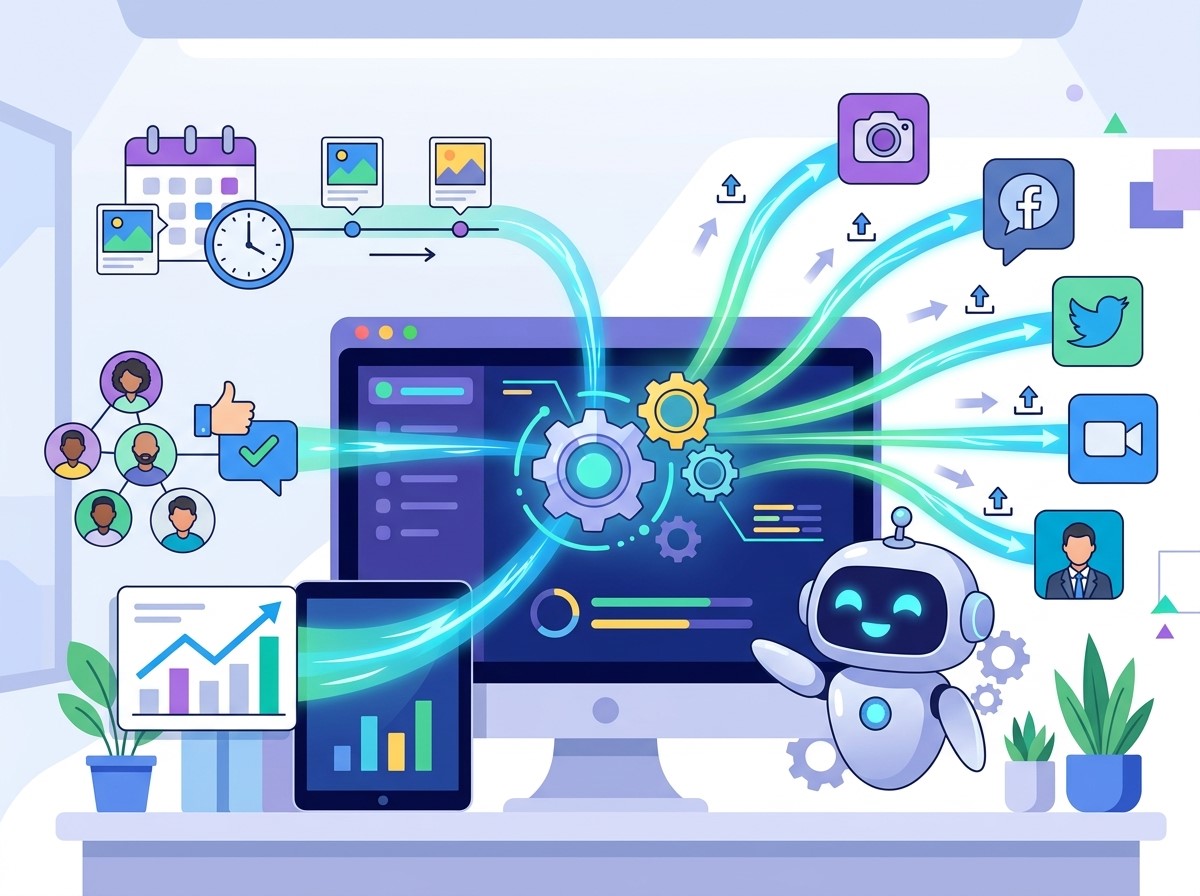
Building a strong online presence requires consistent social media activity, engaging content, and timely communication with your audience. However, managing multiple platforms manually can consume significant time and resources.
Social Media Automation helps businesses streamline repetitive social media tasks, maintain consistent posting schedules, and improve marketing efficiency without sacrificing content quality. By using the right automation strategies, businesses can spend less time on routine tasks and more time developing creative campaigns, building relationships, and growing their brand.
What Is Social Media Automation?
Social media automation is the process of using software and digital tools to schedule, publish, organize, and monitor social media activities automatically. Instead of manually posting content every day, marketers can prepare content in advance and schedule it for specific dates and times.
Automation can support activities such as content scheduling, social media publishing, performance tracking, and audience engagement management. It is particularly useful for businesses managing several social platforms because it creates a more organized and predictable workflow.
However, effective automation does not mean removing people from social media marketing. Human creativity, communication, and decision-making remain important. Automation should handle repetitive tasks while marketing teams focus on strategy and meaningful audience interactions.
Why Social Media Automation Matters for Businesses

Social media has become an important channel for brand awareness, customer engagement, website traffic, and lead generation. Businesses need to remain active, but manually managing every post and platform can become difficult as marketing activities grow.
Social Media Automation makes it easier to maintain consistency while reducing repetitive work. A well-planned automation system can help businesses publish content regularly and keep their social profiles active.
Saves Time and Resources
One of the biggest advantages of automation is time savings. Marketers can create several posts at once and schedule them for future publication instead of logging into each platform every day.
This allows marketing teams to spend more time on campaign planning, creative development, customer relationships, and performance analysis.
Maintains Consistent Posting
Consistency is essential for maintaining visibility on social media. Long gaps between posts can make a brand appear inactive, while a reliable publishing schedule helps audiences know when to expect new content.
Automation allows businesses to create a content calendar and schedule posts in advance. This makes maintaining a consistent presence much easier.
Supports Multiple Social Platforms
Businesses often use platforms such as Facebook, Instagram, LinkedIn, X, Pinterest, or other networks. Managing each platform individually can increase workload.
Automation tools can centralize scheduling and publishing, allowing marketers to organize campaigns from one workflow. Content can also be adapted for different platforms rather than being copied without considering audience expectations.
Build a Strong Social Media Automation Strategy
Successful automation starts with a clear strategy. Simply scheduling large numbers of posts does not guarantee better engagement or business growth.
Businesses should first understand their audience, define their goals, and determine which types of content are most valuable to followers.
Define Your Social Media Goals
Start by identifying what you want social media to achieve. Goals may include increasing brand awareness, generating website traffic, improving engagement, collecting leads, or supporting sales. Clear goals make it easier to decide what content should be automated and which performance metrics should be monitored.
For example, a business focused on brand awareness may prioritize educational and entertaining content, while a lead-generation campaign may focus more heavily on landing pages, offers, and valuable resources.
Create a Content Calendar
A content calendar provides structure to your social media activities. It allows marketers to plan topics, formats, publishing dates, campaigns, and promotional activities ahead of time.
A well-organized calendar can also prevent repetitive content and ensure that different content categories receive appropriate attention. Businesses can schedule evergreen posts in advance while leaving space for real-time content, industry updates, and conversations with followers.
Use Workflow Automation to Improve Efficiency
Workflow automation can make social media management more organized by connecting different marketing tasks into a structured process.
For example, a workflow may begin with content creation, move to review and approval, continue to scheduling, and finish with performance tracking. Automating repetitive steps can reduce manual work and minimize the risk of missed publishing deadlines. A structured workflow is particularly valuable for marketing teams where several people are responsible for creating, reviewing, and publishing content.
Combine Marketing Automation With Social Media

Social media works best when it is connected to broader digital marketing activities. Marketing automation can help businesses connect social campaigns with email marketing, lead management, customer journeys, and website activities.
For example, a social media campaign can direct users to a landing page where they can download a resource or submit their information. That lead can then enter an automated email sequence designed to provide additional information and encourage conversion. This creates a more connected customer journey instead of treating social media as an isolated marketing channel.
Use Content Automation Carefully
Content automation can help marketers organize and distribute content more efficiently. Businesses can repurpose existing blog posts, guides, videos, or educational resources into social media formats.
For example, a long-form blog post can become several social posts, short tips, visual content, or discussion topics. Automation can then help distribute these pieces according to a planned schedule. The important point is to maintain quality and relevance. Automated content should still provide value to the audience and match the tone of each platform.
Personalize Automated Social Media Content
Automation should not make your brand sound robotic. Personalization can make scheduled content more relevant and engaging. Businesses can create different content categories based on audience interests, customer needs, location, or stage in the buying journey.
For example, new followers may receive educational content that introduces the brand, while existing customers may see product tips, support information, or loyalty-focused content. Personalized content makes automation feel more natural while helping businesses communicate with different audience segments.
Choose the Right Posting Frequency
More posts do not always mean better results. Publishing too frequently can overwhelm followers, while posting too rarely can reduce visibility.
The ideal frequency depends on the platform, audience, industry, and type of content being published. Businesses should test different schedules and analyze performance data to determine what works best. Automation makes testing easier because marketers can schedule different publishing times and compare engagement results over time.
Automate Analytics and Performance Monitoring
Automation should not stop after content is published. Monitoring performance is equally important. Businesses should track metrics such as impressions, reach, engagement, clicks, website traffic, leads, and conversions. These insights help marketers understand which content performs well and which areas need improvement.
Regular analysis can reveal useful patterns. For example, certain topics may generate more comments, while specific content formats may drive more website traffic. The goal is to use automation to support better decisions, not simply to increase the number of scheduled posts.
Balance Automation With Human Engagement
One of the most important social media automation strategies is knowing what should not be automated. Social media is fundamentally about communication. Customers may ask questions, share feedback, or mention a brand directly. These interactions often require human responses.
Automating every comment or message can make a business appear distant and impersonal. Instead, automation should handle repetitive publishing and organizational tasks while people manage conversations that require judgment and empathy. A good approach is to automate routine activities but maintain active human involvement in community management.
Common Social Media Automation Mistakes to Avoid
Automation can improve efficiency, but poor implementation can damage a brand’s reputation. One common mistake is publishing identical content across every platform without adapting the message. Each social network has different audiences, formats, and communication styles.
Another mistake is relying entirely on automated engagement. Generic comments and automatic responses can appear unnatural and may reduce trust. Businesses should also avoid scheduling content without reviewing it. A post that was appropriate when scheduled may become outdated because of current events, industry changes, or unexpected situations. Regular content reviews can help businesses maintain relevance and protect their brand image.
How to Measure Social Media Automation Success

Measuring results is essential for improving an automation strategy. Businesses should compare social media performance with their original marketing goals.
If the objective is awareness, metrics such as reach and impressions may be important. If the objective is engagement, businesses can monitor comments, shares, saves, and interactions. For lead generation, clicks, form submissions, and conversions may be more meaningful.
Businesses should also evaluate how much time automation saves. Increased efficiency is an important benefit, especially for small teams with limited resources. Over time, performance data can help marketers improve content topics, posting schedules, audience targeting, and campaign strategies.
Best Practices for Effective Social Media Automation
A successful automation strategy combines technology with thoughtful marketing. Businesses should create content in advance, maintain a reliable publishing schedule, and regularly review scheduled posts. It is also important to keep content diverse. Promotional posts should be balanced with educational, entertaining, informative, and community-focused content.
Businesses should monitor analytics and adjust their strategy based on actual audience behavior. Automation tools are most effective when they support a flexible strategy rather than replacing marketing decisions. Finally, keep human interaction at the center of the strategy. Automation can improve efficiency, but authentic communication is what helps build long-term relationships with followers.
Conclusion
Social Media Automation can help businesses maintain consistency, reduce repetitive work, and manage multiple social platforms more efficiently. When combined with workflow automation, marketing automation, and content automation, it can create a more organized digital marketing process.
The most effective approach is not to automate everything. Instead, businesses should automate repetitive tasks while keeping strategy, creativity, customer communication, and important decisions under human control. With the right balance, social media automation can save time, improve consistency, strengthen engagement, and support long-term online growth.
Frequently Asked Questions
1. What is Social Media Automation?
Social Media Automation uses software and tools to schedule, publish, organize, and monitor social media activities automatically. It helps businesses reduce repetitive work while maintaining consistent activity across platforms.
2. Is Social Media Automation good for small businesses?
Yes. Small businesses can use automation to save time and maintain regular social media activity even with limited marketing resources. It allows small teams to focus more on strategy and customer relationships.
3. Can automation improve social media engagement?
Automation can support engagement by ensuring consistent content publishing and timely campaigns. However, meaningful conversations, comments, and customer interactions should still involve human participation.
4. What types of social media tasks can be automated?
Common tasks include post scheduling, content publishing, campaign organization, performance reporting, and some repetitive workflow activities. Sensitive customer interactions should generally be handled manually.
5. How often should businesses post on social media?
There is no universal posting frequency. The ideal schedule depends on the platform, audience, industry, and content strategy. Businesses should test different schedules and use performance data to identify the most effective approach.
6. What is the difference between social media automation and marketing automation?
Social media automation focuses mainly on social media activities such as scheduling and publishing. Marketing automation covers broader processes such as email campaigns, lead nurturing, customer journeys, and campaign management.
7. Can content automation replace content creators?
No. Content automation can assist with organizing, repurposing, and distributing content, but human creativity and editorial judgment remain important for producing useful and authentic content.
8. Does social media automation make content less personal?
It can if used incorrectly. Over-automation and generic messaging can make a brand feel impersonal. A better approach is to automate repetitive tasks while keeping meaningful communication human.
9. How can businesses measure automation results?
Businesses can track reach, impressions, engagement, clicks, website traffic, leads, conversions, and time saved. The most useful metrics depend on the business’s social media goals.
10. What is the best way to start with Social Media Automation?
Start with a clear goal, create a content calendar, select suitable automation tools, schedule high-quality content, and monitor results. Gradually automate repetitive tasks while keeping important audience interactions human.