
Modern data entry systems are no longer just administrative tools; they are the high-speed engines driving informed decision-making and sustainable growth in a data-centric global economy.
This guide explores the evolution of data entry systems from manual input to AI-driven automation. We analyze key components, strategic benefits, and implementation roadmaps to help businesses optimize accuracy, security, and operational efficiency.
The Backbone of Information Management
Data entry systems have evolved significantly from traditional manual input methods to sophisticated automated solutions that leverage artificial intelligence (AI) and machine learning. This transformation has revolutionized how businesses handle information, creating opportunities for enhanced productivity and reduced operational costs.
According to research often cited by industry leaders like SEMrush, organizations implementing modern data entry systems report up to a 67% reduction in processing errors and approximately 40% improvement in operational efficiency. These statistics highlight the critical importance of investing in robust infrastructure as a strategic business decision rather than an administrative afterthought.
The Evolution from Manual to Automated Systems

The journey of data management has been marked by significant technological leaps. Initially, businesses relied heavily on manual data entry, a process that was not only slow but inherently prone to human fatigue and error.
1. The Era of Manual Input
In this stage, “data entry” meant rows of clerks typing information from paper forms into spreadsheets. While foundational, this method lacks scalability and creates bottlenecks in B2B lead generation and customer service.
2. The Digital Transition
The introduction of automation for small businesses and basic data entry automation software allowed for faster processing. However, these systems still required substantial human intervention to correct formatting issues.
3. The AI Revolution
Today’s advanced data entry systems incorporate artificial intelligence in business to:
- Extract information from various document formats using OCR.
- Validate data against predefined rules in real-time.
- Mastering real-time data transfer to ensure databases are updated instantly.
- Integrate with Hubspot data entry and other CRM platforms.
Key Components of Effective Data Entry Systems
| Component | Function | Technology Used |
| Data Capture | Converting physical/digital noise into data | OCR, Barcode Scanners, Voice Recognition |
| Validation Framework | Ensuring accuracy and integrity | Logic Algorithms, AI Pattern Matching |
| Processing Engine | Transforming raw data into structure | Business process automation tools |
| Storage Infrastructure | Securely housing information | Cloud Databases, On-Premises Servers |
| Integration Layers | Connecting silos | APIs, Webhooks, Real-time data transfer |
Benefits of Implementing Advanced Data Entry Systems
Enhancing Operational Efficiency
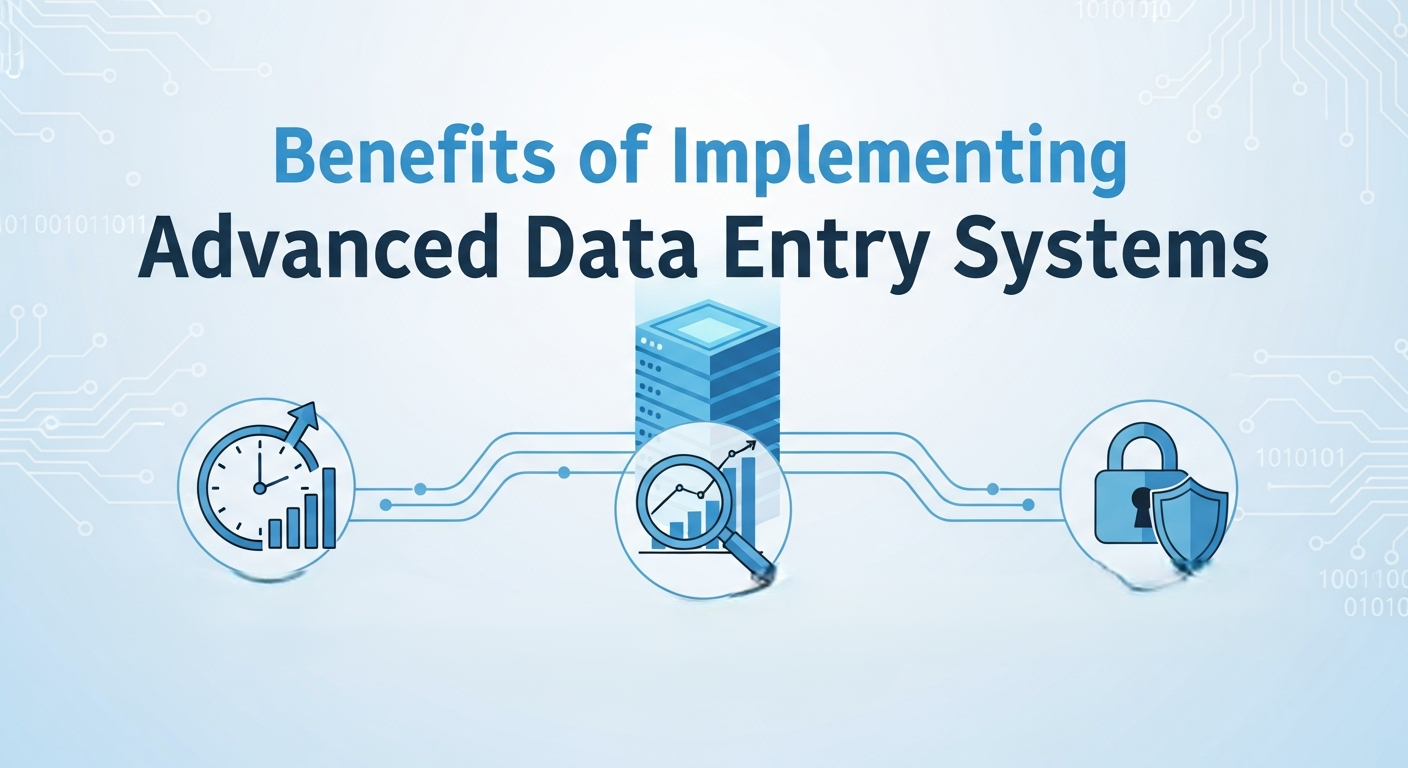
Modern data entry systems dramatically reduce the time required to process information. By using text expansion software and automate website data entry tools, tasks that once took days now take minutes. This efficiency leads to:
- Faster transaction processing.
- Reduced administrative overhead.
- The ability to automate excel spreadsheets without manual formula entry.
Improving Data Accuracy and Integrity
Human error is a silent profit killer. Advanced systems address this by mastering automation in excel data entry and utilizing automated CRM data entry. By standardizing input formats, businesses can ensure their marketing analytics data is clean and reliable.
Cost Reduction Through Automation
The ROI of data entry systems is often realized within 12-18 months. Beyond labor savings, businesses see a reduction in compliance risks and error-correction expenses. For instance, moving from manual invoice data entry to an automated data entry Xero workflow can save hundreds of man-hours annually.
Enhancing Data Security and Compliance
With regulations like GDPR and CCPA, security is paramount. Modern systems provide:
- Encrypted data transmission.
- Role-based access controls.
- Comprehensive audit trails for digital reputation management.
Types of Data Entry Systems for Different Business Needs
Cloud-Based Data Entry Solutions
Cloud solutions offer unparalleled scalability. They are ideal for companies utilizing a virtual assistant or remote teams. These systems facilitate real-time data transfer across geographic boundaries, ensuring that your content marketing plan is always based on the latest metrics.
On-Premises Data Entry Infrastructure
For industries with extreme security needs—such as healthcare or defense—on-premises data entry systems offer complete control over the hardware environment. While the upfront virtual event cost breakdown might be higher for infrastructure, the long-term security autonomy is often worth the investment.
Hybrid Systems: The Best of Both Worlds
A hybrid approach allows businesses to keep sensitive manual data entry tasks local while using the cloud to automate browser data entry for public-facing information.
Integrating Data Entry with Modern Marketing
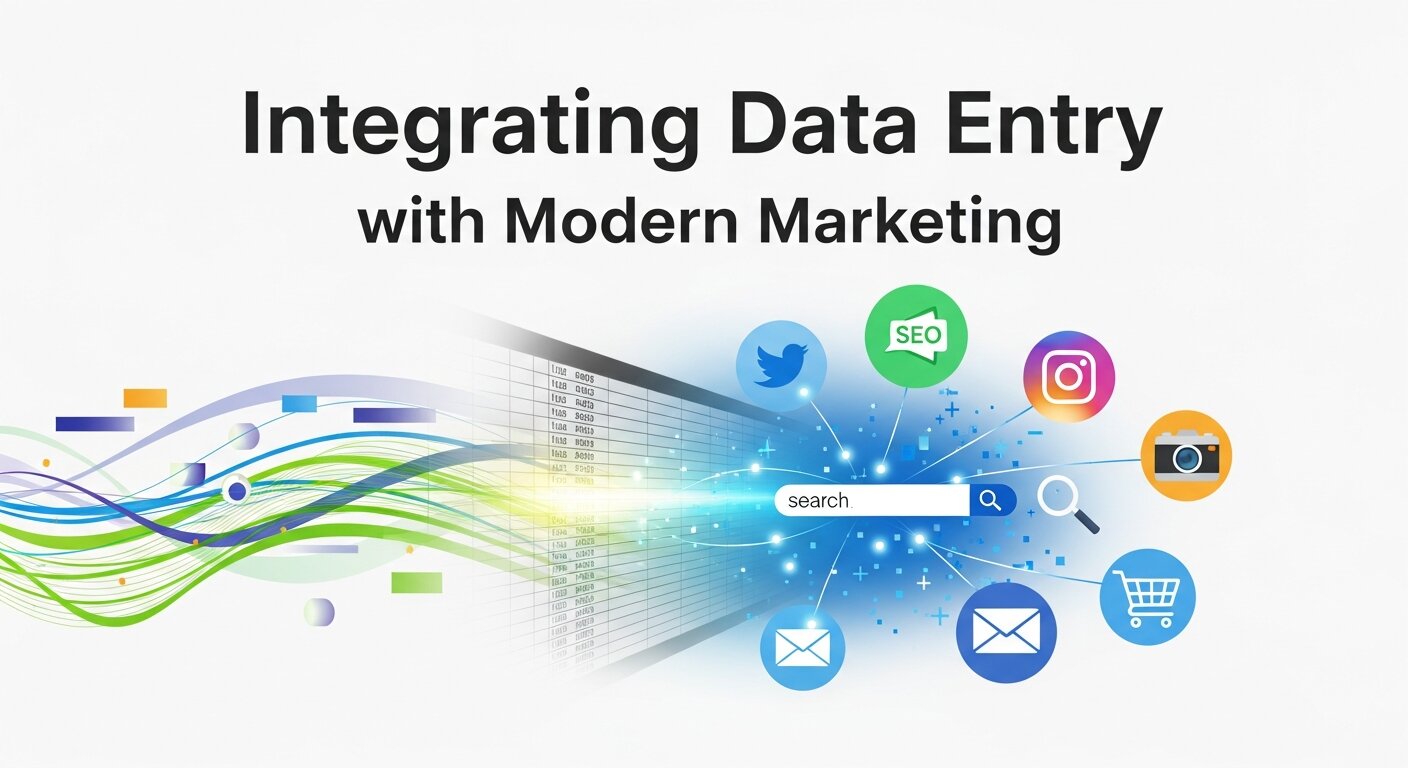
Data doesn’t exist in a vacuum. Efficient data entry systems feed directly into your broader marketing and sales ecosystem.
- Webinar Lead Generation Strategies: Automated systems capture attendee details from webinar hosts and sync them directly to your CRM.
- Marketing Analytics: Using marketing analytics tools, businesses can track the customer journey from the first click to the final sale, provided the data entry is seamless.
- B2B Lead Generation: High-quality data ensures that your outbound email marketing reaches the right decision-makers.
Future Trends in Data Entry Systems
The next generation of tools will focus on predictive trend marketing and AI-driven trend forecasting. We are moving toward a world where data entry systems don’t just record what happened, but predict what will happen next.
- Intelligent Document Recognition: Systems that “learn” different invoice layouts over time.
- Natural Language Processing (NLP): Extracting data from phone calls or webinars for education.
- Video Analytics: Mastering video analytics market trends to turn visual data into actionable spreadsheets.
The Technical Architecture of High-Performance Data Entry Systems
To understand how Data Entry Systems function at scale, one must look under the hood at the “Pipeline Architecture.” Modern systems no longer treat data as a static entry but as a flowing stream.
1. Ingestion Layer
This is the entry point where manual data entry meets automated capture. Whether it is a virtual assistant typing in details or an AI scanning a thousand invoices, the ingestion layer must handle diverse formats (JSON, CSV, XML, and unstructured text).
2. The Transformation Engine
Once captured, data is often “messy.” The transformation engine uses mastering automation in excel data entry logic to clean the data. This includes:
- Normalization: Ensuring “St.” and “Street” are recorded identically.
- Deduplication: Using AI-driven trend marketing algorithms to identify if a lead from a Salesforce webinar is the same as an existing CRM contact.
3. The Load and Sync Layer
Finally, the system must automate browser data entry to push this cleaned information into your ERP or CRM. This is where real-time data transfer becomes critical for maintaining a “single source of truth.”
Industry-Specific Applications of Data Entry Automation
Data Entry Systems in Healthcare (Health Informatics)
In healthcare, accuracy isn’t just about profit—it’s about patient safety. Modern Data Entry Systems in hospitals now use voice-to-text and automated EHR (Electronic Health Record) synchronization. This reduces the “clerical burden” on doctors, allowing them to focus on patient care rather than manual data entry.
E-commerce and Retail Analytics
For retail giants, data entry systems are the link between the warehouse and the website. By using automated data entry Xero integrations and barcode scanning, inventory levels stay updated in real-time. This prevents “overselling” and fuels effective retail marketing analytics.
Financial Services and Fintech
Fintech companies leverage artificial intelligence in business to process thousands of loan applications per hour. By using automated invoice data entry, they can verify income statements and credit scores without a single human keystroke, drastically reducing the time-to-funding.
Mastering Data Entry for Modern Marketing & Events
Data entry is the silent partner of every successful marketing campaign. Without a clean system, your content marketing plan is based on guesswork.
The Role of Webinars in Data Collection
Webinars are goldmines for data. When you host an unforgettable online event, you aren’t just sharing knowledge; you are capturing intent.
- Webinar Lead Generation Strategies: Every poll answered and question asked during a live webinar software session is a data point.
- Follow-Up Emails: Advanced Data Entry Systems take these interactions and trigger automated CRM data entry, ensuring the sales team receives a “warm” lead with a full history of the user’s behavior.
Marketing Analytics and Brand Positioning
To achieve brand awareness and high brand equity in marketing, you need to see how users perceive you. This requires marketing analytics tools that can ingest social media mentions, review scores, and survey data.
- Sentiment Analysis: Modern systems can perform textual data entry from customer reviews and use AI to categorize the “mood” of the brand’s perception.
- Competitive Brand Analysis: Automated systems can scrape competitor pricing and store it in your database, allowing for real-time trend marketing adjustments.
Training and Change Management

The greatest software in the world will fail if the staff refuses to use it. Transitioning from manual data entry to an automated system requires a cultural shift.
Overcoming “Automation Anxiety”
Employees often fear that data entry automation software will replace them. The strategy should focus on “Augmentation,” not “Replacement.” Show your team how text expansion software and automate excel spreadsheets tools will remove the “boring” parts of their jobs, leaving them time for high-value tasks like brand strategy consulting or customer journey mapping.
The Training Roadmap
- Phase 1: Awareness: Explain the “Why” behind the new Data Entry Systems.
- Phase 2: Technical Onboarding: Hands-on sessions with the new UI.
- Phase 3: Optimization: Teaching advanced tips like mastering real-time data filters.
Metrics for Success: Beyond Speed and Accuracy
While “documents per hour” is a standard KPI, high-level organizations look at more nuanced data:
- Data Decay Rate: How quickly does your stored data become obsolete? Good Data Entry Systems include “refresh” cycles.
- System Latency: The time between a customer clicking “submit” on a webinar for education and that data appearing in the sales dashboard.
- Cost Per Entry: Calculating the total cost (software + human oversight) of a single data point.
Conclusion
Investing in advanced data entry systems is a fundamental shift from reactive administration to proactive strategy. By embracing automation, AI, and seamless integration, your business can ensure data integrity, reduce operational costs, and build a scalable foundation for the digital economy. High-quality data is the fuel for your corporate engine—make sure your entry systems are top-tier.
FAQs
1. What are the primary types of data entry systems?
There are three main types: Manual data entry (human input), Automated data entry (using OCR and AI), and Hybrid systems (a mix of both). Most modern businesses are moving toward fully automated or hybrid models to increase speed and reduce errors.
2. How does AI improve data entry systems?
AI improves systems by using machine learning to recognize patterns. It can automate website data entry, recognize different handwriting styles via OCR, and perform automated validation checks to ensure that the data being entered is logical and accurate.
3. Can I automate data entry in Excel?
Yes, mastering automation in excel data entry is possible through Macros, Power Query, and third-party data entry automation software. You can also automate excel spreadsheets by linking them to external web sources or databases for real-time updates.
4. Is cloud-based data entry secure?
Cloud-based data entry systems are highly secure, often employing bank-level encryption and multi-factor authentication. They are frequently more secure than local systems because they receive automatic security patches and have robust disaster recovery protocols.
5. How long does it take to see ROI from data entry automation?
Most organizations report a full return on investment (ROI) within 12 to 18 months. This comes from a combination of reduced labor costs, fewer expensive data errors, and improved employee productivity.
6. What is OCR in the context of data entry?
OCR stands for Optical Character Recognition. It is a technology used in data entry systems to convert different types of documents, such as scanned paper documents, PDF files, or images, into editable and searchable data.
7. How do data entry systems impact B2B lead generation?
Efficient data entry systems ensure that lead information gathered from sources like Salesforce webinars or B2B lead generation campaigns is accurately recorded. This allows for better segmentation and more effective outbound marketing efforts.
8. Can data entry be integrated with CRM software like HubSpot?
Absolutely. Hubspot data entry can be fully automated using APIs or tools like Zapier. This ensures that every time a customer interacts with your brand, their information is updated across all business process automation tools simultaneously.
9. What are the risks of sticking with manual data entry?
The risks include high error rates (which can lead to poor business decisions), slow processing times, high operational costs, and difficulty in scaling your business. Manual data entry also leaves your data more vulnerable to physical loss or unauthorized access.
10. What is the future of data entry?
The future lies in autonomous data management. We are moving toward systems that use predictive trend marketing and natural language processing to capture data without any human intervention, allowing staff to focus on high-level strategy instead of rote tasks.