
Modern e-commerce thrives on speed and precision. Cloud-based data management empowers online retailers to handle massive datasets efficiently, ensuring seamless customer experiences and scalable business growth in a competitive digital marketplace.
This guide explores how cloud-based data management revolutionizes e-commerce by enhancing scalability, security, and real-time analytics. We cover essential use cases, integration strategies, and expert tips for migrating your operations to the cloud to drive long-term profitability and innovation.
The Ultimate Guide to Cloud-Based Data Management in E-commerce
In the hyper-competitive world of online retail, data is the new currency. Every click, cart addition, and customer review generates a trail of information that, if harnessed correctly, can lead to explosive growth. However, the sheer volume of this information can overwhelm traditional systems. This is where cloud-based data management becomes the backbone of a successful digital strategy.
What is Cloud-Based Data Management?
Cloud-based data management is the process of storing, scrubbing, organizing, and analyzing business data on remote servers managed by providers like AWS, Microsoft Azure, or Google Cloud. Unlike “on-premise” solutions that require physical hardware in your office, the cloud offers a virtualized environment accessible from anywhere.
For an e-commerce brand, this means your inventory levels, customer CRM profiles, and marketing analytics are hosted in a secure, high-speed environment. This shift from physical to virtual infrastructure is a core component of business process automation tools that allow small and medium enterprises (SMEs) to compete with global giants.
Why Cloud-Based Data Management is a Game Changer
1. Scalability for Seasonal Fluctuations
E-commerce is rarely a flat line. Between Black Friday surges and holiday rushes, your data needs can skyrocket overnight. Cloud-based data management offers “elasticity,” meaning you can scale your processing power up during peak traffic and down during quiet months. This ensures your site doesn’t crash when customers are ready to buy.
2. Mastering Real-Time Data and Analytics
Waiting for end-of-month reports is a recipe for failure. By mastering real-time data, e-commerce managers can see exactly what is selling now. Cloud systems facilitate real-time data transfer, allowing you to adjust pricing or restock items instantaneously. This is often paired with video analytics market trends to see how users interact with product videos in real-time.
3. Robust Security and Compliance
Handling credit card info and addresses requires top-tier security. Cloud providers offer:
- Data Encryption: Protecting data at rest and in transit.
- Compliance: Meeting GDPR and PCI DSS standards automatically.
- Disaster Recovery: Automated backups ensure that even if a local error occurs, your business stays online.
4. Cost Efficiency and Automation
Traditional servers require IT staff, cooling, and physical space. Cloud solutions operate on a pay-as-you-go model. Furthermore, you can implement data entry automation software to reduce manual errors. Whether it’s automated CRM data entry or manual invoice data entry being replaced by AI, the cloud reduces overhead significantly.
Comparative Analysis: Cloud vs. On-Premise
| Feature | On-Premise Management | Cloud-Based Data Management |
| Setup Cost | High (Hardware + Licenses) | Low (Subscription based) |
| Scalability | Manual & Slow | Instant & Automated |
| Accessibility | Limited to Local Network | Global / Remote Access |
| Maintenance | Requires In-house IT | Handled by Provider |
| Data Security | User-dependent | Enterprise-grade Encryption |
Key Use Cases in E-commerce Operations
Real-Time Inventory and Warehouse Management
Using automated data entry Xero integrations or Hubspot data entry tools, the cloud keeps your stock levels synchronized across Shopify, Amazon, and eBay. This prevents the “out of stock” nightmare and improves customer journey mapping.
AI-Driven Personalization
Artificial intelligence in business is no longer a luxury. Cloud platforms analyze marketing analytics data to create brand personality in marketing that resonates. If a user browses “luxury watches,” the cloud triggers outbound email marketing with personalized recommendations.
B2B Lead Generation and Webinars
For B2B e-commerce, webinar lead generation strategies are vital. Storing attendee data in the cloud allows for successful webinar planning and automated follow-up emails. Managers can use live webinar software to track engagement, which is then fed back into the digital marketing analytics suite.
Global Expansion and Cross-Border Selling
Cloud systems manage digital payment solutions across different currencies. They also help in brand adaptation strategies, ensuring your website content and marketing meet local cultural expectations through cultural branding data.
Strategic Marketing and Branding in the Cloud

Cloud-based data management isn’t just for back-end logistics; it’s the engine for your content marketing plan.
- Viral Marketing Psychology: By analyzing video analytics, brands can identify what makes content go viral on TikTok. Using predictive trend marketing, you can stock products before a trend hits its peak.
- Brand Equity and Perception: Use brand monitoring services to track brand awareness and brand perception in marketing. If a brand crisis management situation arises, real-time cloud alerts allow for immediate response.
- Omnichannel Consistency: Whether it’s SMS marketing or influencer marketing services, the cloud ensures your brand voice strategy remains consistent across every touchpoint.
How to Choose the Right Solution
- Evaluate Integration: Does it work with your SaaS development services? Can it automate Excel spreadsheets or automate browser data entry?
- Analyze the Marketing Suite: Look for advanced web analytics and mobile app marketing analytics capabilities.
- Check for Automation: Ensure it supports business process automation tools and website data entry automation.
- Review Support: Does the provider offer reputation management tools or online PR services integrations?
Tips for a Successful Cloud Migration
- Audit Your Data: Perform a brand audit and data cleanup. Don’t move “dirty” data to a new system.
- Train Your Team: A digital marketing expert role is evolving; ensure your staff understands mastering automation in Excel data entry.
- Start Small: Migrate your email marketing services or local SEO services data first before moving the entire ERP.
- Security First: Implement multi-factor authentication and reputation management protocols immediately.
The Future: AI, Machine Learning, and Trend Marketing
The future of e-commerce lies in AI-driven trend forecasting. By combining cloud-based data management with predictive trend marketing, businesses can move from reactive to proactive. Imagine a system that predicts a “Micro Trend” and automatically adjusts your creative content services to match.
The “Next Gen Trend Marketing Strategies” will rely heavily on sensory branding and emotional marketing, all powered by the deep insights found in cloud-hosted digital marketing analytics.
Advanced Architectures: Data Mesh and Data Fabric
As e-commerce entities grow, a centralized data “lake” often becomes a “swamp”—unorganized and slow. In 2026, the industry has shifted toward two primary architectural patterns:
- Data Mesh: This decentralizes data ownership. Instead of one IT team managing everything, individual departments (like Marketing, Logistics, or Finance) own their own “data products.” This ensures that the people closest to the data are responsible for its quality.
- Data Fabric: This is an AI-driven layer that connects disparate data sources across the cloud. It uses artificial intelligence in business to automatically discover and integrate data, providing a unified view without moving the actual files.
Hyper-Personalization: The “Segment of One”
In 2026, standard personalization is no longer enough. Cloud-based data management now enables hyper-personalization, treating every customer as a “segment of one.”
By mastering real-time data, e-commerce platforms can analyze:
- Active Intent: Current browsing speed, mouse movements, and device type.
- External Context: Local weather at the customer’s location or trending social media topics.
- Predictive Reordering: If your cloud data shows a customer finishes their protein powder every 45 days, the system sends an automated outbound email marketing reminder on day 40.
This level of precision is only possible when your marketing analytics tools are directly integrated with your cloud inventory and CRM systems.
The Rise of Agentic AI in Data Management
The latest evolution in cloud-based data management is the move from “Assistant AI” to “Agentic AI.” While traditional AI might suggest a restock, an Agentic AI system can:
- Identify a potential stock shortage using predictive trend marketing.
- Automatically negotiate prices with suppliers via a SaaS development service interface.
- Execute the purchase order and update the manual data entry logs in your ERP without human intervention.
This transition is a cornerstone of automation for small businesses, allowing lean teams to operate with the efficiency of a global enterprise.
Ethical Data Governance and The “AI Act”
With the full implementation of global regulations like the EU AI Act in 2026, e-commerce businesses must prioritize ethical data practices. Modern cloud-based data management solutions now include:
- Automated Data Lineage: Proving exactly where data came from and how it was modified.
- Bias Detection: Ensuring that AI-driven pricing or credit offers do not discriminate based on demographic data.
- Zero-Trust Security: A “never assume, always verify” approach where every access request to sensitive customer data is strictly authenticated, regardless of its origin.
Edge Computing vs. Cloud Computing
While the cloud is excellent for long-term storage and heavy analytics, 2026 has seen the rise of edge computing for immediate, on-site tasks.
- The Cloud: Best for advanced web analytics, training AI models, and long-term digital marketing success stories.
- The Edge: Best for real-time tasks like in-store facial recognition (for VIP alerts) or instant fraud detection during the checkout process.
- A successful e-commerce strategy uses a hybrid multi-cloud environment, balancing the deep intelligence of the cloud with the lightning speed of the edge.
Measuring Success: Cloud Data KPIs
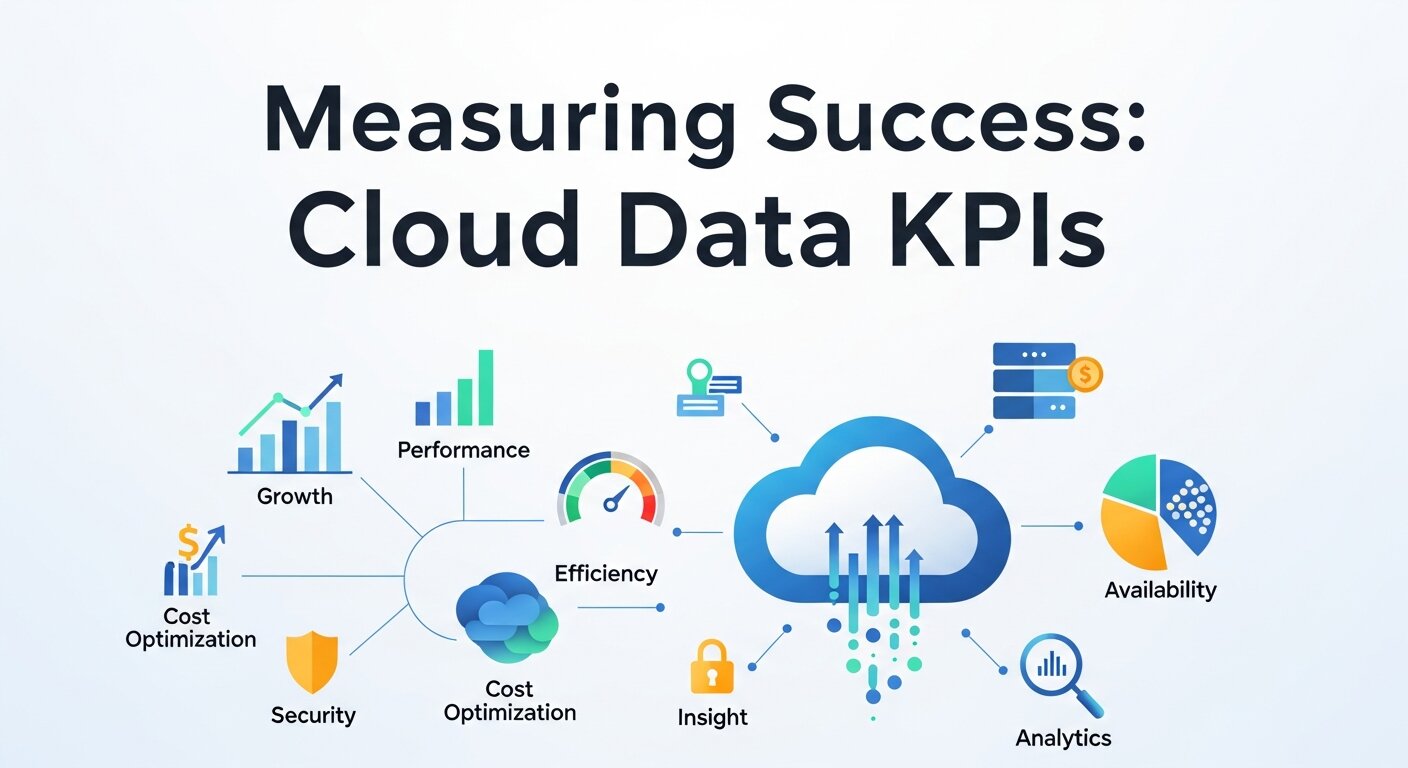
To ensure your investment is paying off, track these specific 2026 metrics:
Data ROI: The revenue generated specifically from AI-driven recommendations.
Latency Rate: The speed at which real-time data transfer occurs during peak traffic.
Data Accuracy Score: The percentage of “clean” data vs. entries requiring manual data entry correction.
Compliance Audit Speed: How quickly your system can generate a GDPR or AI Act compliance report.
Conclusion
Transitioning to cloud-based data management is the most significant upgrade an e-commerce business can make. It provides the agility to scale, the security to protect, and the insights to innovate. By embracing cloud-driven automation and analytics today, you aren’t just managing data—you’re building a resilient, future-proof brand that wins.
FAQs
1. Is Cloud-Based Data Management Safe for Customer Credit Card Information?
Cloud-based data management is generally secure for handling credit card information. Leading providers follow PCI DSS standards and apply strong encryption, multi-layer authentication, and continuous monitoring, often making cloud systems safer and more resilient than traditional local servers.
2. Can I Automate My Bookkeeping with the Cloud?
Yes, cloud platforms allow automated bookkeeping through integrated tools. Automated data entry systems like Xero or CRM integrations sync invoices, payments, and sales data directly into accounting software, reducing manual work, improving accuracy, and saving valuable business time.
3. How Does the Cloud Help with SEO?
Cloud technology enhances SEO by enabling advanced analytics and centralized data tracking. Businesses can monitor website performance, measure keyword success, manage guest posting campaigns, and organize link-building data efficiently using scalable cloud-based analytics platforms.
4. What Is the Difference Between Manual and Automated Data Entry?
Manual data entry requires human input, making it slower and prone to mistakes. Automated data entry uses scripts and integrations to collect, process, and organize information instantly, improving efficiency, accuracy, and workflow consistency across digital business systems.
5. How Do Webinars Fit into E-Commerce Data?
Webinars play an important role in e-commerce by generating qualified leads and customer engagement data. Cloud systems store attendee information, behavior insights, and interaction metrics, enabling businesses to run targeted retargeting campaigns and improve conversion strategies.
6. Can Cloud Management Help with Viral Marketing?
Yes, cloud management platforms track video performance, audience engagement, and social media metrics in real time. These insights help marketers analyze audience behavior, understand viral trends, and refine campaigns using data-driven decisions for wider online reach.
7. What Is Brand Architecture in the Cloud?
Brand architecture in the cloud refers to organizing digital assets and data for multiple brands under one system. It ensures consistent messaging, unified analytics, and efficient management of sub-brands while maintaining overall brand identity and operational clarity.
8. Do I Need an IT Degree to Manage Cloud Data?
No technical degree is required to manage cloud systems today. Modern business automation platforms provide intuitive dashboards, automation templates, and guided workflows, allowing business owners and teams to manage data efficiently without advanced programming knowledge.
9. Can I Use the Cloud for Local Businesses?
Yes, cloud solutions are highly beneficial for local businesses. They help manage local SEO campaigns, monitor rankings, track customer reviews, and analyze feedback in real time, enabling better reputation management and improved visibility in local search results.
10. What Is the Cost of Migrating to the Cloud?
Cloud migration costs depend on business size and tools used, but savings often outweigh expenses. Reduced hardware needs, scalable subscriptions, and improved operational efficiency typically deliver strong ROI, often within the first year of implementation.