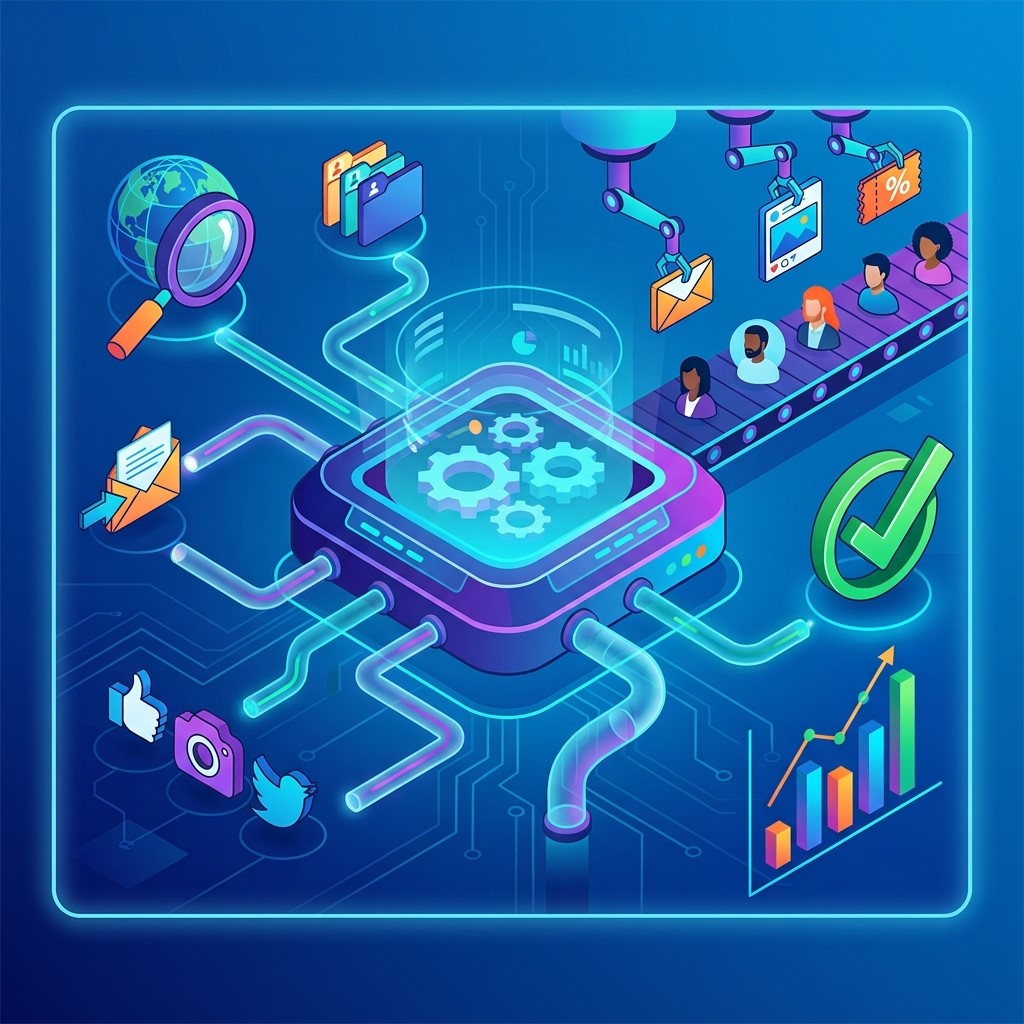
Digital marketing automation helps businesses manage repetitive marketing activities with technology, allowing teams to save time, improve consistency, and focus on strategic growth. From email campaigns and lead nurturing to customer segmentation, social media scheduling, analytics, and personalized communication, automation can streamline the entire marketing process.
Modern businesses can also combine digital marketing automation with business process automation, AI content generation, and automated brand monitoring to create connected and efficient marketing workflows. Instead of manually completing every task, marketers can establish automated processes that respond to customer behavior and deliver relevant messages at the right time. When implemented strategically, automation can improve productivity, customer engagement, campaign performance, lead management, and marketing efficiency while reducing operational complexity and supporting scalable business growth.
What Is Digital Marketing Automation?
Digital marketing automation is the use of software and technology to automate repetitive marketing tasks and workflows. It allows businesses to manage campaigns, communicate with customers, analyze behavior, and nurture prospects with less manual intervention.
Automating Repetitive Marketing Activities
Marketing teams regularly perform repetitive tasks such as sending emails, scheduling social posts, updating customer records, and organizing leads. Automation tools can handle these activities according to predefined rules, allowing marketers to spend more time developing strategy.
Creating Connected Marketing Workflows
Automation connects multiple marketing activities into coordinated workflows. For example, a new subscriber can automatically receive a welcome email, enter a nurturing sequence, and receive personalized content based on subsequent interactions.
Supporting Scalable Marketing Operations
As businesses grow, manually managing every customer interaction becomes increasingly difficult. Automation allows companies to handle larger audiences and more complex campaigns without increasing manual workloads at the same rate.
Why Digital Marketing Automation Matters
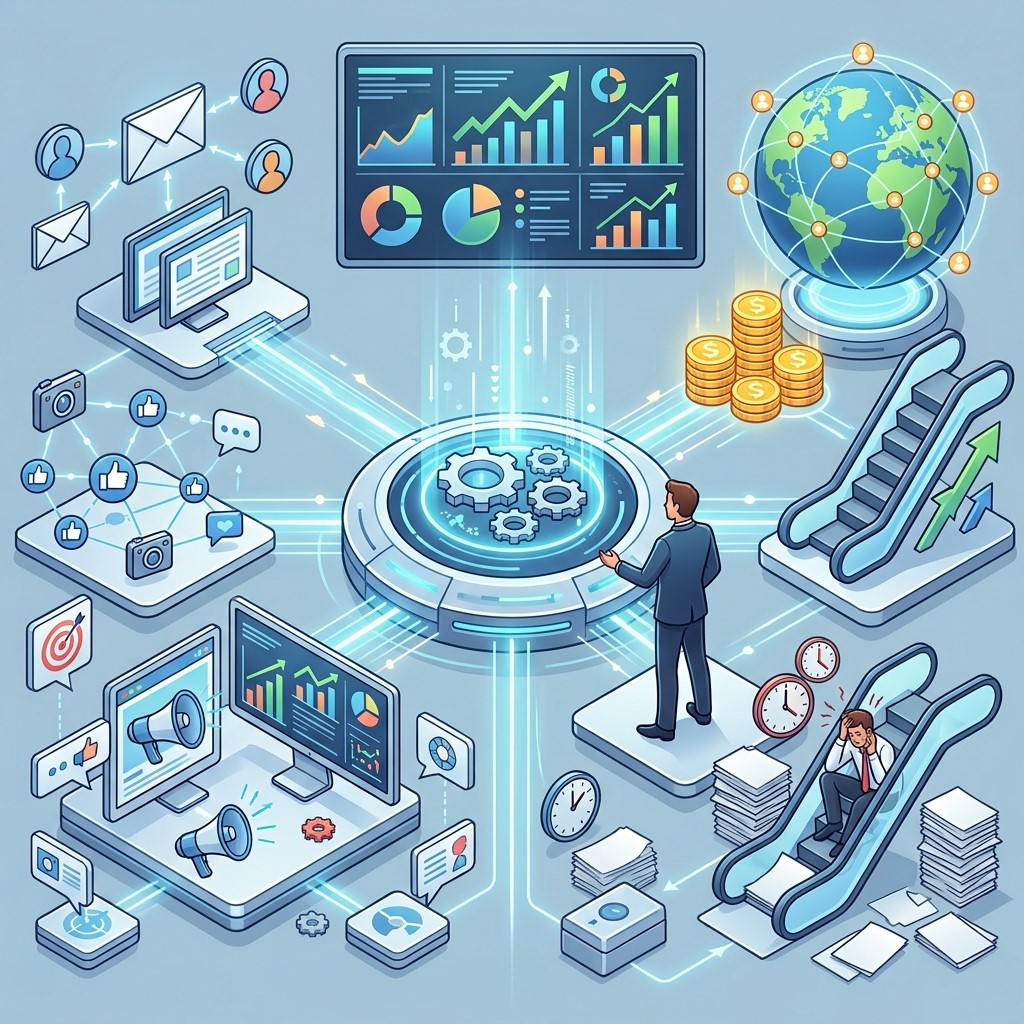
Modern customers expect timely, relevant, and consistent communication. Digital marketing automation helps businesses meet these expectations while giving marketing teams greater control over campaign execution and customer journeys.
Improving Marketing Productivity
Automation reduces the amount of time employees spend on repetitive marketing tasks. Teams can automate routine processes and redirect their efforts toward creative development, strategy, customer research, and campaign optimization.
Increasing Marketing Consistency
Automated workflows execute tasks according to predefined rules. This helps businesses maintain consistent messaging, scheduling, lead follow-ups, and customer communication across different campaigns and marketing channels.
Reducing Human Error
Manual marketing processes can lead to missed follow-ups, incorrect data, inconsistent scheduling, or forgotten tasks. Automation reduces these risks by executing predefined actions consistently and systematically.
Digital Marketing Automation and Business Process Automation
Business process automation extends automation beyond marketing by improving repetitive processes throughout an organization. Connecting marketing automation with broader business workflows can create smoother customer journeys and improve operational efficiency.
Connecting Marketing and Sales
Automation can transfer qualified leads from marketing platforms to sales teams based on specific criteria. This reduces delays and helps sales representatives prioritize prospects who demonstrate stronger purchase intent.
Automating Lead Management
Businesses can automatically assign leads, update customer records, score prospects, and trigger follow-up activities. These processes help organizations maintain accurate information while reducing manual administrative work.
Streamlining Customer Onboarding
After a customer completes a purchase or signs up for a service, automation can trigger welcome messages, educational content, account instructions, and follow-up communications. This creates a more organized onboarding experience.
How Automation Improves Lead Generation
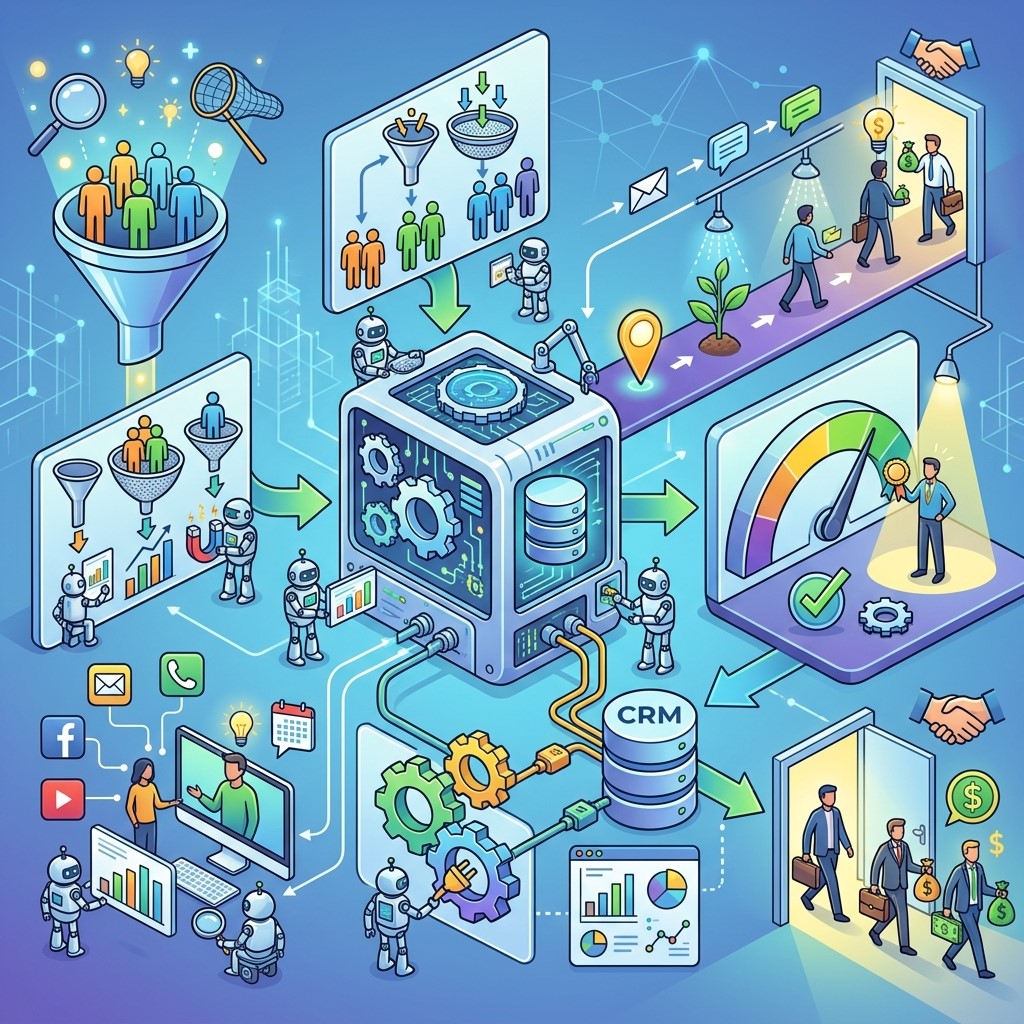 Lead generation is an important part of digital marketing, but managing large numbers of prospects manually can be challenging. Automation helps businesses capture, organize, qualify, and nurture leads more efficiently.
Capturing Leads Automatically
Website forms, landing pages, chat systems, and signup tools can automatically collect prospect information. The data can then be transferred into marketing platforms for segmentation and follow-up.
Scoring Potential Customers
Lead scoring systems can assign values based on actions such as email engagement, website visits, content downloads, and form submissions. This helps marketing teams identify prospects showing stronger interest.
Nurturing Prospects
Automated nurturing campaigns can deliver useful content based on customer interests and behavior. Regular communication helps businesses stay connected with prospects until they are ready to take the next step.
The Role of AI Content Generation
AI content generation is becoming an important component of automated marketing workflows. Artificial intelligence can help marketers create initial drafts, variations, ideas, summaries, and personalized content at scale.
Creating Content Faster
AI tools can help generate initial versions of emails, advertisements, social posts, product descriptions, and other marketing materials. This can reduce production time and help teams maintain consistent content schedules.
Personalizing Marketing Messages
AI can analyze customer information and help create variations of marketing messages for different audiences. Personalized content can make campaigns more relevant while allowing businesses to communicate with larger customer segments.
Supporting Human Creativity
AI content generation should complement human expertise rather than completely replace it. Marketers can use AI for ideation and production support while maintaining human oversight for accuracy, brand voice, originality, and strategic quality.
Digital Marketing Automation for Email Marketing
Email marketing is one of the areas where automation can provide significant benefits. Businesses can create automated campaigns that respond to customer actions, preferences, and lifecycle stages.
Welcome Email Sequences
When someone subscribes to a mailing list, automation can immediately trigger a welcome sequence. These messages can introduce the brand, explain products, share useful resources, and encourage the subscriber to engage further.
Abandoned Cart Emails
Ecommerce businesses can use automation to remind customers about products left in their shopping carts. Timely reminders can encourage customers to return and complete purchases without requiring manual follow-up.
Re-Engagement Campaigns
Inactive subscribers can receive automated messages designed to encourage renewed engagement. Businesses may provide helpful content, personalized recommendations, or special offers based on customer history and preferences.
Digital Marketing Automation for Social Media
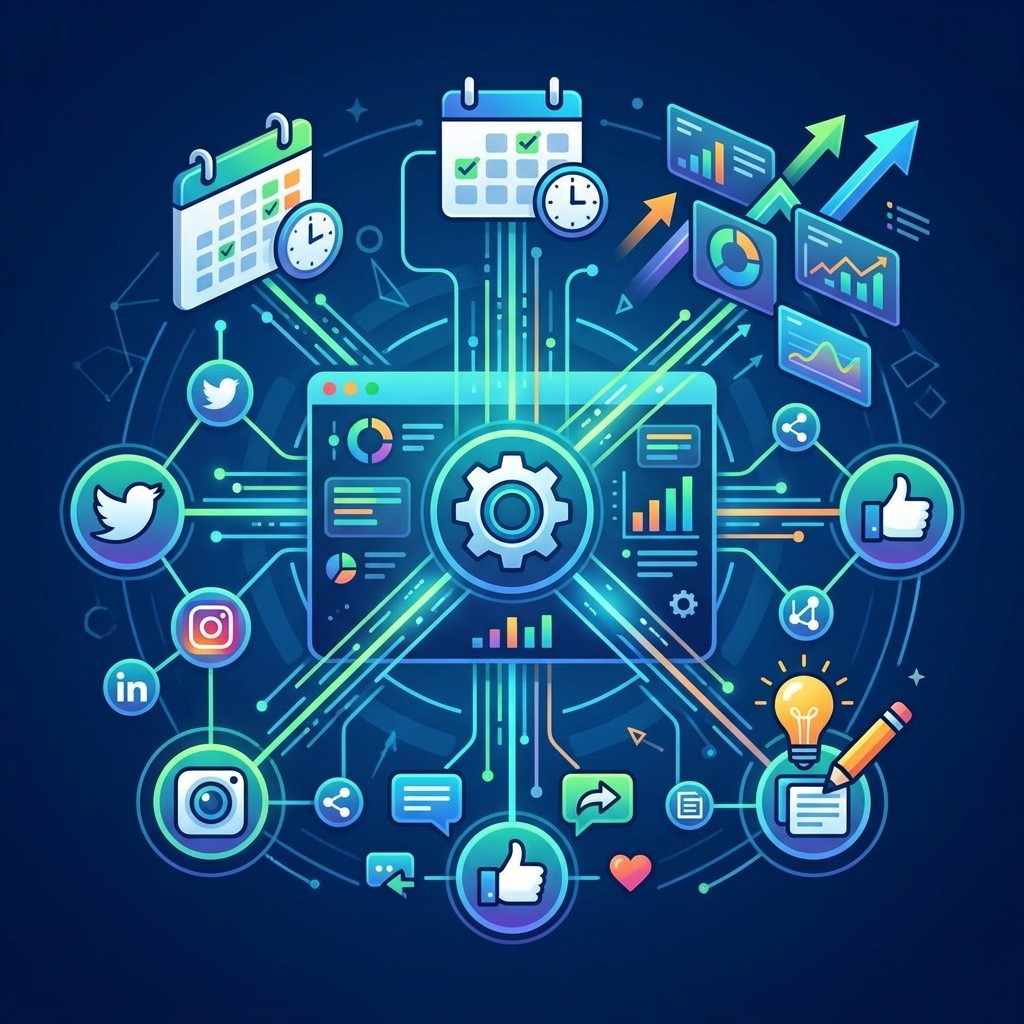
Social media marketing often requires consistent publishing and monitoring. Automation can help businesses schedule content and organize repetitive activities while maintaining a strategic approach to audience engagement.
Scheduling Social Content
Businesses can prepare social media content in advance and schedule posts for specific dates and times. This improves consistency and allows marketing teams to manage campaigns more efficiently.
Repurposing Marketing Content
Existing blogs, videos, presentations, and campaign materials can be adapted into social media content. Automation workflows can help organize and schedule these variations across different platforms.
Monitoring Social Engagement
Automation tools can collect engagement information and notify marketers about important interactions. Teams can then focus their attention on conversations, questions, complaints, and opportunities that require human responses.
Automated Brand Monitoring
Automated brand monitoring helps businesses track online mentions, customer conversations, reviews, and other references to their brand. Monitoring tools can provide timely information about how audiences perceive and discuss a business.
Tracking Brand Mentions
Automation can monitor websites, social platforms, review channels, and other online sources for brand references. This allows businesses to discover conversations without manually searching across multiple platforms.
Identifying Customer Sentiment
Some monitoring systems use automated analysis to identify positive, negative, or neutral patterns in customer discussions. These insights can help businesses recognize reputation risks and understand audience perceptions.
Responding to Reputation Issues
Automated alerts can notify teams when important complaints, negative reviews, or unusual increases in brand mentions occur. Faster awareness gives businesses an opportunity to investigate and respond appropriately.
How Automation Improves Customer Experience
Customer experience depends on timely communication and relevant interactions. Digital marketing automation can help businesses deliver useful information throughout different stages of the customer journey.
Delivering Relevant Messages
Automation can use customer behavior, interests, demographics, and lifecycle stages to determine which messages should be delivered. Relevant communication can reduce unnecessary messages and improve customer engagement.
Supporting Customer Journeys
Businesses can create automated journeys that guide customers from awareness to consideration, purchase, onboarding, and retention. Each stage can trigger different content based on customer actions.
Providing Timely Follow-Ups
Automated follow-ups ensure customers do not get forgotten after submitting a form, requesting information, downloading content, or making a purchase. Timely communication can strengthen trust and improve engagement.
Using Automation for Marketing Analytics
Automation can simplify the process of collecting and organizing marketing data. This helps teams understand campaign performance and make better decisions.
Tracking Campaign Performance
Automated reporting can collect information about email engagement, website activity, lead generation, conversions, and other marketing outcomes. Regular reports help teams identify successful campaigns and areas needing improvement.
Connecting Marketing Data
Marketing automation platforms can connect information from multiple channels. Combining data creates a broader view of customer behavior and helps marketers understand how different touchpoints contribute to conversions.
Supporting Data-Driven Decisions
Reliable automated data allows businesses to evaluate strategies based on measurable results. Marketers can identify high-performing channels, improve underperforming campaigns, and allocate resources more effectively.
Best Practices for Digital Marketing Automation
Automation works best when businesses plan their workflows carefully. Simply automating every available task can create unnecessary complexity and potentially reduce the quality of customer experiences.
Define Clear Marketing Goals
Businesses should identify specific objectives before creating automation workflows. Goals might include generating leads, increasing conversions, improving retention, reducing response times, or increasing customer engagement.
Segment Audiences Carefully
Different customers have different needs and interests. Audience segmentation allows businesses to create relevant automated experiences rather than sending identical messages to everyone.
Maintain Human Oversight
Automation should not eliminate human involvement completely. Marketing teams should regularly review content, workflows, customer responses, and campaign results to ensure that automated processes remain accurate and useful.
Test Automated Workflows
Businesses should test emails, triggers, timing, segmentation rules, and customer journeys before launching campaigns. Continuous testing helps identify errors and improve performance over time.
Common Digital Marketing Automation Mistakes
Poorly planned automation can create irrelevant communication and frustrating customer experiences. Businesses should understand common mistakes before implementing complex workflows.
Sending Too Many Messages
Automation makes it easy to increase communication frequency, but excessive messaging can overwhelm customers. Businesses should establish reasonable communication limits and prioritize useful, relevant content.
Using Generic Automation
Automated campaigns should still feel relevant to customers. Using the same message for every audience can reduce engagement and make automated communication feel impersonal.
Ignoring Customer Data Quality
Automation depends on accurate customer information. Incorrect names, outdated preferences, duplicate records, or incomplete data can result in poor personalization and ineffective campaign decisions.
Forgetting to Update Workflows
Customer expectations, products, offers, and business processes change over time. Automated workflows should be reviewed regularly to ensure that messages and actions remain accurate and aligned with current objectives.
Measuring Digital Marketing Automation Success
Businesses need clear metrics to determine whether automation is creating meaningful improvements. Measurement allows teams to identify successful workflows and make informed optimization decisions.
Monitoring Conversion Rates
Conversion rates help businesses understand whether automated campaigns are encouraging desired actions. These actions may include purchases, registrations, form submissions, bookings, or content downloads.
Measuring Engagement
Email opens, clicks, website visits, social interactions, and content engagement can reveal how customers respond to automated communication. Engagement trends can guide future campaign improvements.
Evaluating Marketing Efficiency
Businesses can compare the time and resources required before and after automation. Reduced manual workload, faster lead processing, and improved campaign performance can demonstrate the operational value of automation.
The Future of Digital Marketing Automation

Digital marketing automation will continue evolving as artificial intelligence, predictive analytics, personalization, and integrated platforms become more advanced. Businesses will increasingly use automation to create responsive and intelligent customer experiences.
AI-Powered Marketing Workflows
AI can help identify customer patterns, recommend content, predict behavior, and optimize campaign timing. Combining AI with automation can create workflows that respond dynamically to changing customer signals.
Predictive Customer Engagement
Predictive systems can analyze historical behavior to estimate what customers may need next. Businesses can use these insights to deliver relevant recommendations and communications at appropriate stages.
Greater Marketing Integration
Future automation platforms will increasingly connect advertising, email, websites, CRM systems, analytics, social media, and customer service. Integrated systems can provide businesses with more complete and coordinated customer journeys.
Frequently Asked Questions
What is digital marketing automation?
Digital marketing automation uses software to automate repetitive marketing activities such as email campaigns, lead nurturing, audience segmentation, social media scheduling, customer follow-ups, reporting, and personalized communication.
Why is digital marketing automation important?
It helps businesses save time, improve marketing consistency, reduce manual errors, manage larger audiences, nurture leads, and create more personalized customer experiences while allowing marketing teams to focus on strategy.
How does business process automation support marketing?
Business process automation connects marketing with sales, customer service, operations, and other departments. It can automate lead assignment, customer onboarding, data updates, follow-ups, and other cross-functional workflows.
What is AI content generation?
AI content generation uses artificial intelligence to create or assist with marketing content such as emails, social media posts, advertisements, product descriptions, ideas, and content variations.
What is automated brand monitoring?
Automated brand monitoring uses technology to track online brand mentions, reviews, social conversations, and other references. It can alert businesses to important customer feedback and potential reputation issues.
Can digital marketing automation improve lead generation?
Yes. Automation can capture leads, score prospects, segment audiences, trigger follow-ups, and deliver nurturing content. These processes help businesses manage prospects more efficiently throughout the customer journey.
How does automation improve email marketing?
Automation allows businesses to create triggered email sequences based on customer actions or lifecycle stages. Welcome campaigns, abandoned cart reminders, follow-ups, and re-engagement campaigns can run with minimal manual intervention.
What mistakes should businesses avoid with marketing automation?
Businesses should avoid excessive messaging, poor audience segmentation, inaccurate customer data, generic content, complicated workflows, and failing to review automated processes regularly.
How can businesses measure marketing automation success?
Businesses can track conversion rates, engagement, lead quality, revenue, customer retention, campaign performance, response times, and reductions in manual workload to evaluate automation effectiveness.
What is the future of digital marketing automation?
The future will increasingly involve AI-powered workflows, predictive analytics, real-time personalization, automated customer journeys, and deeper integration between marketing, sales, CRM, analytics, advertising, and customer service platforms.
Conclusion
Digital marketing automation allows businesses to streamline repetitive marketing tasks, improve customer communication, manage leads, and scale campaigns more efficiently. By combining automation with business process automation, AI content generation, and automated brand monitoring, organizations can create connected workflows that support both marketing performance and broader business operations.
The most successful automation strategies focus on customer needs rather than automation for its own sake. Businesses should define clear objectives, segment audiences, maintain accurate data, monitor performance, and regularly review automated workflows. Human oversight remains important for maintaining brand quality, strategic direction, and meaningful customer relationships.