Content marketing has always been a numbers game—more quality content means more traffic, more leads, and more conversions. But producing quality content at scale has historically required large teams, significant budgets, and weeks of lead time. AI content generation is changing that equation, and fast.
Over the past few years, AI marketing tools have evolved from basic grammar checkers into sophisticated platforms capable of producing long-form articles, ad copy, social media posts, and product descriptions—often in minutes. Marketers who once spent days drafting a single campaign can now iterate across dozens of formats simultaneously.
This post breaks down exactly how AI content generation improves content marketing performance, where it delivers the greatest ROI, and what smart marketers need to keep in mind when building AI into their workflows. If you’re looking to scale output, sharpen your AI brand strategy, or simply get more from your marketing automation stack, this one’s for you.
What Is AI Content Generation, and How Does It Work?
AI content generation refers to the use of artificial intelligence—typically large language models (LLMs)—to produce written content. These models are trained on vast datasets of text, enabling them to generate human-like copy based on prompts, briefs, or structured inputs.
Platforms like Jasper, Copy.ai, and Writer have brought this technology to marketing teams of all sizes. Marketers input a brief—sometimes as simple as a product name and target audience—and the AI returns drafts, outlines, or fully formed content pieces within seconds.
It’s worth distinguishing AI content generation from basic marketing automation. Automation handles repetitive tasks like email scheduling or social posting. AI content generation actually creates the content itself, which is a fundamentally different capability. When combined with marketing automation tools, the result is a content engine that can produce personalized, on-brand messaging at a scale that was previously impossible without a large team.
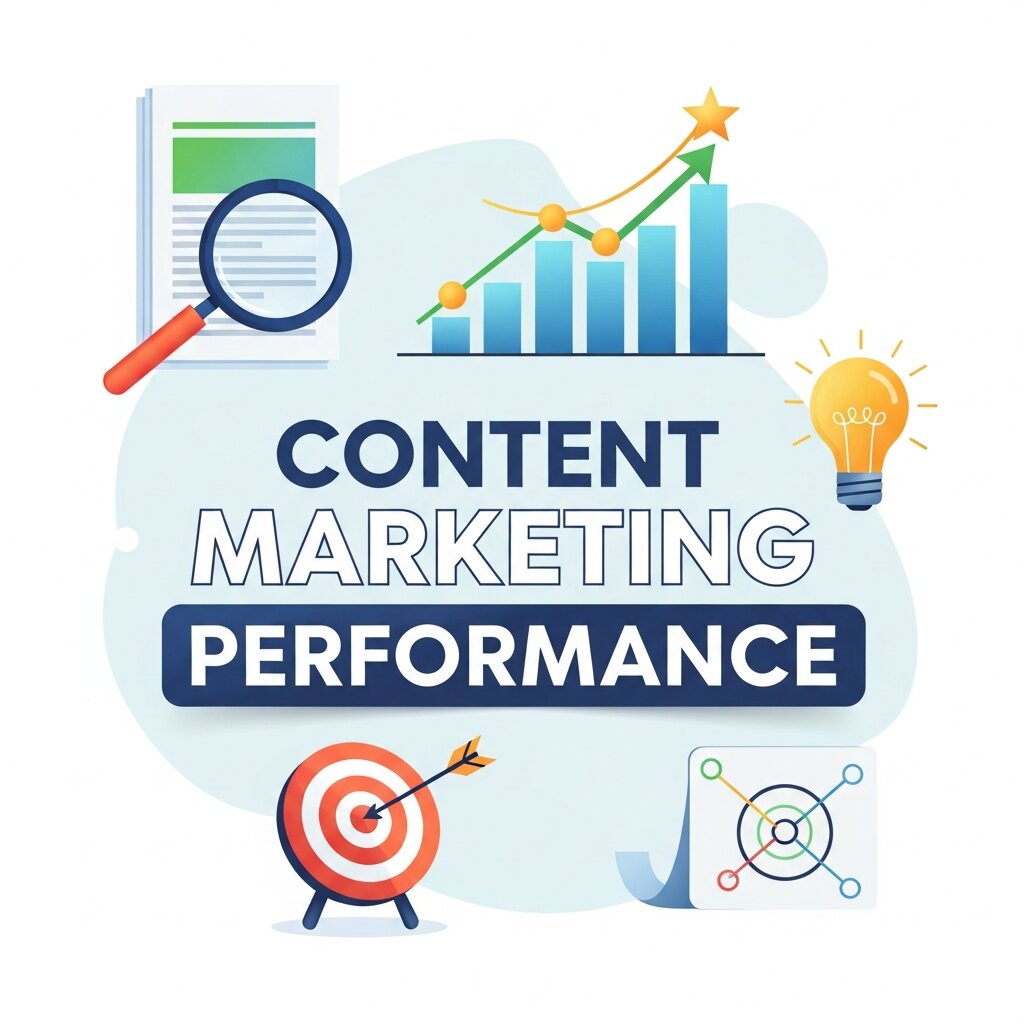
How AI Content Generation Improves Content Marketing Performance
Scaling Output Without Scaling Headcount
The most immediate and measurable impact of AI content generation is volume. A single content marketer supported by AI tools can produce the output that would traditionally require a team of five or more.
Consider a typical content calendar: blog posts, email newsletters, social media copy, landing pages, and product descriptions all need to be written, reviewed, and published on a regular cadence. For most teams, the bottleneck isn’t ideas—it’s execution. AI content generation removes that bottleneck by handling the first draft, freeing up human writers to focus on editing, strategy, and creative direction.
According to HubSpot’s 2023 State of Marketing report, 48% of marketers who use AI say it saves them more than five hours per week. Multiply that across an entire marketing team, and the productivity gains become substantial.
Improving Content Consistency and Brand Voice
One underrated benefit of AI content generation is its ability to reinforce a consistent brand voice across all touchpoints. When AI tools are trained on brand guidelines, tone of voice documents, and past content, they can replicate a brand’s style with a high degree of accuracy—even when content is produced by multiple team members or external contributors.
This directly supports a stronger AI brand strategy. Rather than spending time correcting off-brand copy or realigning freelancers, marketing leaders can configure AI tools to act as a brand guardian. Every output starts from the same baseline, reducing inconsistencies and speeding up the review process.
Platforms like Writer and Jasper offer brand voice features that allow teams to upload style guides and example content, effectively teaching the AI how to sound like the brand. The result is a more cohesive content experience for the audience—and fewer revisions for the team.
Accelerating SEO Content Production
Search engine optimization depends on consistent, high-quality content production. Ranking for competitive keywords requires not just one well-written article, but a network of content that covers a topic from multiple angles—cluster pages, FAQs, comparison posts, and supporting guides.
AI content generation makes it feasible to build out entire content clusters in a fraction of the time. Teams can generate first drafts for 10 or 15 related posts in the time it would traditionally take to write one, then layer in research, expert quotes, and original insights during editing.
The SEO benefits compound over time. More content means more opportunities to rank, more internal linking opportunities, and a broader topical authority footprint—all of which signal relevance and credibility to search engines.
That said, AI-generated content still needs human oversight. Google’s helpful content guidelines prioritize original, expert-driven content. AI tools are best used to accelerate drafting, not replace the subject matter expertise and editorial judgment that make content genuinely useful.
Enabling Personalization at Scale
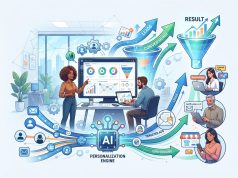
Personalization has become a baseline expectation among consumers. Research from McKinsey consistently shows that personalized experiences drive higher engagement and conversion rates. The challenge has always been delivering personalization at scale—tailoring messages for different audience segments, funnel stages, and channels without multiplying production costs.
AI content generation solves this problem directly. Marketers can use AI tools to produce multiple variations of the same content piece, each tailored to a different persona, industry, or use case. An email campaign that once had one version can now have five, each speaking directly to a different segment of the audience.
When integrated with marketing automation platforms, this capability becomes even more powerful. Personalized content can be automatically matched to the right audience segment and delivered at the right time, without any additional manual effort from the team.
Reducing Time-to-Publish for Reactive Content
Speed matters in content marketing. Trending topics, breaking news, and seasonal moments have short windows of opportunity. Teams that can publish relevant content quickly capture traffic and engagement that slower competitors miss.
AI content generation significantly reduces the time between idea and publication. Where a reactive blog post might have taken two or three days to write, edit, and approve, AI-assisted drafts can be ready for review within hours. This agility is a genuine competitive advantage, particularly for brands operating in fast-moving industries like tech, finance, or retail.
Where AI Marketing Tools Deliver the Highest ROI
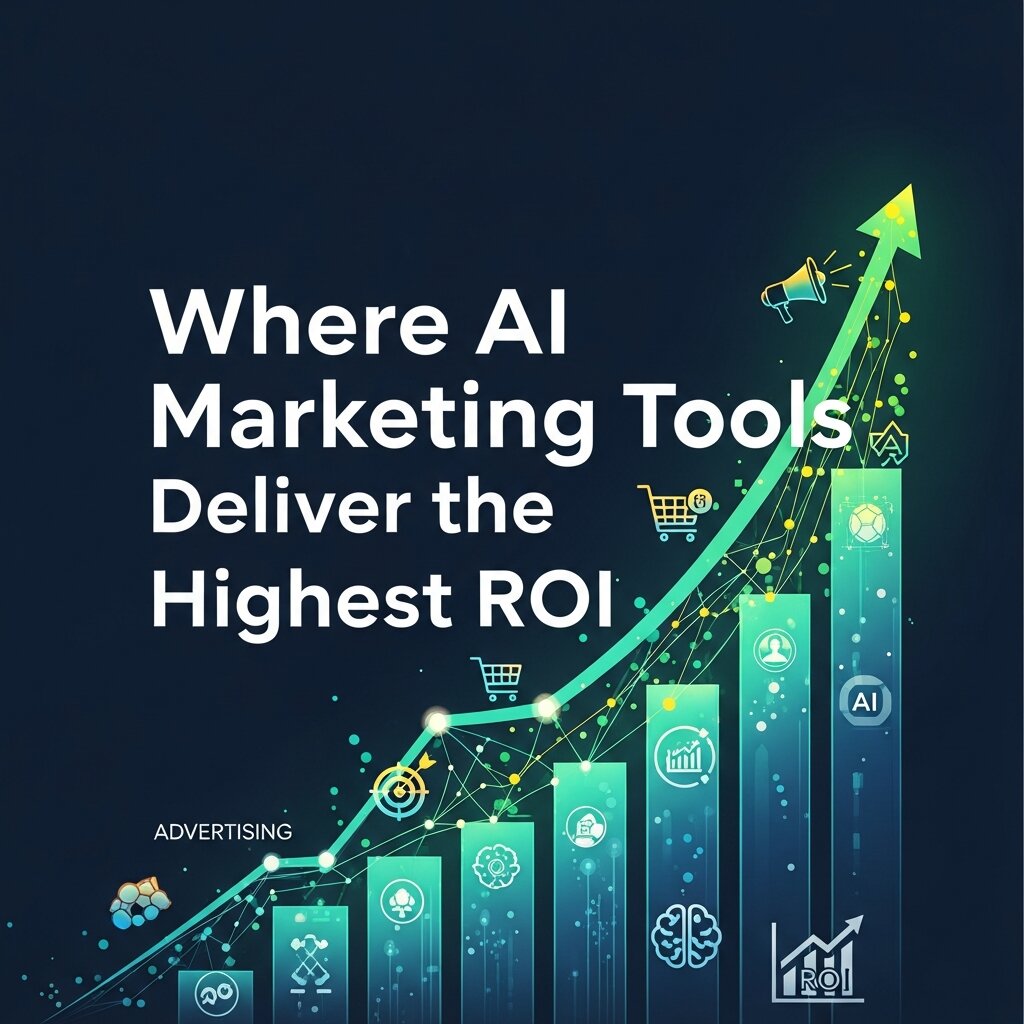 Not all content types benefit equally from AI content generation. Understanding where these tools deliver the highest return helps teams allocate their resources strategically.
High ROI applications:
- Product descriptions: E-commerce brands with large catalogs can generate consistent, SEO-optimized product descriptions at scale—a task that would otherwise require extensive copywriting resources.
- Email subject lines and copy: AI tools can produce and test multiple variations quickly, enabling faster A/B testing and higher open rates.
- Social media copy: Short-form content across multiple platforms is time-consuming to produce manually. AI tools handle volume while maintaining brand voice.
- Blog first drafts: AI handles the structure and initial content, allowing writers to focus on adding depth, examples, and expert perspective.
Lower ROI applications:
- Thought leadership content: Long-form opinion pieces and executive commentary require genuine expertise and personal voice that AI cannot authentically replicate.
- Sensitive or highly technical content: Medical, legal, and deeply technical writing requires accuracy and nuance that AI tools can get wrong. Human review is non-negotiable in these areas.
Building an Effective AI Brand Strategy Around Content
Deploying AI content generation successfully isn’t just a question of picking the right tool. It requires a deliberate AI brand strategy that defines how AI fits into the broader content workflow.
Start by identifying the content types and workflows where AI can deliver the most value with the least risk. High-volume, lower-stakes content—social posts, email copy, product descriptions—is an ideal starting point. From there, teams can expand AI use into longer-form content as they build confidence in the quality of outputs.
Equally important is establishing clear governance. Who reviews AI-generated content before it’s published? What quality standards must it meet? How is the brand voice maintained as the team scales? Answering these questions upfront prevents the inconsistencies and quality issues that often arise when AI tools are adopted without a clear framework.
Finally, treat AI content generation as an amplifier of human creativity, not a replacement for it. The best content marketing teams use AI to handle the heavy lifting—drafting, formatting, iterating—while human marketers focus on strategy, originality, and audience understanding. That balance is what produces content that genuinely stands out.
The Real Impact on Content Marketing Metrics
 For all the talk of efficiency and scale, the ultimate measure of AI content generation is its impact on marketing outcomes. The evidence is encouraging.
Teams that integrate AI into their content workflows consistently report improvements across key performance indicators. Content velocity increases, allowing brands to maintain publishing consistency even when team capacity fluctuates. SEO performance improves as content clusters grow and topical authority builds. Email engagement rises as personalization becomes more sophisticated. And conversion rates climb when landing page copy is continuously tested and optimized using AI-generated variations.
These aren’t hypothetical benefits. A 2023 study by Salesforce found that 68% of marketing teams using AI reported improved content performance, with the biggest gains in personalization, speed, and cost efficiency.
Frequently Asked Questions (FAQs)
1. What is AI content generation?
AI content generation is the process of using artificial intelligence to create written content such as blog posts, social media captions, email campaigns, product descriptions, ad copy, and website content based on user prompts or predefined guidelines.
2. How does AI content generation benefit content marketing?
AI content generation helps marketers produce content faster, maintain publishing consistency, reduce production costs, personalize messaging, and scale content creation without significantly increasing team size or workload.
3. Can AI-generated content improve SEO?
Yes, AI-generated content can support SEO by speeding up content production, creating topic clusters, optimizing keyword usage, and improving internal linking opportunities. However, human editing is essential to ensure originality, accuracy, and compliance with search engine quality guidelines.
4. Is AI content generation better than human writing?
AI is excellent for generating first drafts, brainstorming ideas, and handling repetitive content tasks, while human writers provide creativity, expertise, emotional storytelling, and strategic insights. The best results come from combining AI efficiency with human editing.
5. What types of content can AI generate?
AI can create blog articles, website copy, landing pages, email newsletters, social media posts, product descriptions, ad copy, FAQs, video scripts, content outlines, and marketing campaign materials across multiple industries.
6. How can businesses maintain their brand voice when using AI?
Businesses can maintain a consistent brand voice by providing AI tools with brand guidelines, tone-of-voice documentation, writing samples, approved terminology, and human editorial review before publishing any AI-generated content.
7. What are the limitations of AI content generation?
AI may produce inaccurate information, outdated facts, repetitive language, or generic content. It also lacks real-world experience and critical thinking, making human review necessary for quality, originality, and factual accuracy.
8. Which industries benefit the most from AI content generation?
Industries such as eCommerce, digital marketing, SaaS, education, finance, healthcare, travel, real estate, and technology benefit significantly from AI content generation due to their continuous demand for fresh, scalable digital content.
9. What are the best practices for using AI in content marketing?
Use AI to create drafts and outlines, fact-check all information, add expert insights, optimize for search intent, maintain brand consistency, perform plagiarism checks, and continuously monitor content performance through analytics.
10. How can I measure the success of AI-generated content?
Track key performance indicators such as organic traffic, keyword rankings, click-through rate (CTR), engagement time, bounce rate, conversion rate, social shares, and return on investment (ROI) to evaluate the effectiveness of AI-generated content.
Make AI Content Generation Work for Your Marketing Team
AI content generation isn’t a shortcut to great content marketing—it’s a force multiplier for teams that already have strong fundamentals. The brands seeing the biggest gains are those that combine AI’s speed and scale with human creativity, editorial judgment, and a clear AI brand strategy.
The practical next step is straightforward: audit your current content workflow, identify the biggest bottlenecks, and pilot one or two AI marketing tools in those areas. Measure the results, refine your process, and expand from there. The teams that start building this capability now will have a meaningful head start as AI becomes standard practice across the industry.