
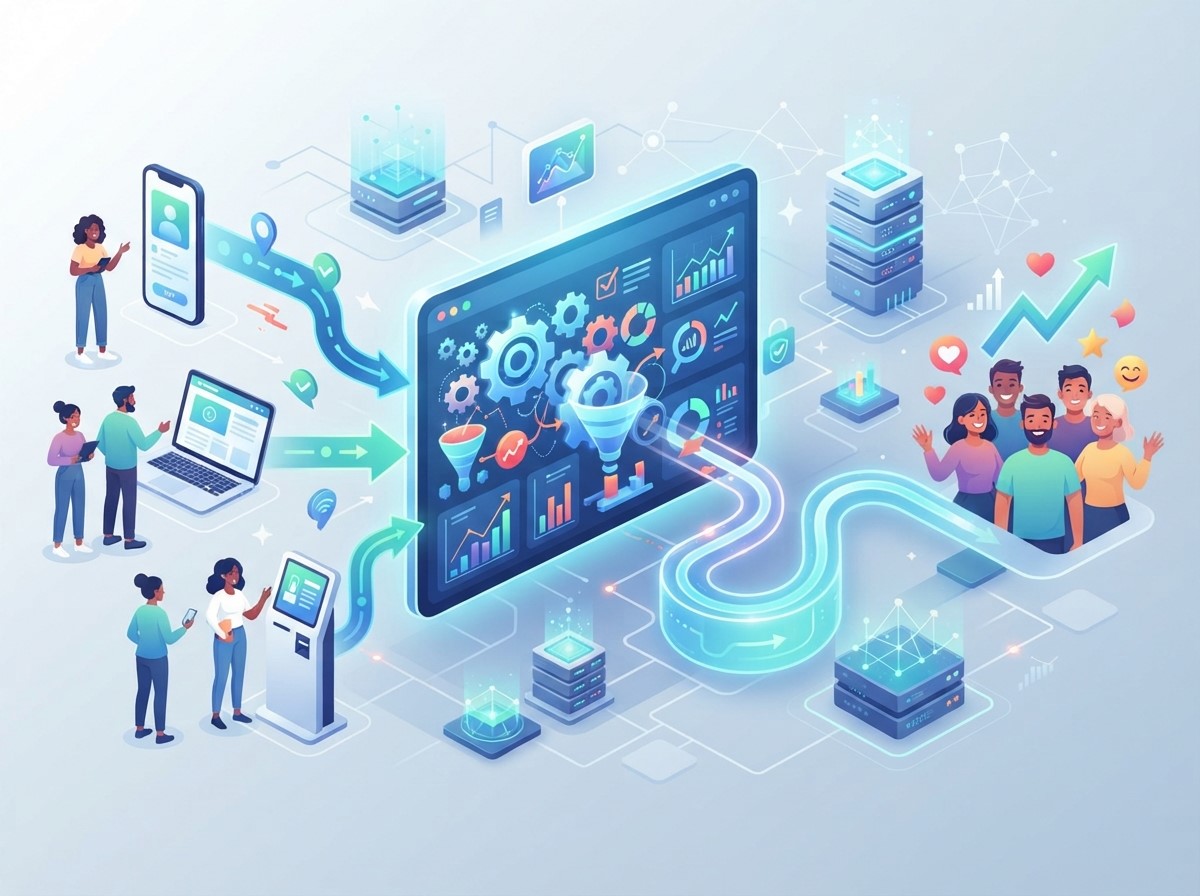
Customer experience optimization is an important strategy for businesses that want to build stronger relationships, improve customer satisfaction, and support long-term growth. Customers interact with brands through websites, social media, emails, mobile applications, customer service channels, and purchasing platforms. Every interaction can influence how customers perceive a business.
A confusing website, slow response, inconsistent branding, or complicated purchasing process can create frustration and reduce loyalty. Customer experience optimization focuses on identifying these problems and improving every stage of the customer journey. Businesses can also use technologies such as Automated brand creation, Brand identity automation, and Customer journey automation to create more consistent and personalized experiences across different digital touchpoints.
What Is Customer Experience Optimization?
Customer experience optimization is the process of improving interactions between customers and a business across different touchpoints. It focuses on making the customer journey easier, more relevant, consistent, and valuable from the first interaction through post-purchase communication.
Understanding the Customer Experience
Customer experience includes every interaction a person has with a business. This can begin with seeing an advertisement and continue through website visits, product research, customer support, purchasing, delivery, and follow-up communication.
A positive experience can make customers more comfortable doing business with a company. A negative experience, however, may cause customers to abandon purchases or consider competing brands.
Why Customer Experience Matters
Customers have many choices in competitive markets. Businesses that provide convenient and relevant experiences can create stronger relationships with their audiences.
Customer experience also affects more than immediate purchases. Satisfied customers may return, recommend the brand to others, provide positive feedback, and develop greater long-term trust.
How Customer Experience Optimization Supports Business Success

Optimizing customer experience can influence customer satisfaction, retention, engagement, and conversion opportunities. Businesses can identify friction points and improve interactions based on customer needs and measurable performance data.
Increasing Customer Satisfaction
Customer satisfaction can improve when businesses make interactions simple and responsive. Customers want clear information, convenient navigation, fast support, and straightforward purchasing processes.
Businesses can improve satisfaction by identifying common customer complaints and reviewing where users experience difficulty. Small improvements in communication or usability can make the overall experience more convenient.
Improving Customer Retention
Customer retention is influenced by the quality of experiences customers receive after their initial purchase. Businesses that provide useful support, relevant communication, and consistent service can encourage customers to continue their relationship.
Retention strategies should focus on delivering ongoing value rather than relying only on promotional messages. Understanding customer expectations can help businesses develop more relevant retention experiences.
Mapping the Customer Journey
Customer journey mapping helps businesses understand the different stages customers move through when interacting with a brand. It can reveal opportunities for improvement across marketing, sales, service, and post-purchase activities.
Identifying Customer Touchpoints
Touchpoints may include search results, social media, websites, emails, chat systems, product pages, checkout pages, support channels, and review platforms.
Businesses should evaluate whether these touchpoints provide consistent information and whether customers can easily move from one stage to the next.
Finding Experience Gaps
Experience gaps can occur when customer expectations and actual interactions do not match. For example, an advertisement may promise a simple process while the website requires multiple unnecessary steps.
Identifying these gaps allows businesses to improve communication, simplify processes, and create a more consistent customer journey.
Using Customer Journey Automation
Customer journey automation can help businesses manage repetitive interactions throughout the customer lifecycle. Automation can trigger messages or actions based on customer behavior, preferences, or journey stages.
Automating Relevant Communications
Businesses can automate welcome emails, reminders, product recommendations, follow-ups, onboarding messages, and other communications.
Automated communication should be relevant to the customer’s situation. Sending the same message to every customer can reduce personalization and make the experience feel less useful.
Supporting Customers at Different Stages
Customers at different stages have different needs. A new visitor may need educational information, while an existing customer may need onboarding assistance or product support.
Customer journey automation can help deliver appropriate communications based on customer actions. This can make interactions more timely while reducing manual work for business teams.
Creating Consistent Brand Experiences
Consistency is an important part of customer experience. Customers should receive a recognizable and coherent brand experience across different platforms.
Using Automated Brand Creation
Automated brand creation can support businesses in developing and maintaining brand assets more efficiently. Automated systems may assist with generating or organizing visual elements, messaging templates, digital content, and other brand materials.
The goal should be to maintain consistency while still allowing businesses to adapt communication for different audiences and channels.
Maintaining Consistent Messaging
A customer may discover a business through social media and later visit its website or contact customer support. If each channel communicates a completely different message, customers may become confused.
Businesses should establish clear brand guidelines covering tone, messaging, visual identity, and customer communication. Consistency can make the brand easier to recognize and understand.
The Role of Brand Identity Automation
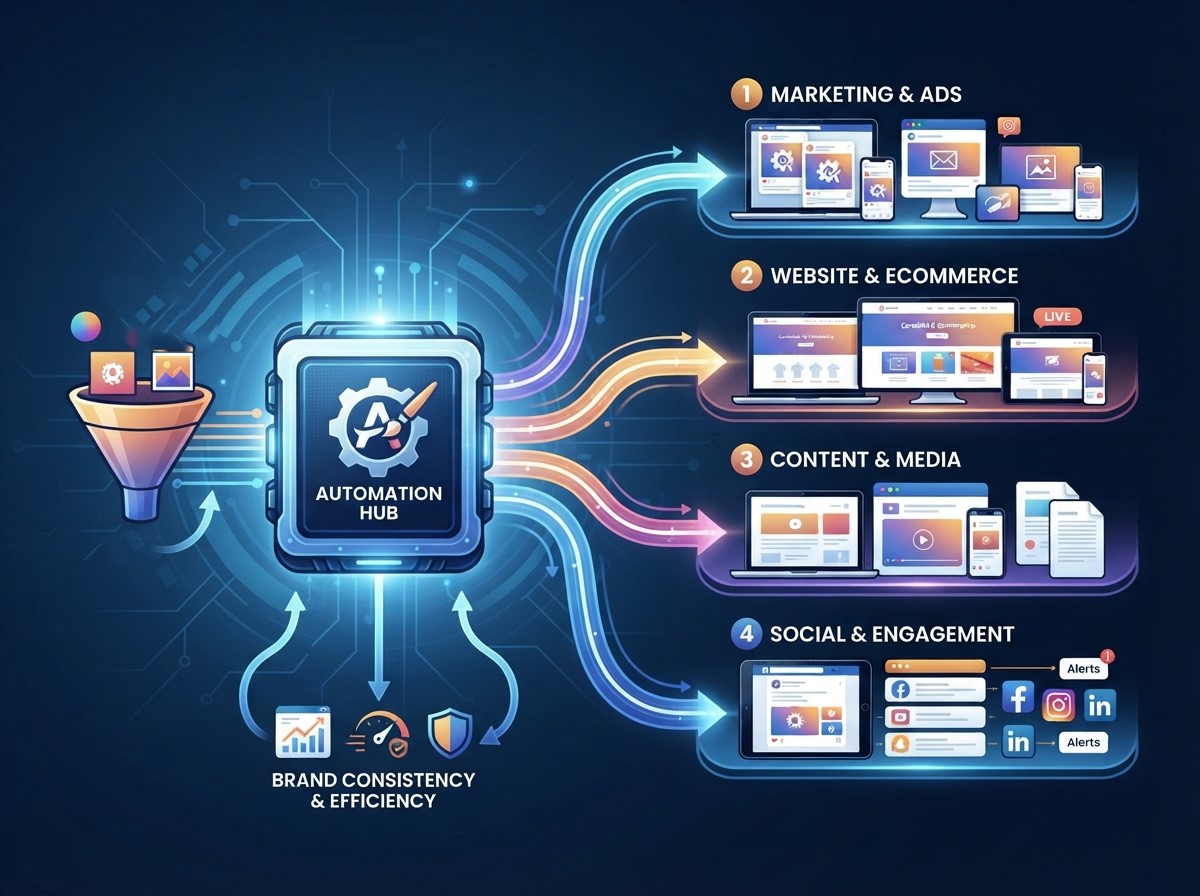
Brand identity automation can help businesses manage repetitive branding tasks while maintaining consistent visual and communication standards.
Improving Visual Consistency
Brand identity includes elements such as logos, typography, color usage, imagery, layouts, and visual communication. Maintaining these elements consistently across multiple platforms can become difficult as businesses grow.
Automation can help teams organize approved brand assets and apply established guidelines across different content formats.
Supporting Scalable Brand Communication
As a business expands into new markets and channels, the amount of content and communication increases. Brand identity automation can help teams maintain consistency while producing materials more efficiently.
However, automated systems should operate within clear brand guidelines and should be reviewed when accuracy, context, or brand sensitivity is important.
Improving Website and Digital Experiences
A website is often one of the most important customer touchpoints. Its design, performance, navigation, and content can significantly influence customer perception.
Simplifying Website Navigation
Customers should be able to find important information without unnecessary effort. Clear menus, logical page structures, search functions, and visible calls to action can improve navigation.
Businesses should review common user paths to identify pages where visitors frequently leave or become confused.
Optimizing Mobile Experiences
Mobile users may interact with websites differently from desktop users. Small buttons, difficult forms, slow-loading pages, and poorly organized content can create frustration.
Responsive design, readable content, simple navigation, and mobile-friendly forms can help businesses provide a smoother experience across different devices.
Personalizing Customer Interactions
Personalization can make customer interactions more relevant by considering customer preferences, previous actions, and interests.
Using Customer Data Responsibly
Businesses can use customer information to provide relevant recommendations, content, and communication. However, data should be collected and used responsibly.
Customers should understand how their information is being used, and businesses should implement appropriate security and privacy practices.
Delivering Relevant Recommendations
Businesses can recommend products, services, content, or support resources based on customer activity. For example, an online store may recommend related products based on previous purchases.
Relevant recommendations can make the customer experience more convenient, but recommendations should remain useful rather than becoming excessive promotional messages.
Improving Customer Service
Customer service has a direct impact on customer experience because customers often contact support when they have questions or problems.
Providing Faster Support
Customers generally want timely answers, especially when they encounter purchasing, payment, delivery, or product issues. Businesses can use live chat, knowledge bases, automated responses, and support ticket systems to improve response processes.
Automation can handle common questions while more complex issues can be directed to human representatives.
Creating Omnichannel Support
Customers may communicate through email, chat, social media, phone, or other channels. Businesses should aim to maintain consistent information across these platforms.
An integrated support process can reduce the need for customers to repeatedly explain the same issue when moving between channels.
Measuring Customer Experience Performance
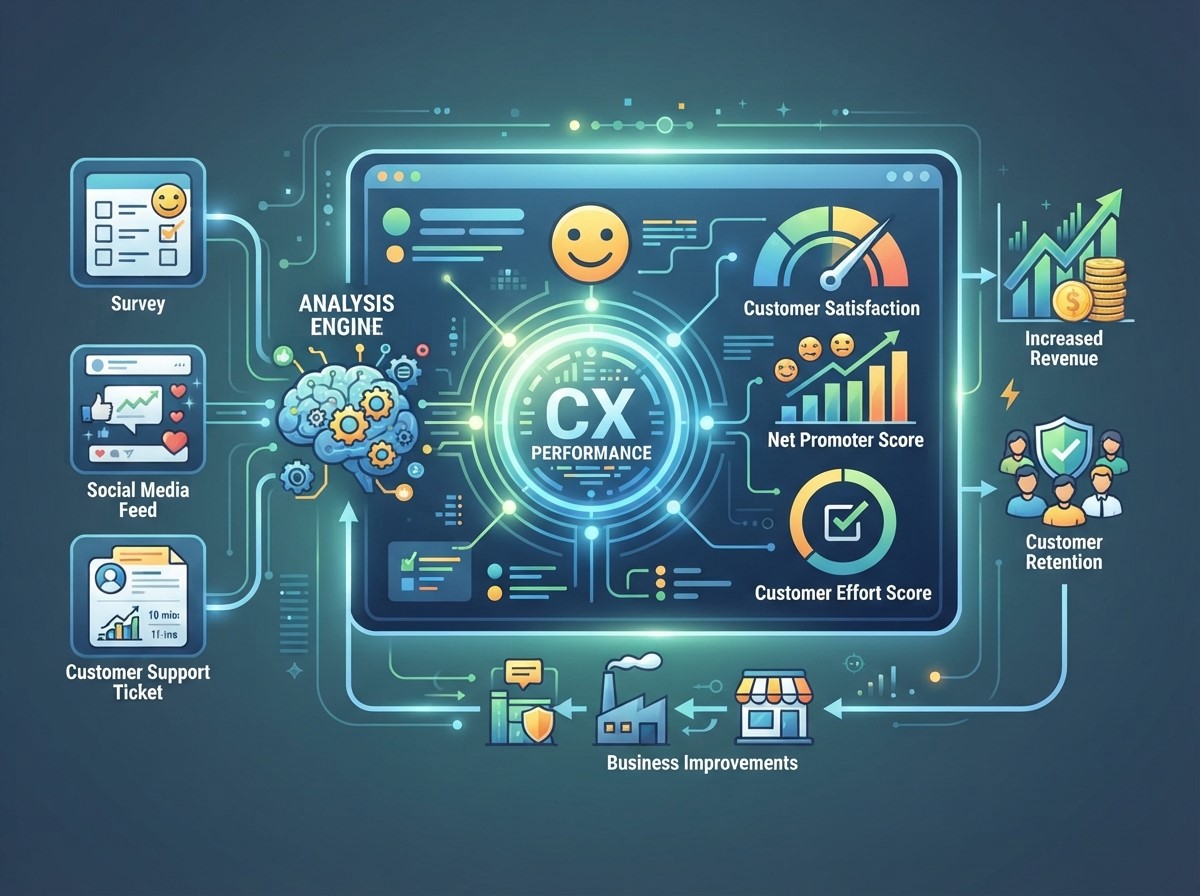
Customer experience optimization requires ongoing measurement. Businesses need to understand whether changes are improving customer satisfaction and business outcomes.
Tracking Customer Feedback
Customer surveys, reviews, support conversations, and feedback forms can provide useful information about customer expectations.
Businesses should look for recurring themes rather than focusing only on individual comments. Repeated complaints may indicate a broader experience problem that needs attention.
Monitoring Business Metrics
Useful metrics may include customer retention, repeat purchases, conversion rates, support response times, customer satisfaction scores, and customer lifetime value.
Combining customer feedback with business performance data provides a broader view of the customer experience.
Common Customer Experience Mistakes
Businesses can unintentionally create poor experiences by focusing too heavily on internal processes instead of customer needs.
Creating Too Many Automated Messages
Automation can save time, but excessive messages can overwhelm customers. Businesses should carefully control frequency and ensure that each communication provides a clear benefit.
Ignoring Customer Feedback
Collecting feedback without acting on it can reduce trust. Businesses should review feedback regularly and identify realistic opportunities for improvement.
Providing Inconsistent Information
Different departments or platforms may sometimes provide conflicting information about pricing, policies, products, or services. Clear internal processes can help reduce these inconsistencies.
How to Build an Effective Customer Experience Strategy
A strong customer experience strategy should combine customer research, clear processes, technology, consistent branding, and continuous improvement.
Understand Customer Expectations
Businesses should identify what customers need before, during, and after a purchase. Surveys, interviews, analytics, support data, and reviews can help reveal expectations and pain points.
Prioritize Important Experience Improvements
Not every issue has the same impact. Businesses should identify problems that affect large numbers of customers or create significant friction.
Prioritizing improvements can help teams use resources more effectively and create measurable changes.
Combine Automation With Human Support
Automation can handle repetitive tasks, but human support remains valuable for complex, sensitive, or highly personalized situations.
Businesses should determine which interactions can be automated and which require human involvement. This balanced approach can improve efficiency without making customer experiences feel impersonal.
Frequently Asked Questions
1. What is Customer Experience Optimization?
Customer experience optimization is the process of improving customer interactions across different touchpoints to make experiences easier, more relevant, consistent, and satisfying.
2. Why is Customer Experience Optimization important?
It can help businesses improve customer satisfaction, retention, engagement, conversion opportunities, and long-term relationships by reducing friction throughout the customer journey.
3. What is Customer Journey Automation?
Customer journey automation uses technology to automatically manage communications and actions based on customer behavior, preferences, or journey stages.
4. How does Automated brand creation affect customer experience?
Automated brand creation can help businesses maintain consistent branding across digital materials and communication channels, making the brand easier for customers to recognize.
5. What is Brand identity automation?
Brand identity automation uses technology to support the consistent application and management of brand assets, visual elements, messaging, and established identity guidelines.
6. Can automation improve customer satisfaction?
Yes. Appropriate automation can provide faster responses, timely communications, useful recommendations, and convenient self-service options. However, businesses should avoid excessive or irrelevant automation.
7. How can businesses improve their customer journey?
Businesses can map customer touchpoints, identify friction points, simplify navigation, improve communication, personalize relevant interactions, and continuously review customer feedback.
8. How can customer experience be measured?
Businesses can use customer satisfaction surveys, reviews, retention rates, repeat purchases, conversion rates, support response times, and other relevant performance metrics.
9. Should every customer interaction be automated?
No. Repetitive and predictable tasks can often be automated, while complex, sensitive, or highly personalized situations may benefit from human support.
10. How does customer experience contribute to business growth?
A positive customer experience can encourage satisfaction, repeat purchases, retention, referrals, and stronger customer relationships, which can contribute to sustainable business growth.
Conclusion
Customer experience optimization plays an important role in business success by helping companies improve every interaction throughout the customer journey. From website usability and customer service to personalized communication and post-purchase support, each touchpoint can influence customer satisfaction and loyalty.
Technologies such as Automated brand creation, Brand identity automation, and Customer journey automation can help businesses deliver more consistent and efficient experiences when implemented thoughtfully. However, technology should support customer needs rather than replace human understanding. By collecting customer feedback, analyzing performance, reducing friction, maintaining consistent branding, and continuously improving digital experiences, businesses can create stronger relationships and support long-term growth.