
Building a brand used to take months. Teams of designers, strategists, and copywriters would labor over positioning documents, visual identity systems, and tone-of-voice guides before a single piece of content ever went live. For most businesses, that process was expensive, slow, and difficult to scale.
Automated brand creation is changing all of that—and fast. Powered by advances in artificial intelligence and machine learning, the tools available to marketers and founders today can compress weeks of branding work into hours. But this shift is about more than speed. Automated brand creation is redefining what it means to build a brand from the ground up, making sophisticated AI brand strategy accessible to businesses that previously couldn’t afford it.
This post breaks down what automated brand creation actually involves, why it’s gaining serious momentum, where the technology stands today, and what it means for the future of digital branding. Whether you’re running a startup or managing brand strategy for an enterprise, the trends covered here will affect how your business shows up in the market.
What Is Automated Brand Creation?
Automated brand creation refers to the use of AI-powered tools and algorithms to generate, manage, and evolve the core elements of a brand—without requiring a full creative team to build everything manually.
At its most basic level, this includes generating brand names, logos, color palettes, typography, and taglines. At a more sophisticated level, it encompasses AI brand strategy: identifying target audiences, defining brand positioning, producing brand voice guidelines, and even generating on-brand marketing content at scale.
Platforms like Looka, Brandmark, and Tailor Brands have already made logo generation automated and affordable. More advanced tools are now tackling the strategic layer—using AI to analyze market positioning, competitor landscapes, and consumer psychology to recommend where and how a brand should show up.
The result is a new category of automated marketing infrastructure, one where the creative and strategic foundations of a brand can be assembled, tested, and iterated with far less friction than traditional processes allow.
Why Traditional Branding Struggles to Keep Up
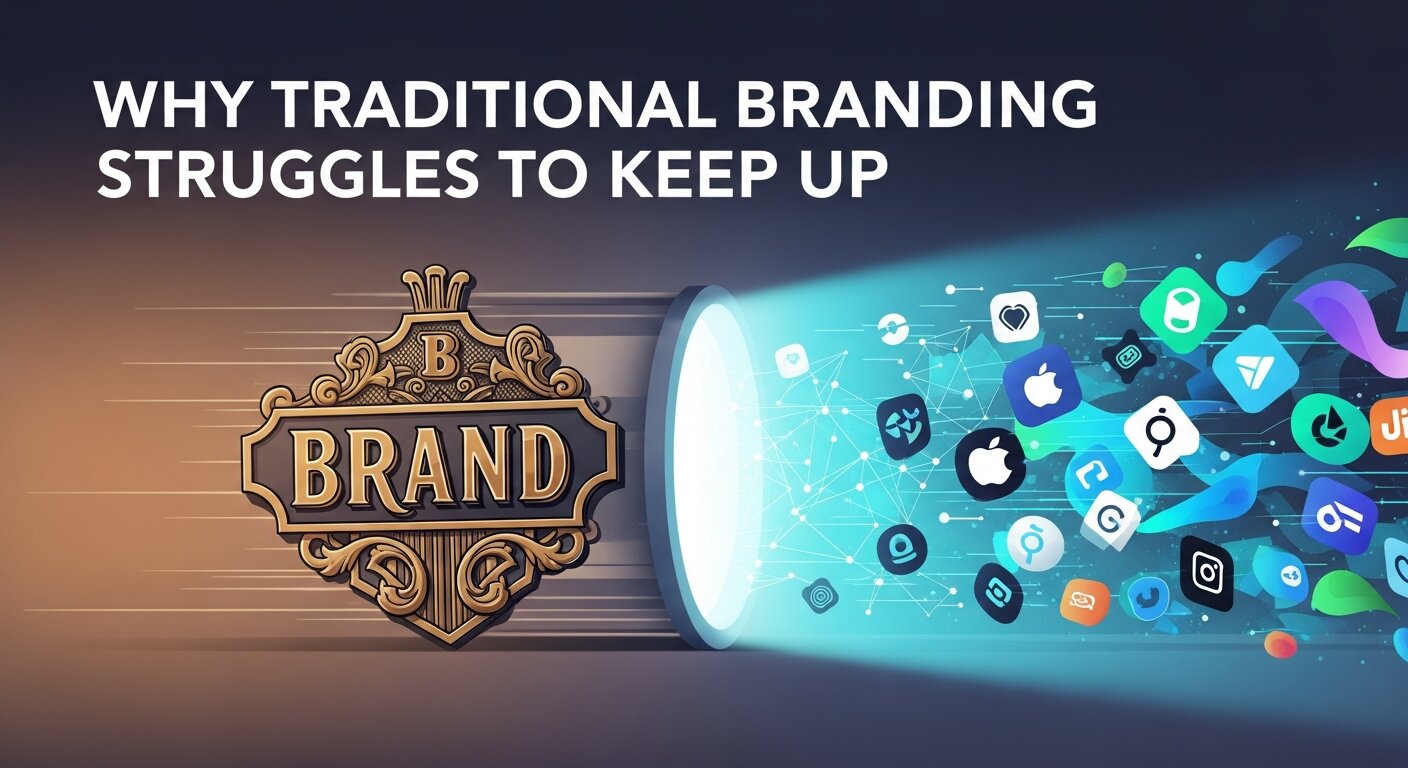
Traditional branding has always been resource-intensive by nature. A comprehensive brand identity project at a mid-tier agency could run anywhere from $20,000 to well over $100,000, with timelines stretching across multiple quarters. For enterprise companies with the budget and timeline flexibility, this model works. For everyone else, it creates a significant barrier.
The problem goes beyond cost. Markets move quickly, consumer preferences shift, and digital channels multiply. A brand identity built in a single workshop and locked into a static style guide struggles to stay relevant across a landscape that looks fundamentally different every few years.
There’s also the question of consistency. Managing brand guidelines across a growing team, multiple agencies, and dozens of platforms is genuinely difficult. Studies from Lucidpress have found that consistent brand presentation can increase revenue by up to 23%—yet maintaining that consistency manually is one of the biggest operational challenges marketing teams face.
Automated brand creation addresses all three of these pain points: cost, speed, and consistency.
How AI-Powered Branding Tools Work
The mechanics behind AI-powered branding vary by platform, but the underlying logic follows a similar pattern. These systems are trained on large datasets of successful brand identities, design principles, consumer behavior patterns, and market positioning frameworks. When a user inputs information about their business—industry, target audience, tone preferences, competitor references—the AI uses that data to generate brand assets that are statistically likely to resonate.
More advanced systems go further. Some platforms analyze real-time search data and social listening signals to identify gaps in a market’s visual or verbal landscape, then recommend positioning strategies that help a new brand stand out. Others integrate directly with content generation tools, so once a brand identity is established, the AI can produce marketing copy, social content, and campaign assets that remain consistently on-brand.
The key technological enablers here are:
- Generative AI: Large language models and image generation tools that can produce text, visuals, and design systems from natural language prompts.
- Machine learning: Algorithms that learn from performance data to optimize brand assets over time.
- Natural language processing (NLP): The technology behind AI tools that can develop brand voice guidelines and generate on-brand copy.
Together, these technologies make automated marketing not just possible but genuinely strategic.
The Business Case for Automated Brand Creation
Speed and cost are the obvious wins. A founder who previously needed a six-week agency engagement to establish a visual identity can now generate a complete brand system in a single afternoon. For startups, this means getting to market faster. For larger organizations, it means running more brand experiments with less overhead. But the deeper business case lies in scalability.
Traditional branding doesn’t scale gracefully. Each new market, product line, or campaign tends to create its own creative requirements, often pulling resources from a central design team or going back out to agencies. Automated brand creation flips this model. Once the core brand system is established and the AI understands the brand’s parameters, producing new variations, assets, and sub-brand identities becomes dramatically more efficient.
There’s also a performance dimension. AI-powered branding tools can A/B test visual and verbal brand elements at a scale that human teams simply can’t match. Rather than relying on a creative director’s gut instinct about which logo variant will perform better, brands can run data-driven experiments and let real user behavior inform the decisions.
For businesses operating across multiple channels—social media, email, paid search, out-of-home, retail—the ability to maintain brand consistency while adapting assets for different formats is invaluable. Automated marketing platforms that integrate with brand systems can enforce guidelines automatically, reducing the risk of off-brand content slipping through at scale.
Where Automated Brand Creation Is Headed
The technology is advancing rapidly, and the trajectory points toward even deeper integration between AI brand strategy and the broader marketing stack.
Dynamic brand identities are one of the most exciting frontiers. Rather than a static visual identity that remains fixed for years, AI systems will increasingly enable brands to adapt their visual and verbal presentation in real time—responding to seasonal trends, cultural moments, or audience segments—while maintaining overall coherence.
Personalization at the brand level is another major development. Right now, most personalization happens at the content layer. AI-powered branding will push this further, enabling brands to adjust tone, visual style, and messaging for different audience segments while keeping the underlying brand system intact.
Continuous brand monitoring is also becoming more sophisticated. AI tools can now track how a brand is being perceived across social media, review platforms, and search results, flagging when sentiment shifts or when the brand is being misrepresented. Over time, these systems will move from monitoring to actively recommending strategic adjustments in response to brand health data.
Perhaps most significantly, automated brand creation is breaking down the wall between branding and performance marketing. Historically, these disciplines operated in separate silos—brand teams focused on identity and positioning while performance teams focused on conversion and ROI. AI-powered tools increasingly connect these functions, using performance data to inform brand decisions and brand data to improve performance outcomes.
What This Means for Brand Strategists and Creative Teams
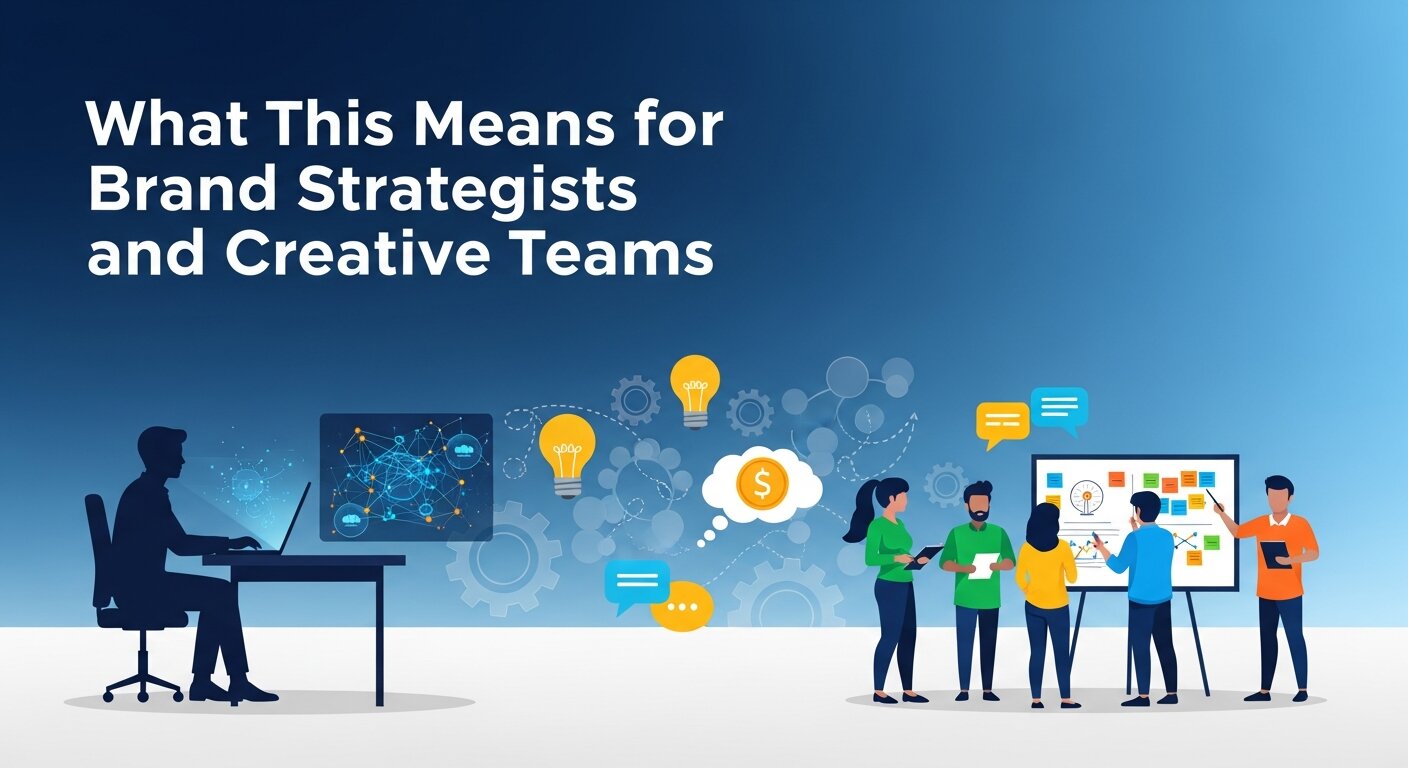
It’s worth addressing the tension that often comes up in conversations about AI-powered branding: does automation threaten the role of human brand strategists and designers?
The honest answer is that it changes the role rather than eliminating it. The tasks that are most susceptible to automation are those involving production and execution—generating logo variations, formatting assets for different platforms, producing first drafts of copy. The tasks that remain distinctly human are those requiring genuine strategic judgment, cultural nuance, and emotional intelligence.
A brand’s ability to connect meaningfully with a specific community, to take a stand on a relevant cultural issue, or to build long-term emotional loyalty is not something an algorithm can fully replicate. What AI-powered branding does is free up the humans working on these challenges from the operational burden of production work, giving them more time to focus on the strategic decisions that actually differentiate a brand.
The most effective approach to automated brand creation is one where AI handles the execution layer—generating assets, maintaining consistency, testing variations—while human strategists set the direction, make the judgment calls, and ensure the brand is building something real rather than just optimizing for short-term performance metrics.
Frequently Asked Questions (FAQs)
1. What is automated brand creation?
Automated brand creation is the process of using artificial intelligence and automation tools to develop key brand elements such as logos, color palettes, typography, messaging, brand voice, and marketing assets. These tools help businesses create and manage a consistent brand identity more efficiently than traditional manual methods.
2. How does AI help with brand creation?
AI analyzes business information, target audiences, industry trends, and competitor data to generate branding recommendations and creative assets. It can also produce brand-consistent content, suggest visual identities, and refine branding strategies based on user feedback and performance data.
3. What are the benefits of automated brand creation?
Automated brand creation reduces the time and cost required to build a brand while improving consistency across marketing channels. It also makes it easier to scale branding efforts, test creative variations, and maintain a unified brand identity as a business grows.
4. Can automated brand creation replace human designers and brand strategists?
No. While AI can automate repetitive tasks and generate creative assets quickly, human expertise is still essential for strategic decision-making, storytelling, emotional branding, and understanding cultural context. The most effective branding combines AI efficiency with human creativity.
5. Which businesses benefit most from automated brand creation?
Automated brand creation is valuable for startups, small businesses, marketing agencies, e-commerce brands, and large enterprises. Any organization looking to build or scale a consistent brand while reducing production time can benefit from AI-powered branding tools.
6. What types of brand assets can AI generate?
AI can generate logos, brand names, color schemes, typography suggestions, taglines, brand voice guidelines, marketing copy, social media content, advertising creatives, presentations, and other branded materials based on user preferences and business goals.
7. How does automated brand creation improve brand consistency?
AI-powered platforms use predefined brand guidelines to ensure that logos, colors, fonts, messaging, and design elements remain consistent across websites, social media, email campaigns, advertisements, and other marketing channels, reducing the risk of off-brand content.
8. Are automated branding tools suitable for established brands?
Yes. Established brands can use automated branding tools to create campaign assets faster, manage multiple product lines, maintain consistent branding across teams, and adapt content for different audiences while preserving their core brand identity.
9. What are the limitations of automated brand creation?
Although AI can streamline branding tasks, it may lack the creativity, emotional insight, and strategic thinking needed for complex branding decisions. Businesses should review AI-generated assets carefully to ensure they accurately reflect their values, goals, and audience expectations.
10. What is the future of automated brand creation?
The future of automated brand creation will likely include more advanced personalization, real-time brand optimization, predictive brand strategy, and deeper integration with marketing automation platforms. As AI technology continues to evolve, businesses will be able to create, manage, and optimize their brands more efficiently while maintaining strong human oversight.
Building Smarter Brands by Default
Automated brand creation makes this possible by keeping the infrastructure of a brand flexible and data-informed. It lowers the cost of experimentation, raises the floor for brand quality across the business landscape, and puts sophisticated AI brand strategy within reach of organizations that previously had to choose between doing branding well and doing it at all.
The businesses that will benefit most from this shift are those that treat automated marketing not as a replacement for strategic thinking, but as a platform for it. The tools are powerful—increasingly so. But they work best when they’re pointed in a direction that only humans can determine: toward a brand that genuinely means something to the people it’s built to serve.