Modern businesses depend on multiple software applications to manage daily operations, communicate with customers, process information, and maintain business records. However, when these applications operate independently, transferring information between systems can become time-consuming and complicated. API automation provides an effective way to connect different software platforms, exchange data, and reduce repetitive manual activities. It allows applications to communicate automatically through predefined instructions and integration processes.
With API automation, businesses can improve software integration, maintain consistent information, and create more efficient workflows. It also supports modern technologies such as artificial intelligence, cloud computing, and automated business applications. As organizations continue adopting digital solutions, reliable API connectivity has become an important part of operational efficiency and long-term business growth.
Understanding API Automation and Software Connectivity
API automation refers to using automated processes to manage communication and interactions between different application programming interfaces. An API allows two or more software applications to exchange information and access specific functionalities without requiring users to transfer data manually. Automation makes these interactions faster, more consistent, and easier to manage.
For example, an online store can automatically send customer orders to inventory management software, update payment records, and notify shipping platforms. These activities can happen through connected APIs without requiring employees to enter the same information repeatedly.
How API Automation Works
API automation works through predefined rules, requests, responses, and triggers that control how applications exchange information. When a specific event occurs, such as a customer placing an order, an automated API request sends the necessary information to another connected application. The receiving system processes the request and returns a response.
This communication allows businesses to synchronize information between different platforms. Depending on the integration requirements, APIs can use REST, SOAP, or GraphQL technologies to exchange structured data. Proper authentication, error handling, and monitoring help maintain secure and reliable communication.
Why Software Connectivity Matters
Software connectivity allows different business applications to work together as part of a connected digital environment. Without effective integration, organizations may experience duplicated records, inconsistent information, communication delays, and unnecessary administrative work.
API automation helps address these challenges by creating communication channels between software platforms. Employees can access updated information across connected applications, while businesses can improve coordination between departments. Better connectivity also makes it easier to introduce new technologies without replacing existing software systems.
How API Automation Improves Software Integration
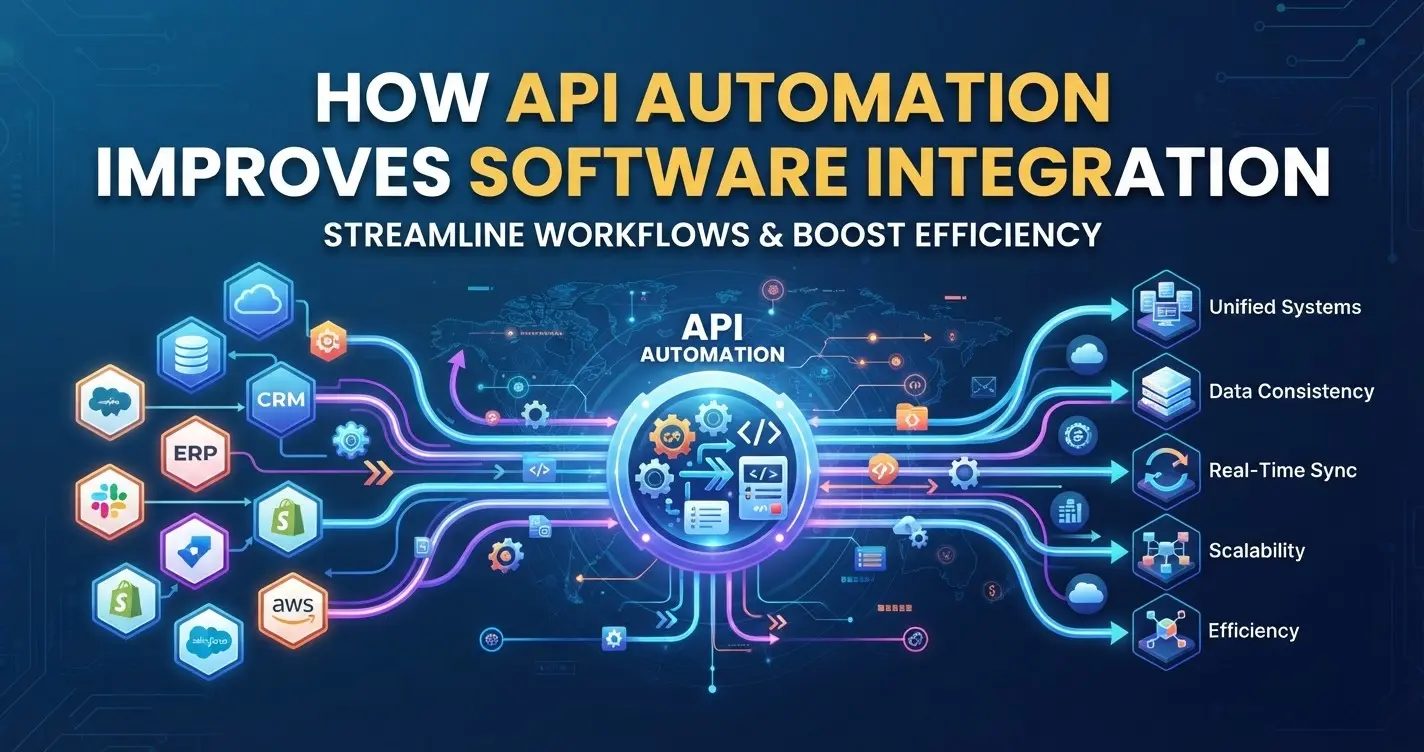 Software integration becomes more effective when applications can communicate without constant manual intervention. API automation connects different systems and allows information to move between them according to predefined workflows. This reduces operational interruptions and helps organizations maintain consistent business information across multiple platforms.
Connecting Multiple Business Applications
Businesses commonly use separate applications for customer relationship management, accounting, marketing, inventory, and communication. Managing these systems independently can create information gaps and increase administrative responsibilities.
API automation connects these applications so that information can move between them automatically. For instance, when a sales representative updates customer information in a CRM platform, the connected marketing system can receive the updated details. This improves coordination and reduces the possibility of outdated customer records.
Eliminating Manual Data Entry
Manual data entry consumes valuable employee time and increases the possibility of human errors. When employees repeatedly transfer information between applications, small mistakes can affect financial records, customer information, and operational reports.
Automated API connections reduce these problems by transferring information directly between authorized systems. Businesses can establish predefined rules for collecting, validating, and updating information. This improves data accuracy while allowing employees to focus on activities that require professional judgment.
Supporting Real-Time Data Synchronization
Real-time data synchronization helps businesses maintain consistent information across connected software platforms. When a particular application receives new information, an automated integration can immediately notify another system or update the relevant records.
This capability is particularly useful for ecommerce businesses, financial services, logistics companies, and customer support teams. Employees can access more current information when making decisions, while customers receive more consistent service across different communication channels.
The Role of API Automation in Digital Process Automation
Modern organizations increasingly use automation to simplify repetitive business activities and improve operational performance. Digital process automation focuses on managing complete business workflows through connected digital technologies. API automation supports this approach by allowing different applications to exchange information and perform specific actions without requiring continuous employee involvement.
For example, a business can automate customer onboarding by connecting registration forms, verification systems, CRM software, and email platforms. Once a customer submits information, the connected applications can process the relevant steps according to predefined conditions. This creates a more organized workflow and reduces unnecessary delays.
Streamlining Repetitive Business Workflows
Repetitive activities often involve transferring information, updating records, generating notifications, and managing approvals. Performing these tasks manually can slow down business operations, especially when multiple departments depend on the same information.
API automation helps organizations establish connected workflows that complete routine activities automatically. Employees can spend less time managing administrative responsibilities and more time working on strategic tasks. This approach also makes business processes easier to standardize and monitor.
Improving Departmental Collaboration
Different departments frequently depend on information maintained by other teams. Sales employees may need customer records from marketing, while finance teams require updated transaction information from sales and payment applications.
API automation improves collaboration by connecting the software platforms used across these departments. Relevant information can reach the appropriate applications without unnecessary communication delays. As a result, employees can coordinate their responsibilities more effectively and maintain consistent operational records.
How AI Task Automation Strengthens API Integration
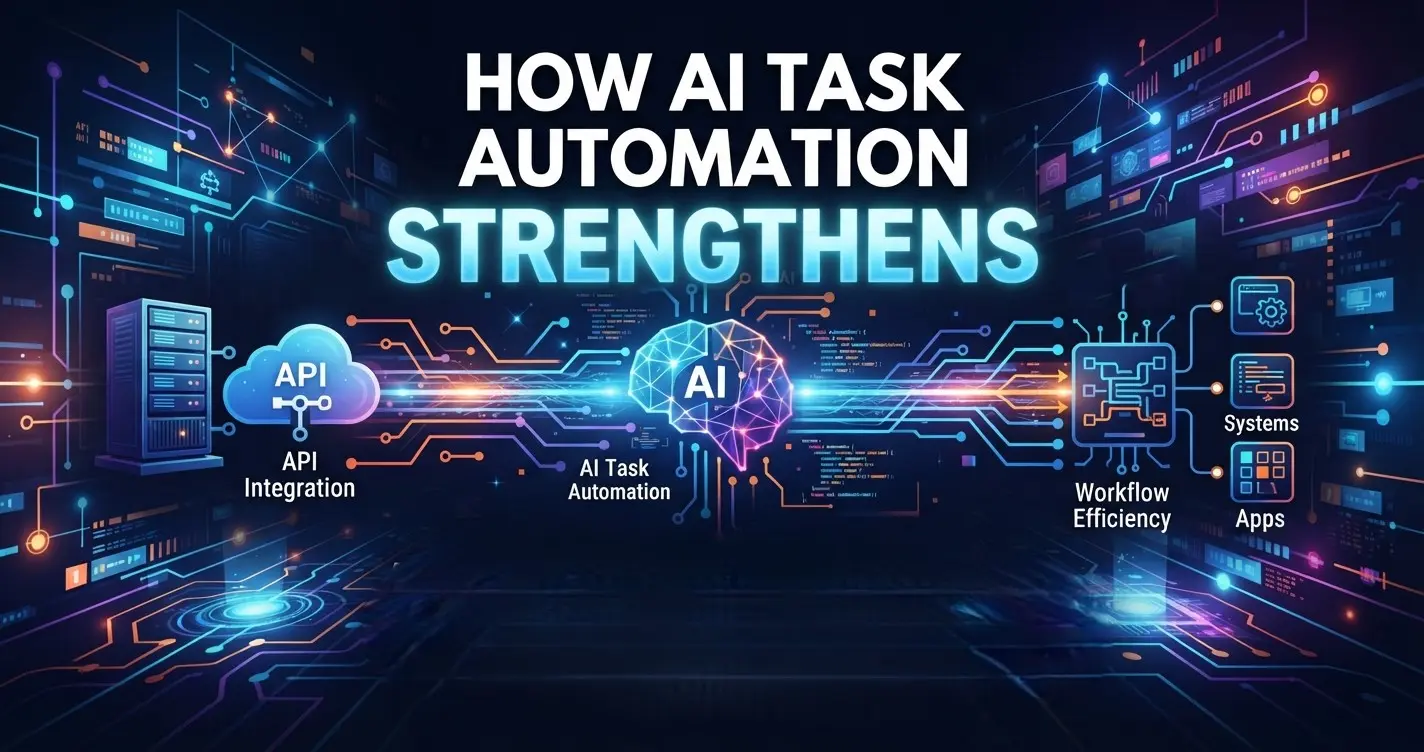 Artificial intelligence is expanding the capabilities of traditional software automation. AI Task automation combines artificial intelligence with automated workflows to perform activities that involve information analysis, classification, decision support, and repetitive task management.
When integrated with APIs, AI-powered applications can exchange information with other business systems and trigger actions based on processed results. For example, an AI application may analyze incoming customer messages, identify their main topics, and send relevant information to a customer relationship management platform through an API connection.
Combining Artificial Intelligence With APIs
APIs allow AI applications to access information from external platforms and provide processed results to connected systems. This makes it possible to integrate AI capabilities into existing business environments without rebuilding every application.
A company can connect an AI-powered support tool with its CRM software to organize customer inquiries and prepare relevant responses. API integration transfers the necessary information between applications, while the AI system performs the analysis required for the workflow.
Automating Intelligent Business Activities
Traditional automation generally follows predefined conditions, while AI-powered automation can handle certain tasks that require pattern recognition and information interpretation. Combining these technologies allows businesses to create more flexible workflows.
For example, AI applications can categorize customer feedback, identify common support requests, and summarize business information. APIs can then transfer these results to reporting platforms or internal management systems. However, organizations should maintain human oversight for sensitive decisions and activities requiring professional judgment.
The Importance of Content Automation in Connected Systems
Businesses produce and manage different types of digital content across websites, marketing platforms, social networks, and customer communication channels. Managing these activities separately can increase workload and create inconsistencies in published information.
Content automation helps organizations manage repetitive content-related activities through connected applications and predefined workflows. API integration makes it possible to transfer content information between content management systems, publishing platforms, analytics tools, and marketing applications.
Connecting Content Management Platforms
Content management systems help businesses create, organize, edit, and publish digital materials. When connected with other applications through APIs, these platforms can support more efficient content management processes.
For example, a business can connect its content management system with an email marketing platform. When a new article is published, the integration can send relevant information to the marketing application for newsletter preparation. This reduces repetitive work and helps maintain a consistent publishing process.
Improving Content Distribution
Content distribution involves sharing published materials across different digital channels. API automation can simplify this process by connecting websites, social media management tools, and other publishing applications.
Businesses can establish workflows that transfer approved content information to connected platforms. This makes content distribution more organized and reduces the time required to manage multiple publishing environments. However, platform permissions, publishing requirements, and content approval rules should be considered before implementing automated distribution.
Key Benefits of API Automation for Businesses
API automation offers several operational advantages for organizations that depend on multiple software applications. Its value extends beyond simple data transfers because it helps businesses establish connected workflows, improve information management, and reduce repetitive responsibilities.
Increased Operational Efficiency
Automating communication between software applications reduces the time employees spend transferring information and managing repetitive tasks. Businesses can complete routine operations more quickly while maintaining consistent processes across departments.
Improved operational efficiency also helps organizations use their existing technology investments more effectively. Instead of purchasing separate solutions for every business requirement, companies can integrate compatible applications and create connected workflows that support their operational needs.
Better Data Accuracy and Consistency
Information accuracy is important for customer management, financial reporting, inventory control, and business planning. When information is entered manually into several applications, differences can develop between records.
API automation reduces unnecessary manual handling by transferring information directly between connected systems. Data validation rules and error-handling procedures can further improve consistency. Businesses should still monitor synchronization activities to identify incorrect information or integration problems.
Improved Business Scalability
As businesses grow, their software requirements and operational responsibilities usually become more complicated. Applications that work effectively for a small organization may become difficult to manage when transaction volumes and customer interactions increase.
API automation supports scalability by allowing organizations to connect additional applications and expand existing workflows. Businesses can introduce new services, integrate additional platforms, and manage increasing information volumes without depending entirely on manual processes.
Best Practices for Implementing API Automation
Successful API automation requires proper planning, technical preparation, and continuous monitoring. Businesses should understand their existing software environment before establishing integrations. Selecting suitable APIs, defining workflow requirements, and maintaining appropriate security controls can help prevent operational problems.
Identify Integration Requirements
Before implementing API automation, organizations should identify which applications need to communicate and what information must move between them. Understanding existing workflows helps businesses select appropriate integration methods and avoid unnecessary technical complexity.
Companies should also determine whether information needs to move continuously, periodically, or only after specific events. Clear integration requirements make development, testing, and future maintenance more manageable.
Prioritize API Security
APIs frequently exchange sensitive business information, including customer records, financial details, and internal operational data. Weak security controls can expose these resources to unauthorized access and potential data breaches.
Organizations should implement appropriate authentication, authorization, encryption, and access restrictions. API keys and tokens should be protected, while permissions should follow the principle of least privilege. Regular security reviews can help identify vulnerabilities and maintain reliable integrations.
Monitor API Performance
API integrations may experience failures because of network interruptions, incorrect requests, expired credentials, service limitations, or changes in external applications. Without monitoring, these problems can interrupt important business workflows.
Organizations should use monitoring systems to track API response times, error rates, request volumes, and failed transactions. Retry mechanisms, logging, and alert notifications can help technical teams identify problems and restore normal operations more effectively.
Common Challenges in API Automation
Although API automation provides significant advantages, implementing and maintaining integrations can involve technical and operational challenges. Businesses need to understand these limitations before depending on automated connections for important processes.
Compatibility Between Different Systems
Not every software application supports the same API standards, data formats, or integration capabilities. Some platforms may have limited API access, while others require additional development to support specific business requirements.
Organizations should evaluate compatibility before selecting integration solutions. Testing API endpoints, reviewing technical documentation, and examining data requirements can help identify potential problems before deployment.
Managing API Rate Limits
Many API providers restrict the number of requests applications can make within a particular period. These restrictions help maintain platform stability but may affect workflows that require frequent information exchanges.
Businesses should understand provider-specific rate limits and design integrations accordingly. Request scheduling, caching, batching, and controlled retry strategies can help reduce unnecessary API calls and maintain stable communication.
Maintaining Integration Reliability
External software providers may update API versions, change authentication requirements, or discontinue older endpoints. These changes can affect existing integrations and interrupt automated workflows.
Regular maintenance is therefore essential for long-term reliability. Businesses should monitor provider announcements, update integrations when necessary, and maintain documentation describing how connected applications communicate.
Future Trends in API Automation and Software Integration
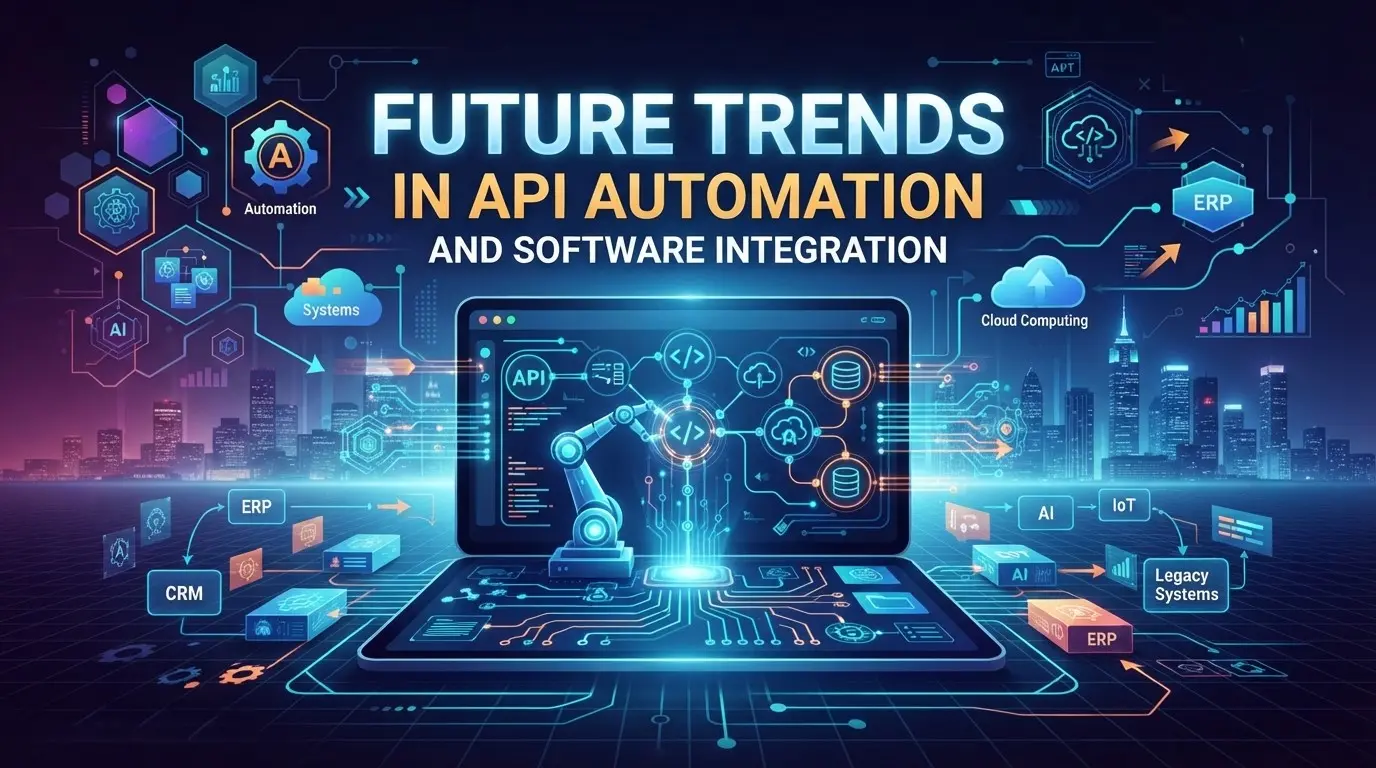 API automation will continue evolving as businesses adopt artificial intelligence, cloud computing, and more connected digital environments. Organizations increasingly require flexible integration solutions that can support changing operational needs while maintaining secure information exchange.
AI-powered integrations are expected to support more intelligent workflow management, while event-driven APIs can help applications respond quickly to important business activities. Low-code and no-code integration platforms may also make automation more accessible to organizations with limited development resources.
Conclusion
API automation has become an important part of modern software integration and business connectivity. By connecting different applications, synchronizing information, and reducing repetitive manual activities, it helps organizations create more efficient operational environments. Its integration with Digital process automation, AI Task automation, and Content automation also provides opportunities to develop smarter and more connected business workflows.
However, successful implementation requires careful planning, secure API management, compatibility testing, and continuous performance monitoring. Businesses that invest in reliable API integration strategies can improve collaboration, maintain accurate information, and build scalable software environments that support long-term growth.
Frequently Asked Questions (FAQs)
1. What Is API Automation?
API automation is the process of using automated requests and predefined workflows to manage communication between different software applications. It allows systems to exchange information, perform actions, and synchronize data without requiring continuous manual intervention.
2. How Does API Automation Improve Software Integration?
API automation improves software integration by connecting different applications and allowing them to exchange information automatically. It reduces manual data entry, improves communication between platforms, and helps businesses maintain consistent information across their software environment.
3. What Are the Main Benefits of API Automation?
The main benefits include improved operational efficiency, reduced manual work, better data accuracy, faster information exchange, and increased scalability. It also helps organizations connect existing applications without completely replacing their software infrastructure.
4. What Is the Difference Between API Integration and API Automation?
API integration establishes communication between two or more software applications, while API automation uses that communication to perform predefined tasks automatically. Integration creates the connection, whereas automation determines how connected systems interact within specific workflows.
5. How Does API Automation Support Digital Process Automation?
API automation supports Digital process automation by connecting applications involved in business workflows. It allows information to move between systems automatically, helping organizations streamline administrative activities, improve departmental coordination, and reduce repetitive operational tasks.
6. Can API Automation Work With Artificial Intelligence?
Yes, API automation can connect artificial intelligence applications with CRM systems, analytics platforms, customer support tools, and other business software. These integrations allow AI applications to access information, process requests, and transfer results to connected systems.
7. Is API Automation Suitable for Small Businesses?
API automation is suitable for small businesses that use multiple applications to manage customers, sales, marketing, and daily operations. It can reduce repetitive work, improve information management, and help smaller organizations operate more efficiently.
8. How Does API Automation Improve Content Management?
API automation connects content management systems with publishing platforms, email marketing applications, and analytics tools. Through Content automation, businesses can simplify content distribution, transfer publishing information, and manage repetitive content-related workflows.
9. What Security Measures Are Important for API Automation?
Important security measures include strong authentication, authorization controls, encrypted communication, secure API key management, and regular security testing. Businesses should also monitor API activity and restrict access to sensitive information according to operational requirements.
10. What Is the Future of API Automation?
The future of API automation will involve greater integration with artificial intelligence, cloud applications, event-driven systems, and low-code automation platforms. These developments will help businesses create more flexible workflows and improve connectivity across increasingly complex software environments.