
An effective AI brand strategy combines artificial intelligence tools with clear brand positioning to automate content creation, personalize customer experiences, and maintain consistent brand identity at scale. Brands that integrate AI into their strategy early gain a measurable competitive advantage in speed, personalization, and data-driven decision-making.
Brands have always competed on relevance. The ones that stay relevant adapt faster than their competitors—and right now, the fastest-moving brands are the ones embedding AI into the core of how they operate.
An AI brand strategy does more than automate repetitive tasks. When built correctly, it reshapes how a brand communicates, how it learns from its audience, and how consistently it shows up across every channel. The result? A brand that feels more human, even as the processes powering it become increasingly automated.
This guide breaks down exactly how to build an AI brand strategy from the ground up—covering brand identity automation, AI-powered branding tools, automated marketing, and the practical steps that turn AI potential into measurable results.
What Is an AI Brand Strategy?
An AI brand strategy is a structured approach to integrating artificial intelligence into a brand’s positioning, communication, and marketing operations. It goes beyond simply using AI tools. A true AI brand strategy aligns those tools with specific brand goals, audience insights, and long-term growth objectives.
At its core, an AI brand strategy answers three questions:
- How can AI help us understand our audience better?
- How can AI ensure our brand communicates consistently at scale?
- How can AI accelerate the decisions that drive growth?
The brands getting this right aren’t replacing human creativity with automation—they’re using AI to amplify it.
Why AI-Powered Branding Is No Longer Optional
The numbers tell a clear story. According to McKinsey’s 2023 State of AI report, companies that have integrated AI into their marketing functions report up to 15% revenue growth and a 20% reduction in customer acquisition costs. Meanwhile, brands that delay adoption risk falling behind competitors who are already personalizing at scale.
AI-powered branding gives teams the ability to produce more content, test more variations, and respond to audience behavior faster than traditional workflows allow. For growing businesses especially, this kind of leverage is the difference between building a brand and building a brand that lasts.
How to Create an Effective AI Brand Strategy: Step by Step
Step 1: Define Your Brand Identity Before Automating It
No AI tool can build what hasn’t been defined. Before introducing brand identity automation into your workflow, you need a clear and documented brand foundation—your brand voice, values, visual identity, and positioning.
Start by documenting:
- Brand voice guidelines: Formal or casual? Direct or conversational? Optimistic or pragmatic?
- Key messaging pillars: The three to five core ideas your brand consistently communicates.
- Audience personas: Who are you speaking to, and what do they care about?
- Visual identity rules: Logo usage, color palette, typography, and imagery style.
These elements become the training inputs for your AI tools. The more precise your brand guidelines, the more accurately AI can replicate and scale them.
Step 2: Audit Your Current Marketing Stack
Before adding new AI tools, understand what you’re already working with. Conduct an audit of your existing marketing technology—your CRM, content management system, email platform, analytics tools, and social media scheduler.
Ask: Which of these tools already have AI features built in? Where are the biggest inefficiencies? Which tasks consume the most time without producing proportional results?
This audit will surface the highest-impact opportunities for AI integration—the places where automation delivers the clearest return.
Step 3: Choose the Right AI Tools for Each Brand Function
AI-powered branding tools aren’t one-size-fits-all. Different platforms serve different functions, and the best AI brand strategy assembles a focused toolkit rather than adopting every available solution.
Here’s how to think about it by function:
Content creation: AI writing platforms like Jasper or Copy.ai help teams produce on-brand copy at scale—from blog posts and ad copy to email sequences and product descriptions. These tools work best when trained on your brand voice guidelines.
Visual brand identity automation: Tools like Adobe Firefly and Canva’s AI features allow teams to generate on-brand visuals quickly, reducing dependency on external designers for routine creative tasks.
Customer personalization: Platforms like Salesforce Einstein and HubSpot’s AI features analyze customer behavior and automate personalized communication across email, SMS, and web.
Brand monitoring: Tools like Brandwatch and Sprinklr use AI to track brand mentions, analyze sentiment, and surface competitive insights in real time.
Analytics and decision-making: Google Analytics 4, combined with AI-powered tools like Tableau or Looker, helps brands move from reporting to predicting—identifying trends before they peak.
Choose AI brand strategy tools based on where your team has the most friction, not based on what’s trending.
Step 4: Build a Brand Identity Automation Framework
Brand identity automation is the process of using AI to ensure your brand looks, sounds, and feels consistent across every touchpoint—without requiring manual review of every single piece of content.
A strong brand identity automation framework includes:
- AI-powered content templates: Pre-built templates trained on your brand voice that writers can use as starting points, reducing inconsistency and production time.
- Automated brand compliance checks: Tools like Frontify or Bynder can flag content that deviates from brand guidelines before it goes live.
- Dynamic content personalization: AI systems that automatically adjust messaging based on the audience segment—same brand, different emphasis.
- Content approval workflows: Even with automation, human oversight matters. Build clear review checkpoints into your workflow to catch errors AI might miss.
The goal of brand identity automation is consistency at scale—not removing humans from the process, but freeing them to focus on strategy and creative direction.
Step 5: Integrate AI Into Your Automated Marketing Workflows
Automated marketing powered by AI goes further than scheduled emails and social posts. Modern AI-driven marketing automation anticipates customer behavior and responds to it in real time.
Key automated marketing applications for an AI brand strategy include:
Email marketing personalization: AI platforms analyze open rates, click behavior, and purchase history to determine the best time to send, the best subject line to use, and the best offer to present—for each individual subscriber.
Predictive lead scoring: AI models evaluate prospect behavior and assign scores that help sales teams prioritize the most conversion-ready leads.
Dynamic ad targeting: Platforms like Meta and Google use machine learning to automatically optimize ad targeting and bidding based on performance signals—minimizing wasted spend and improving return on ad spend (ROAS).
Chatbot-driven customer engagement: AI chatbots handle initial customer queries, qualify leads, and escalate complex issues to human agents—maintaining brand voice around the clock.
Each of these capabilities compounds over time. The longer your AI tools run and learn, the more precisely they can predict what your audience wants next.
Step 6: Measure What Matters
An AI brand strategy without measurement is just automation for its own sake. Define the KPIs that connect AI adoption to business outcomes before you launch any new initiative.
Metrics worth tracking include:
- Content production velocity: How many pieces of content does your team produce per week, before and after AI integration?
- Brand consistency score: Tools like Frontify can measure how consistently brand guidelines are applied across assets.
- Customer engagement rate: Are AI-personalized emails and ads generating higher open and click-through rates than non-personalized alternatives?
- Cost per lead: Is automated marketing reducing the cost of acquiring new customers?
- Revenue attribution: Which AI-powered campaigns and touchpoints contribute most directly to closed deals?
Review these metrics quarterly and adjust your AI brand strategy accordingly. The brands that treat AI as a living system—rather than a one-time implementation—are the ones that extract the most value from it.
Common Mistakes to Avoid When Building an AI Brand Strategy
Automating before defining: Deploying AI tools before documenting your brand guidelines leads to inconsistent output. Build your brand foundation first.
Over-automating customer relationships: AI can personalize at scale, but it can’t replace genuine human connection. Use automated marketing to open conversations, not to close them entirely.
Ignoring data quality: AI tools are only as good as the data they learn from. Invest in data hygiene—clean, organized, and accurate customer data—before expecting AI to deliver meaningful insights.
Treating AI as a cost-cutting measure only: The brands winning with AI aren’t just cutting costs—they’re reallocating resources toward creativity, strategy, and growth.
How AI Enhances Customer Journey Mapping
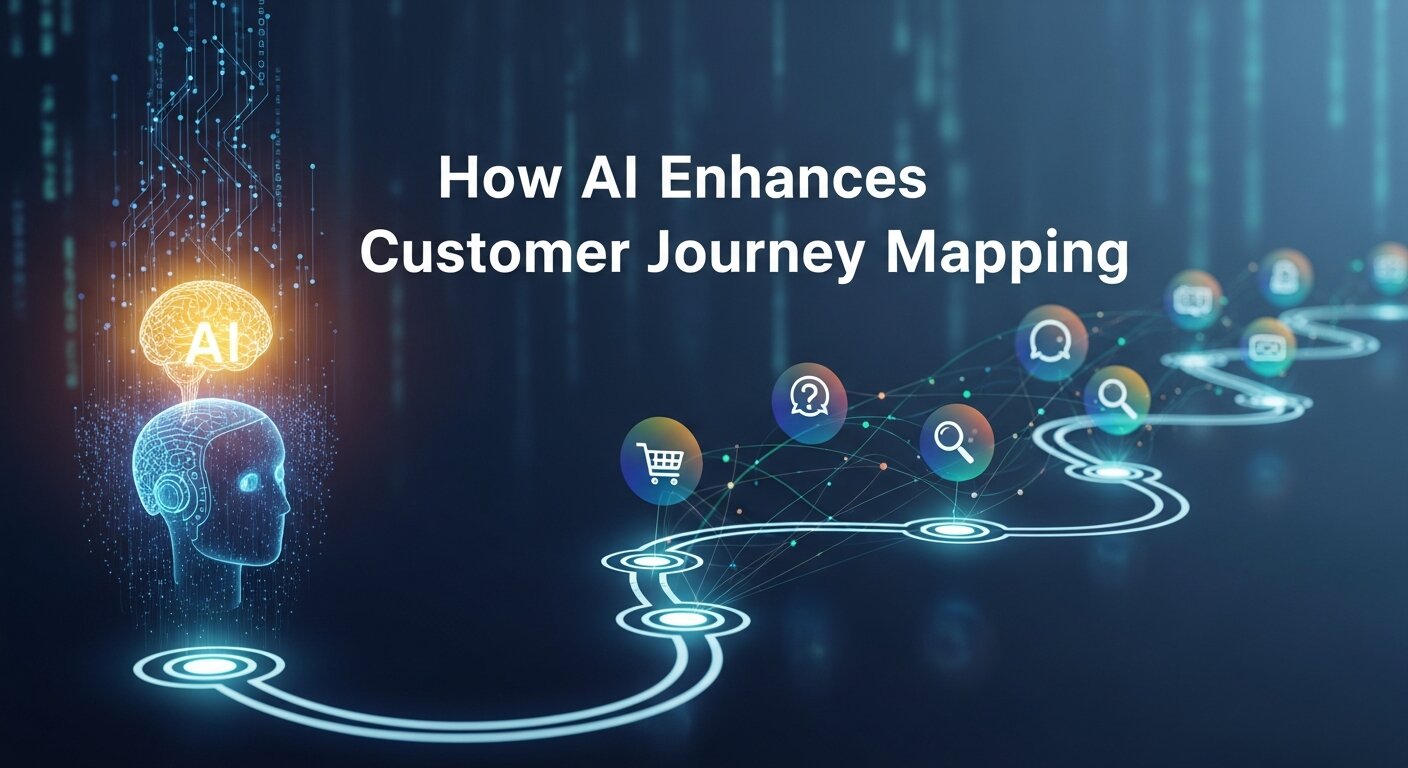
An AI brand strategy becomes significantly more effective when it is built around the entire customer journey rather than isolated marketing campaigns. AI can analyze customer interactions across websites, emails, social media, and support channels to identify patterns that humans often overlook. These insights help brands understand where customers engage, where they hesitate, and what influences purchasing decisions.
With this information, businesses can create personalized experiences for every stage of the buyer journey—from awareness to post-purchase support. Instead of relying on assumptions, brands use predictive analytics and behavioral data to deliver relevant messages at the right moment. This approach improves customer satisfaction, strengthens loyalty, and increases conversion rates while ensuring every interaction reflects a consistent and recognizable brand identity.
Using AI for Competitive Brand Intelligence
A successful AI brand strategy doesn’t focus only on internal performance—it also monitors the competitive landscape. AI-powered competitive intelligence tools continuously track competitor campaigns, customer sentiment, pricing trends, keyword rankings, and emerging market opportunities. Rather than spending hours gathering information manually, marketing teams receive real-time insights that support faster and more informed decisions.
Businesses can identify gaps in the market, respond quickly to changing customer expectations, and refine their messaging before competitors react. AI also highlights industry trends that influence consumer behavior, allowing brands to stay relevant in rapidly changing markets. By combining competitive intelligence with customer data, organizations develop stronger positioning strategies that differentiate their brand and create sustainable long-term growth.
Building Trust and Transparency in AI-Driven Branding
As artificial intelligence becomes a larger part of brand communication, maintaining customer trust is more important than ever. Consumers appreciate personalized experiences, but they also expect businesses to use their data responsibly and communicate transparently. An effective AI brand strategy includes clear data privacy practices, ethical AI usage, and human oversight throughout automated processes.
Brands should regularly review AI-generated content to ensure accuracy, fairness, and alignment with company values. Explaining how customer data is collected and used helps strengthen credibility while meeting evolving privacy expectations. Organizations that balance automation with authenticity create stronger customer relationships, protect their reputation, and position themselves as trustworthy brands in an increasingly AI-powered digital marketplace.
Frequently Asked Questions
What is an AI brand strategy?
An AI brand strategy is a structured plan for integrating artificial intelligence into brand positioning, content creation, customer personalization, and marketing operations. The goal is to use AI tools to communicate more consistently, scale content production, and make faster, data-driven brand decisions.
What are the best AI tools for brand identity automation?
The best AI tools for brand identity automation depend on your team’s needs. For content creation, platforms like Jasper and Copy.ai are widely used. For visual consistency, tools like Canva’s AI features and Adobe Firefly are effective. For brand monitoring and compliance, Frontify and Bynder help teams maintain brand standards at scale.
How does AI improve automated marketing performance?
AI improves automated marketing by enabling real-time personalization, predictive lead scoring, and dynamic ad optimization. Rather than sending the same message to every subscriber, AI systems analyze individual behavior to determine the most relevant message, timing, and channel for each person—leading to higher engagement and lower acquisition costs.
Is AI brand strategy suitable for small businesses?
Yes. Many AI brand strategy tools offer scalable pricing that works for small teams. For small businesses, the highest-impact starting points are AI-powered content creation and email marketing personalization, both of which reduce production time and improve audience engagement without requiring large budgets.
How do I maintain brand authenticity with AI?
Maintaining brand authenticity with AI starts with well-documented brand guidelines. Train your AI tools on your specific voice, values, and messaging pillars. Build human review into your content workflow to catch anything that feels off-brand. AI handles scale; humans preserve authenticity.
The Future of AI-Powered Branding
The trajectory of AI brand strategy points toward greater personalization, faster iteration, and tighter feedback loops between brand output and audience response. AI systems are becoming better at understanding context, tone, and nuance—meaning the gap between AI-generated content and human-created content will continue to narrow.
Brands that start building their AI strategy now—with a clear foundation, the right tools, and a commitment to measurement—will be the ones best positioned to lead as these capabilities mature.