
Your brand is more than a logo or a color palette. It’s the sum of every impression, interaction, and message your business puts into the world. And as the volume of those touchpoints grows—across websites, social media, advertising, email, and beyond—keeping them consistent becomes one of the most difficult challenges a modern business faces. That’s exactly where intelligent branding solutions come in.
Powered by AI and automation, intelligent branding solutions help businesses manage and scale their brand identity without sacrificing consistency or quality. They reduce the manual workload on creative teams, eliminate costly brand inconsistencies, and make it easier for organizations of all sizes to show up professionally at every customer touchpoint.
This post explores what intelligent branding solutions actually are, how AI-powered branding works in practice, and why more businesses are turning to brand automation as a strategic advantage—not just an operational shortcut.
What Are Intelligent Branding Solutions?
Intelligent branding solutions are tools and systems that use artificial intelligence, machine learning, and automation to help businesses create, manage, and maintain a cohesive brand identity. Unlike traditional brand management—which often relies on manual processes, style guides, and constant human oversight—intelligent branding solutions automate much of the heavy lifting.
At their core, these platforms typically combine several capabilities:
- Brand asset management: Centralized storage and organization of logos, fonts, templates, and imagery
- AI-powered content generation: Tools that create on-brand copy, visuals, and design assets at scale
- Automated brand governance: Systems that flag off-brand usage and enforce consistency across teams
- Data-driven brand insights: Analytics that measure how your brand is perceived and performing
Taken together, these features allow businesses to scale their brand presence while keeping every asset aligned with their identity guidelines.
Why Brand Consistency Is Harder Than It Looks
Before exploring how intelligent branding solutions help, it’s worth understanding the scale of the problem they solve.
Large organizations often have multiple departments, agencies, and freelancers producing content simultaneously. Marketing creates campaigns. Sales builds presentations. HR produces onboarding materials. Customer service sends emails. Each team has its own tools, its own timelines, and—too often—its own interpretation of what the brand should look and sound like.
The result? Inconsistency. A slightly different shade of blue here. An outdated logo there. Copy that doesn’t quite match the brand voice. These small deviations accumulate, and over time, they erode the trust and recognition that strong brands depend on.
Research from Lucidpress found that consistent brand presentation across all platforms can increase revenue by up to 33%. Yet the same report noted that brand consistency is one of the top challenges organizations face. The gap between knowing consistency matters and actually achieving it is wide—and closing it manually is both time-consuming and expensive. Automated brand management addresses this gap directly.
How AI-Powered Branding Strengthens Brand Identity
Building a Unified Brand Foundation
Every strong brand starts with clearly defined guidelines: the colors, typography, tone of voice, and visual language that make a brand recognizable. Intelligent branding solutions take these guidelines and encode them into the tools teams actually use.
Rather than asking employees to manually reference a PDF style guide, AI-powered branding platforms embed brand rules directly into content creation workflows. When a team member creates a social media graphic or drafts a marketing email, the platform automatically applies the correct fonts, colors, and tone—removing the risk of human error and the burden of constant oversight. This is the foundation of automated brand management: turning brand guidelines from static documents into active, enforced systems.
Scaling Content Without Losing Brand Voice
One of the most significant challenges in modern marketing is producing enough content to stay visible across multiple channels—without letting quality or consistency slip.
AI-powered branding tools help creative teams generate content at scale while keeping that content anchored to the brand’s voice and visual identity. These platforms can produce first-draft copy that reflects a brand’s tone, suggest imagery that aligns with visual guidelines, and resize or adapt assets for different platforms automatically.
For growing businesses in particular, this capability is transformative. A startup with a small marketing team can produce the volume of branded content that previously required a large in-house agency—all while maintaining the quality and consistency of an established brand.
Reducing Brand Governance Burden
Brand governance—the process of ensuring every piece of content meets brand standards—is traditionally a manual, time-intensive task. Someone has to review materials, catch inconsistencies, and send revisions back and forth before anything goes live.
Intelligent branding solutions automate much of this process. AI-powered systems can scan content for off-brand usage, flag non-compliant assets, and even suggest corrections in real time. This shifts brand management from a reactive process (catching mistakes after they happen) to a proactive one (preventing them in the first place). The result is faster turnaround times, fewer revision cycles, and a brand that stays consistent at scale.
The Strategic Benefits of Intelligent Branding Solutions
Faster Time-to-Market for Brand Assets
Speed matters in marketing. Trends shift quickly, campaign windows are short, and the ability to move fast without breaking your brand guidelines is a genuine competitive advantage.
With intelligent branding solutions, teams can create on-brand assets in minutes rather than hours. Pre-approved templates, AI-generated copy, and automated resizing tools eliminate many of the bottlenecks that slow traditional content production. Marketing teams spend less time on execution and more time on strategy.
Stronger Brand Recognition Across Touchpoints
Brand recognition is built through repetition. When customers encounter the same visual language, tone of voice, and design aesthetic consistently—whether they’re reading a blog post, watching an ad, or browsing a product page—that brand becomes familiar. Familiarity builds trust. Trust drives purchase decisions.
AI-powered branding makes this level of consistency achievable for businesses that operate across dozens of channels and markets. It ensures that the brand a customer encounters on LinkedIn looks and sounds like the brand they encounter on your website, in your emails, and at your point of sale.
Enabling Personalization Without Sacrificing Consistency
One of the most powerful applications of intelligent branding solutions is the ability to personalize content at scale—without breaking brand consistency.
Traditional personalization often required creating multiple versions of the same asset manually, which was slow and prone to inconsistency. AI-powered branding platforms can dynamically adapt content to different audiences, regions, or use cases while keeping every variation anchored to core brand guidelines.
This means a retail brand can deliver personalized product recommendations in campaign emails that feel unique to each recipient—but every email still looks, reads, and feels unmistakably on-brand.
Intelligent Branding Solutions in Practice

How Enterprises Use Brand Automation
For large enterprises, intelligent branding solutions solve the challenge of scale. When hundreds of employees across multiple departments and geographies are creating branded content, maintaining consistency without automation is essentially impossible.
Enterprise brand automation platforms typically include centralized digital asset management (DAM) systems, AI-powered template tools, and governance workflows that keep all content aligned with brand standards. Global brands like Coca-Cola and Unilever have invested heavily in brand management technology for exactly this reason—consistency at scale is a strategic priority, not just an operational one.
How Smaller Businesses Benefit From AI-Powered Branding
Intelligent branding solutions aren’t exclusively for large organizations. Small and medium-sized businesses often benefit even more from brand automation, because they typically lack the dedicated resources to manage branding manually.
A small e-commerce brand, for example, might use an AI-powered branding platform to create a consistent library of product images, social media templates, and email designs—without hiring a full-time designer. The platform handles the repetitive production work, freeing the founder or marketing lead to focus on strategy and growth.
Measuring the Success of Intelligent Branding Solutions
Implementing intelligent branding solutions is only the first step; measuring their impact is what ensures long-term value. Businesses should track key performance indicators such as brand consistency scores, content production time, campaign engagement, and customer recognition. Metrics like reduced design revisions, faster approval workflows, and improved marketing efficiency can reveal how automation is streamlining operations.
Customer feedback and brand sentiment analysis also provide insight into whether audiences perceive a more consistent and trustworthy brand. By reviewing these metrics regularly, organizations can refine their branding strategy, maximize return on investment, and ensure their intelligent branding solutions continue supporting business growth as market demands evolve.
Integrating Intelligent Branding Solutions with Existing Workflows
Successful adoption depends on how well intelligent branding solutions fit into your current marketing and creative processes. Modern platforms integrate seamlessly with content management systems, customer relationship management software, digital asset management platforms, and collaboration tools. These integrations allow teams to create, review, approve, and publish branded content without switching between multiple applications.
Automated workflows also reduce repetitive tasks, minimize communication gaps, and improve collaboration across departments. By embedding AI-powered branding into everyday operations, businesses create a more efficient environment where creativity thrives while brand standards remain consistent across every project.
Common Challenges When Adopting Intelligent Branding Solutions
Although intelligent branding solutions offer significant advantages, businesses may encounter challenges during implementation. Employees may resist changing familiar workflows, while incomplete brand guidelines can limit the effectiveness of AI-driven systems. Data quality, platform integration issues, and insufficient user training may also slow adoption.
To overcome these obstacles, organizations should establish clear branding standards before deployment, provide comprehensive employee training, and introduce automation gradually. Regular performance reviews and feedback sessions help teams adapt quickly while ensuring the technology continues to support both creative flexibility and consistent brand execution.
Future Trends in Intelligent Branding Solutions
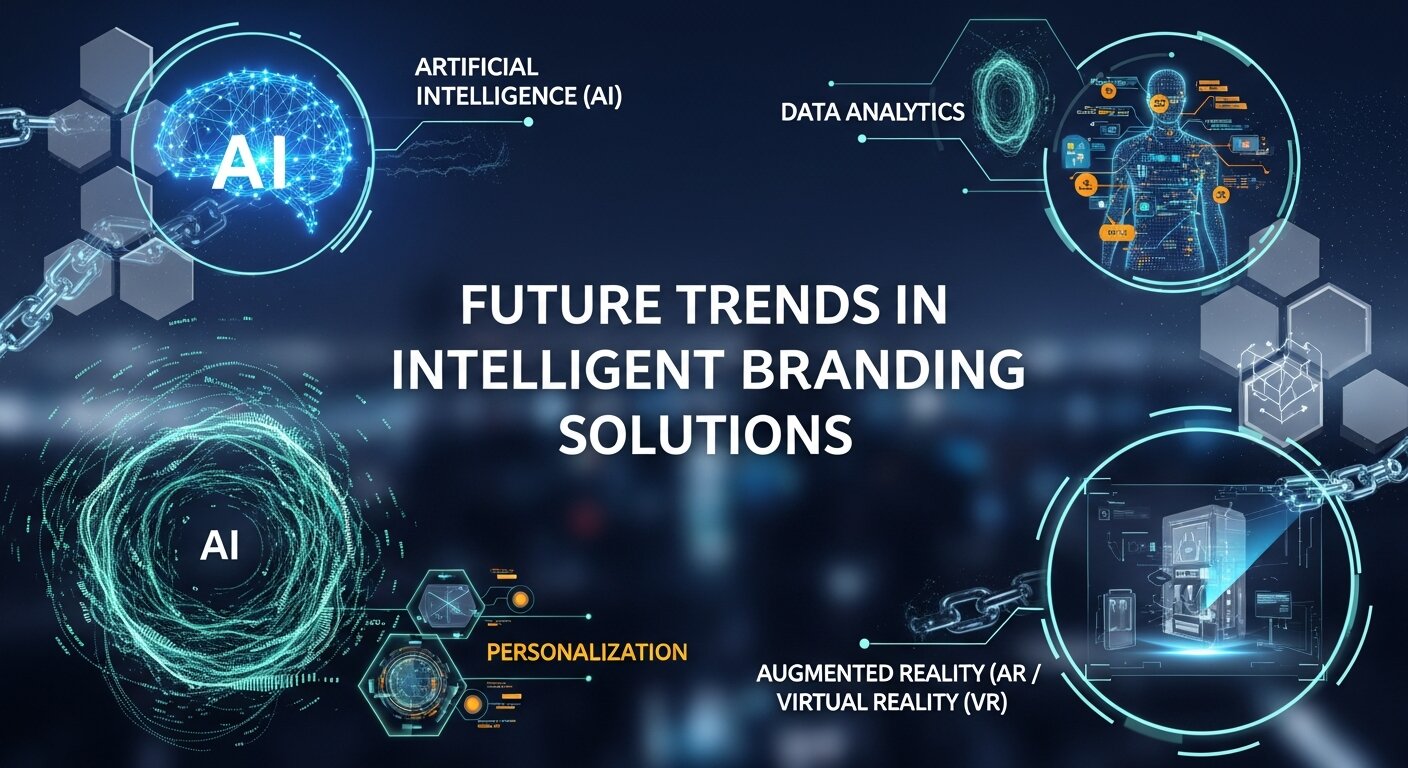
The future of intelligent branding solutions extends far beyond simple automation. Advances in artificial intelligence will enable platforms to predict customer preferences, generate hyper-personalized brand experiences, and optimize campaigns in real time. Voice branding, AI-generated video content, augmented reality experiences, and predictive design recommendations will become increasingly common.
As machine learning models continue improving, businesses will gain deeper insights into audience behavior and automatically adapt their messaging while maintaining brand consistency. Companies that embrace these innovations early will be better positioned to strengthen customer relationships and stay competitive in rapidly evolving digital markets.
Best Practices for Maximizing Intelligent Branding Solutions
Getting the most from intelligent branding solutions requires a thoughtful strategy rather than relying solely on automation. Begin by developing comprehensive brand guidelines that clearly define your visual identity, messaging, and tone of voice. Keep AI systems updated with current brand assets and regularly review generated content for accuracy and relevance. Encourage collaboration between marketing, design, and leadership teams to ensure automation aligns with business objectives.
Finally, combine AI-powered insights with human creativity to produce authentic, engaging experiences. When technology and strategic oversight work together, intelligent branding solutions become a powerful driver of long-term brand growth and customer loyalty.
Choosing the Right Intelligent Branding Solution for Your Business
Not every intelligent branding solution is built the same way. The right choice depends on your team size, content volume, existing technology stack, and the specific brand challenges you’re trying to solve.
A few key questions to consider:
What’s your primary pain point? If your biggest challenge is content volume, prioritize platforms with strong AI content generation capabilities. If it’s consistency across teams, look for solutions with robust governance and approval workflows.
How complex is your brand? Organizations with multiple sub-brands, regional variations, or product lines need platforms that can manage brand hierarchy—not just a single set of guidelines.
How technical is your team? Some intelligent branding solutions are designed for designers and developers; others prioritize ease of use for non-technical marketing teams. Choose a platform that your team will actually adopt and use.
What integrations do you need? The most effective intelligent branding solutions integrate with your existing tools—your CMS, DAM, project management software, and design platforms.
Building a Brand That Lasts
Strong brand identity doesn’t happen by accident. It’s built deliberately, through consistent decisions made across thousands of touchpoints over months and years. Intelligent branding solutions make that consistency achievable—not just for global enterprises with large budgets, but for any business serious about how it shows up in the world.
The shift toward AI-powered branding and automated brand management reflects a broader truth: the businesses that grow fastest are those that can scale their operations without scaling their problems. When your brand stays consistent as your team, channels, and content volume grow, you build the kind of recognition and trust that translates directly into business results.