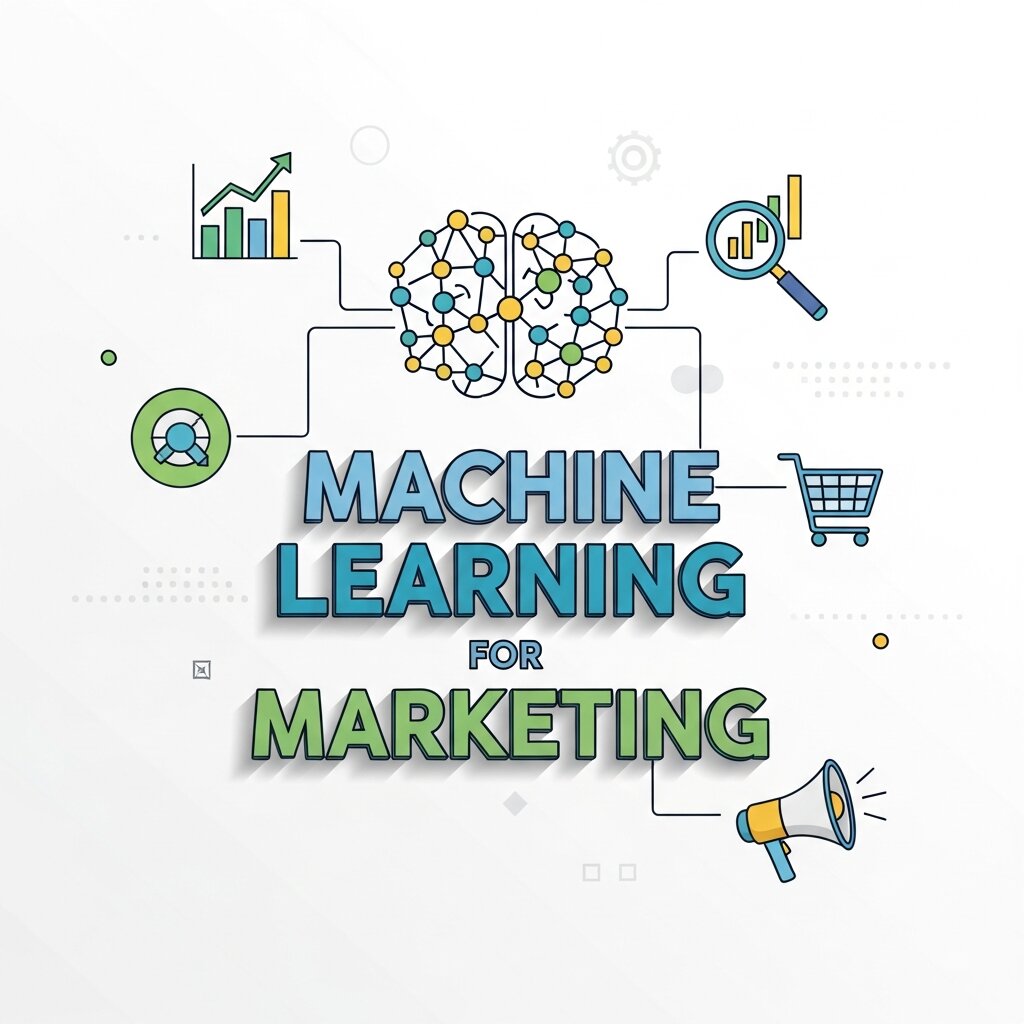
Marketing is becoming increasingly data-driven, and businesses now collect information from websites, social media, email campaigns, advertising platforms, and customer interactions. Machine learning for marketing helps businesses turn this growing amount of data into useful insights and actionable strategies.
Instead of depending entirely on assumptions, marketers can use machine learning to identify patterns, predict customer behavior, and understand which strategies are most likely to produce results. This allows marketing teams to make faster and more informed decisions.
Modern customers also expect personalized experiences across different digital channels. Machine learning helps businesses understand individual preferences and deliver more relevant content, recommendations, offers, and messages.
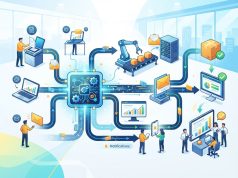
When combined with workflow automation, AI content generation, and marketing automation, machine learning can make marketing operations more efficient. These technologies allow businesses to reduce repetitive work while giving marketers more time to focus on strategy and creativity.
What Is Machine Learning for Marketing?
Machine learning for marketing means using machine learning technologies to analyze marketing data, identify patterns, predict customer behavior, and support marketing decisions. It allows businesses to discover insights that may be difficult to find through manual analysis. Machine learning systems can process information such as website activity, purchase history, customer interactions, email engagement, advertising results, and product preferences. They use these patterns to make predictions and recommendations that support marketing objectives.
For example, an ecommerce company can analyze previous purchases and browsing behavior to predict which products a customer may want next. The company can then use this information to personalize product recommendations and promotional campaigns. Machine learning can also learn from new information over time, helping businesses improve their predictions and recommendations. This makes it useful for continuously changing marketing environments where customer behavior can shift quickly.
How Machine Learning Supports Marketing Decisions
Traditional marketing analysis often focuses on understanding what happened in previous campaigns. Machine learning can go further by helping marketers predict what customers may do next. A machine learning model can identify customers who are likely to purchase, predict potential churn, recommend products, and estimate which audiences may respond to specific campaigns. These insights can improve marketing planning and resource allocation.
Instead of treating every customer in the same way, businesses can use data-driven predictions to create more targeted marketing strategies. This can make campaigns more relevant while reducing unnecessary marketing activities.
Why Machine Learning Matters for Modern Marketing
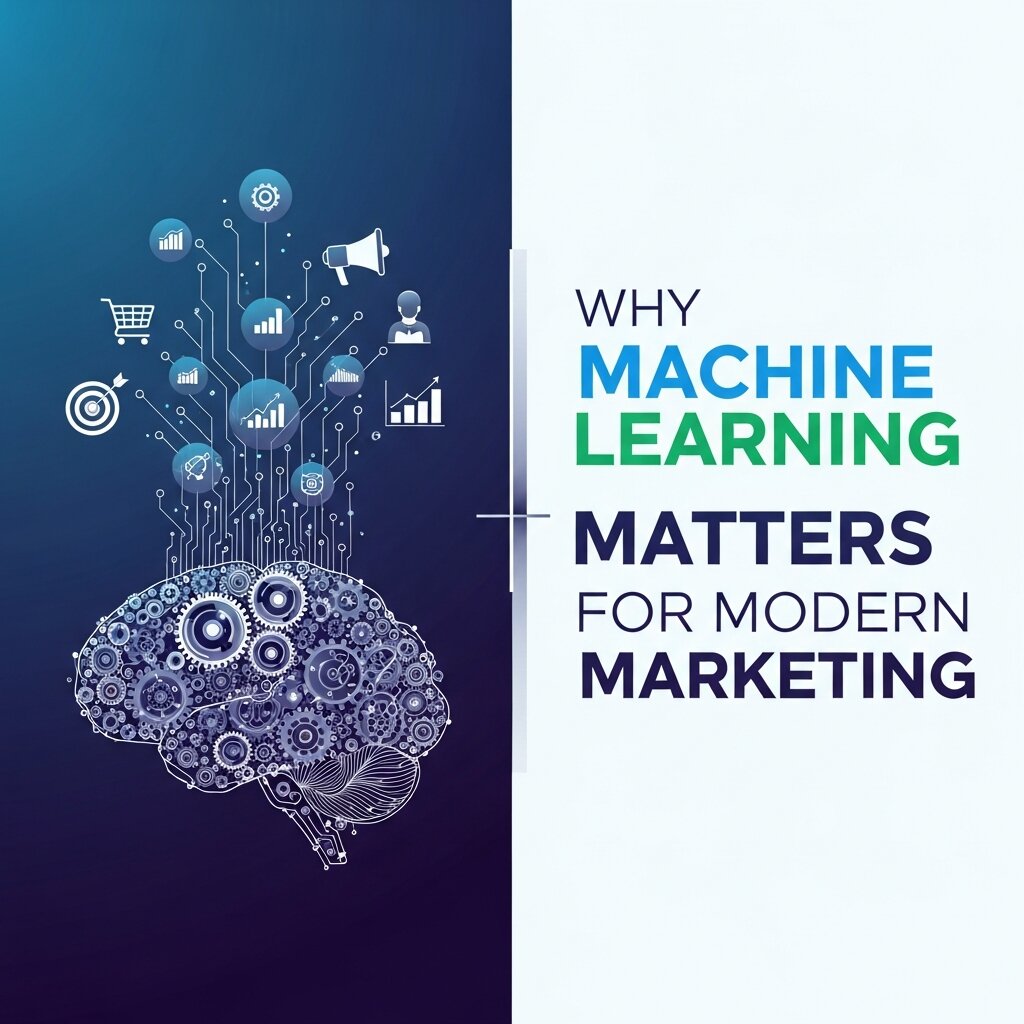
Businesses now have access to more customer data than ever before, but collecting data does not automatically create useful insights. Marketing teams need efficient ways to analyze information and identify patterns that can influence business decisions. Machine learning provides a way to process large datasets and uncover meaningful relationships. It can help marketers understand customer preferences, identify campaign trends, and discover opportunities for improving performance.
Another major advantage is personalization. Customers are more likely to respond positively when marketing messages, products, and offers match their interests and previous behavior. Machine learning can analyze individual customer signals and help businesses create experiences that are more relevant. This can support stronger engagement throughout the customer journey.
Better Customer Understanding
Understanding customers is one of the most important parts of successful marketing. Machine learning can analyze behavioral data to identify trends across different customer groups and individual users. Businesses can use these insights to understand which products customers prefer, which content receives attention, and which marketing channels influence customer actions. This information can improve future campaign planning.
Machine learning can also reveal customer patterns that marketers may not notice through manual analysis. These discoveries can help businesses identify new audience segments and marketing opportunities.
Improved Marketing Efficiency
Marketing teams often spend considerable time collecting data, creating reports, segmenting audiences, and monitoring campaigns. Many of these repetitive activities can be supported by automation and intelligent technologies.
When workflow automation is combined with machine learning, businesses can create processes that automatically respond to customer behavior and marketing signals. For example, a customer who demonstrates strong purchase intent can automatically enter a specific marketing workflow. This reduces manual intervention and allows marketers to focus on higher-value strategic work.
Key Benefits of Machine Learning for Marketing
The benefits of machine learning can be seen across many areas of digital marketing. Businesses can use it to improve personalization, customer segmentation, advertising, forecasting, content strategies, and marketing efficiency.
The technology does not have to replace human marketers to be valuable. Instead, it can provide data-driven insights that help marketing professionals make better decisions and spend more time on creative and strategic activities.
1. More Accurate Customer Segmentation
Customer segmentation divides audiences into groups based on shared characteristics, behaviors, or interests. Machine learning can analyze large amounts of customer data and identify patterns that support more accurate segmentation.
Segments can be created based on purchasing behavior, website activity, engagement levels, preferences, and other relevant signals. This allows marketers to develop campaigns that are better suited to specific audiences.
2. Personalized Customer Experiences
Personalization has become an important part of modern digital marketing because customers expect businesses to understand their individual needs. Machine learning can help personalize websites, emails, advertisements, product recommendations, and offers.
For example, an ecommerce website can recommend products based on previous purchases, searches, and browsing activity. These recommendations can make the shopping experience more relevant and convenient. Personalization can also help businesses communicate with customers at different stages of the buying journey. Relevant communication can increase engagement and encourage customers to take meaningful actions.
3. Better Marketing Predictions
Predictive analytics is one of the most useful applications of machine learning. Businesses can analyze historical data to identify patterns that may indicate future customer behavior.
Marketing teams can predict purchase likelihood, customer churn, lead quality, campaign performance, and potential customer value. These predictions can help businesses prioritize their marketing resources. For example, a company can identify customers who are more likely to purchase and focus campaigns on those audiences. This can make marketing activities more targeted and efficient.
4. Improved Advertising Performance
Digital advertising generates large amounts of data related to impressions, clicks, conversions, audiences, costs, and engagement. Machine learning can analyze these signals to identify performance patterns. Marketers can use machine learning insights to improve audience targeting, campaign optimization, bidding strategies, and budget allocation. This can help businesses make better use of advertising resources.
As more campaign data becomes available, machine learning systems can continue identifying patterns and supporting optimization. This creates opportunities for ongoing performance improvement.
5. Faster Data Analysis
Manual data analysis becomes increasingly difficult as businesses collect information from multiple marketing platforms. Machine learning can process large datasets much faster and identify important trends. This allows marketing teams to spend less time searching through spreadsheets and reports. They can instead focus on interpreting insights and deciding which actions should be taken.
Faster analysis is particularly useful for businesses operating in competitive industries. Quick access to customer and campaign insights can help marketers respond to changing market conditions.
Machine Learning and Workflow Automation
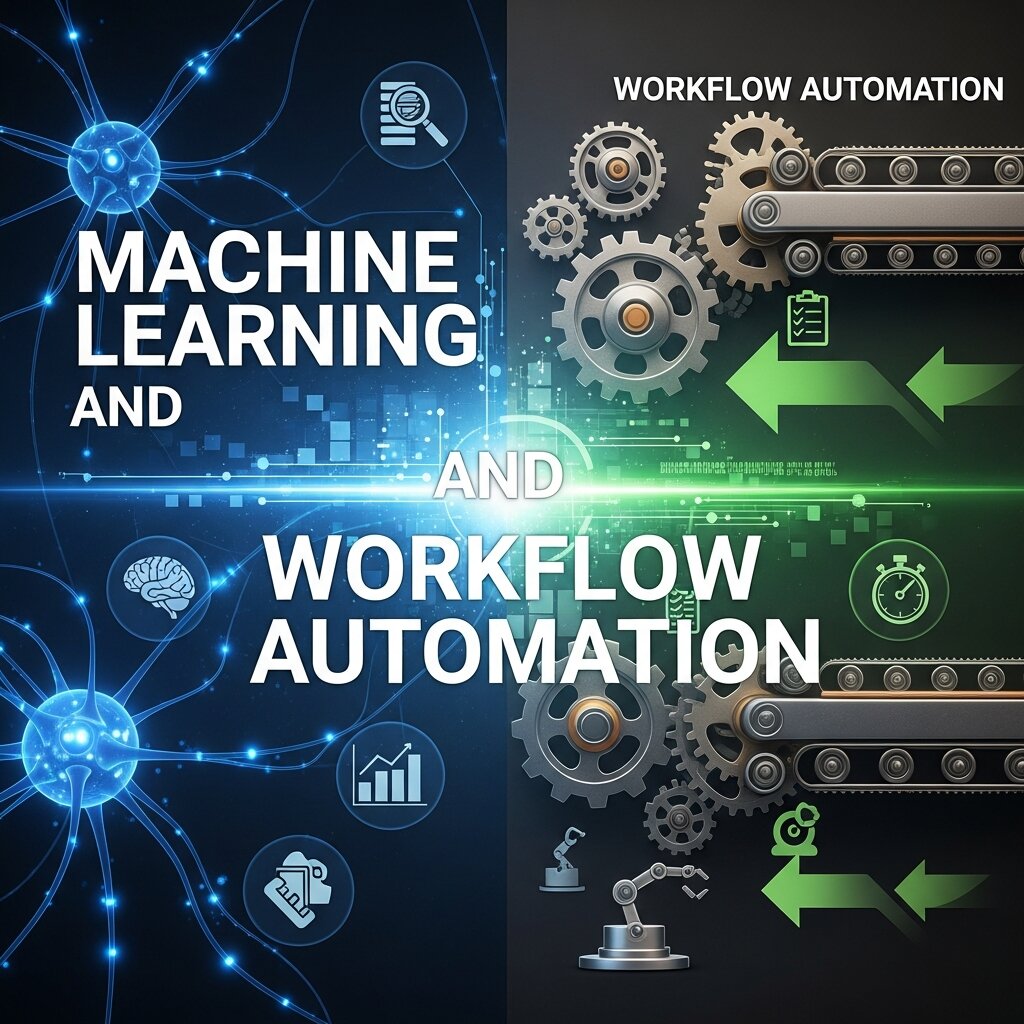
Workflow automation allows businesses to automate repetitive marketing processes and connect multiple activities into structured workflows. Machine learning can make these workflows more intelligent by providing predictions and behavioral insights. For example, a business can analyze customer activity, identify an audience segment, trigger a personalized message, and track the customer’s response automatically. Machine learning can help determine which action is most appropriate based on available data.
This combination can reduce repetitive tasks while creating more responsive customer journeys. Marketing teams can spend more time developing strategies instead of manually managing every step.
Automating Lead Management
Lead management is an important area where machine learning and automation can work together. Businesses receive leads from websites, advertisements, social media, search engines, and other channels.
Machine learning can analyze lead characteristics and behavioral signals to estimate which prospects are more likely to convert. This helps marketing and sales teams prioritize their attention. Automated workflows can then send relevant follow-up messages, assign qualified leads to sales representatives, or continue nurturing prospects who are not yet ready to buy.
Automating Customer Engagement
Customer engagement includes emails, notifications, product recommendations, follow-ups, and other communications. Machine learning can help determine which customers may be most interested in specific messages.
Automation can then deliver those communications based on customer behavior and predefined marketing objectives. This creates a more efficient way to manage large audiences. Businesses can also use engagement data to improve future campaigns. Machine learning can identify which types of messages generate stronger responses and provide useful insights for future optimization.
Machine Learning and AI Content Generation
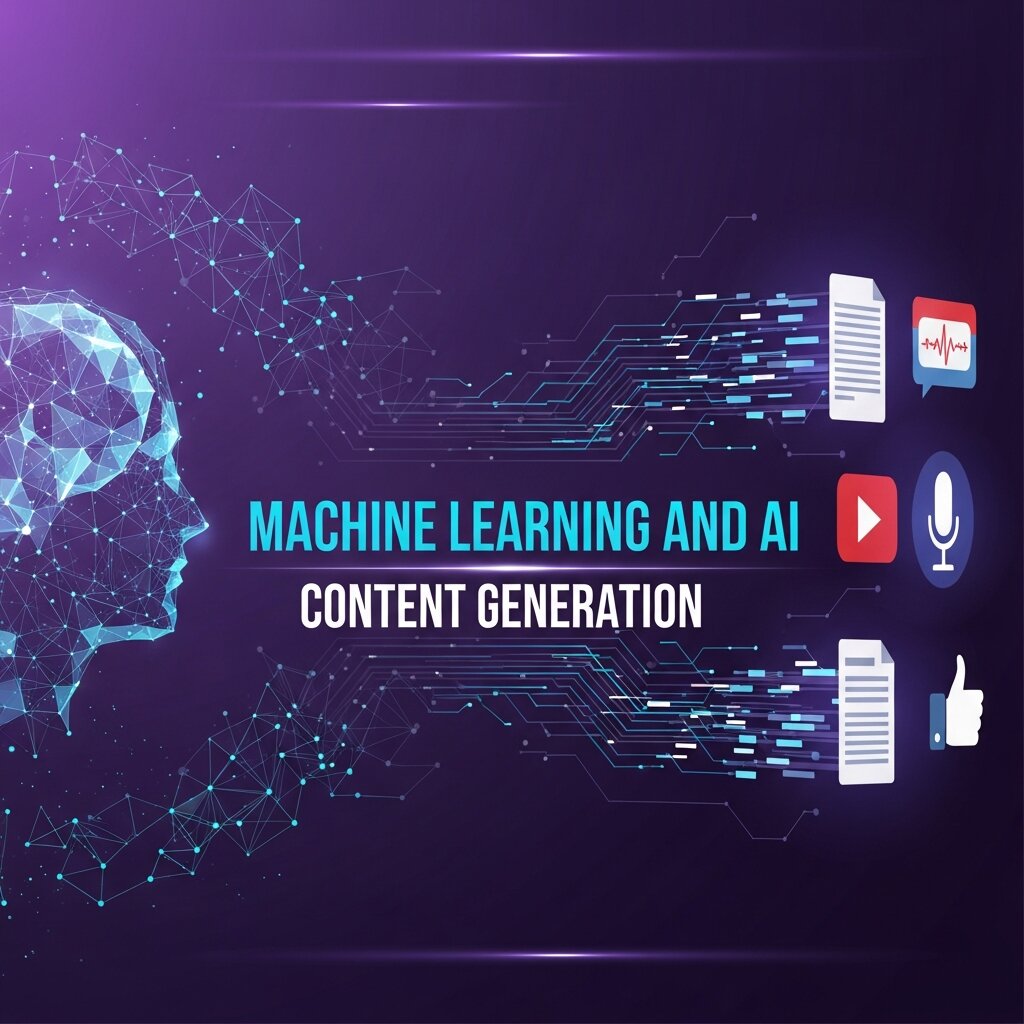
AI content generation has become an important component of modern marketing workflows. AI-powered tools can help marketers create content ideas, product descriptions, email drafts, social media posts, and other marketing materials.
Machine learning can support this process by analyzing audience behavior and identifying topics, formats, and messages that may be more relevant. Marketers can then use these insights when developing content strategies. However, AI-generated content should still receive human review. Marketers need to check accuracy, originality, brand voice, usefulness, and alignment with customer expectations before publishing content.
Creating More Relevant Content
Generic content may not be equally useful to every audience. Machine learning can analyze engagement patterns to identify topics and content formats that appeal to different customer groups.
Marketing teams can use these insights to create content that addresses specific interests, problems, and stages of the customer journey. This can improve content relevance and engagement. AI content generation can then help marketers produce initial drafts more efficiently. Human editors can refine those drafts and ensure that the final content provides genuine value.
Scaling Content Operations
Businesses with many products, services, markets, or customer segments often need to produce large amounts of content. AI content generation can support marketers by reducing the time required for repetitive content production.
Machine learning can help determine which content should be prioritized based on customer behavior and campaign performance. This creates a more data-driven approach to content planning. The goal should not be to produce content as quickly as possible. Instead, businesses should combine automation with human expertise to create useful, accurate, and audience-focused content.
Machine Learning and Marketing Automation
Marketing automation helps businesses manage repetitive activities such as email campaigns, lead nurturing, customer segmentation, follow-ups, and campaign scheduling. Machine learning can make these automated systems more adaptive.
Instead of applying identical rules to every customer, machine learning can analyze behavioral signals and support decisions about what action should happen next. This can help businesses create more personalized customer journeys. Customers may receive different messages or offers depending on their interests, behavior, and position in the buying process.
Smarter Email Marketing
Email marketing generates valuable behavioral data such as opens, clicks, purchases, responses, and engagement frequency. Machine learning can analyze this information to identify useful patterns.
Businesses can use these insights to improve audience segmentation, content recommendations, campaign timing, and customer targeting. This can make email communication more relevant. For example, customers who regularly interact with a particular product category can receive related recommendations instead of generic promotional messages.
Predictive Lead Scoring
Lead scoring helps marketing teams determine which prospects are more likely to become customers. Traditional scoring systems often depend on manually assigned values and predefined rules.
Machine learning can analyze historical customer data to identify characteristics associated with successful conversions. These insights can make lead scoring more dynamic. Sales and marketing teams can then focus more attention on high-potential prospects. Other leads can continue through automated nurturing workflows until they show stronger buying signals.
Machine Learning for Customer Retention
Customer retention is important because businesses often invest significant resources in acquiring new customers. Machine learning can help marketers identify behavioral signals that may indicate declining customer engagement.
Signals such as fewer purchases, reduced website activity, declining email engagement, or changes in product usage may indicate potential churn. Machine learning can analyze these patterns and identify customers who may need attention. Businesses can then use automated campaigns to deliver relevant retention messages. These could include personalized recommendations, helpful content, special offers, or customer support resources.
Predicting Customer Churn
Churn prediction models analyze customer data to estimate which customers may be at risk of leaving. This helps marketing teams prioritize retention efforts instead of contacting every customer in the same way.
Early identification gives businesses more time to respond. Marketers can create personalized strategies based on customer behavior and engagement history. The effectiveness of these strategies should be measured carefully. Businesses need to understand whether retention campaigns are actually improving customer engagement and long-term value.
Machine Learning for Marketing Analytics
Marketing analytics provides information about traffic, campaign performance, conversions, customer behavior, and revenue. Machine learning can make this analysis more advanced by identifying patterns and making predictions.
Instead of simply showing what happened, machine learning can help businesses understand potential reasons behind performance changes. It can also support predictions about future customer behavior. This can make marketing reporting more useful for strategic decision-making. Teams can focus on insights that can influence future campaigns rather than simply reviewing historical numbers.
Measuring Campaign Performance
Machine learning can evaluate campaign performance across multiple variables and identify patterns associated with stronger results. This can help marketers understand which audiences, channels, messages, and offers perform well.
Marketing teams can use these insights to optimize future campaigns. They can test new approaches while continuing to learn from customer responses. This creates a continuous improvement cycle. Each campaign can provide additional data that helps businesses refine future marketing decisions.
Improving Marketing ROI
Return on investment is a major concern for businesses because marketing budgets need to generate measurable value. Machine learning can help identify which channels and campaigns are producing stronger outcomes.
By analyzing costs, conversions, customer value, and engagement, businesses can make more informed budget allocation decisions. This can reduce inefficient spending. However, ROI should not be evaluated only through immediate conversions. Businesses should also consider customer lifetime value, retention, brand engagement, and long-term business impact.
Practical Applications Across Marketing Channels
Machine learning can support many digital marketing channels, including search marketing, social media, email, ecommerce, paid advertising, and customer relationship management.
Its effectiveness depends on the quality of available data and the specific goals of the business. Organizations should identify clear use cases before implementing complex machine learning systems.
Search Engine Marketing
Machine learning can support search marketing through audience analysis, keyword insights, advertising optimization, and performance prediction. These capabilities can help marketers understand which audiences and search behaviors are associated with valuable actions.
Businesses can use machine learning insights to improve targeting and identify opportunities for campaign optimization. Human SEO and advertising expertise remains important when interpreting these insights.
Social Media Marketing
Social media platforms generate large amounts of engagement data. Machine learning can analyze interactions, audience preferences, content performance, and behavioral patterns.
These insights can help marketers understand which content formats and topics are more likely to generate engagement. Businesses can then use this information to improve social media strategies.
Ecommerce Marketing
Ecommerce businesses can use machine learning for product recommendations, customer segmentation, demand prediction, personalized offers, and retention campaigns.
Recommendation systems are particularly valuable because they allow websites to present products based on customer interests and previous behavior. This can improve product discovery and create a more personalized shopping experience.
Challenges of Using Machine Learning for Marketing
Machine learning offers significant marketing opportunities, but businesses should also understand its challenges. Successful implementation requires quality data, suitable technology, clear objectives, and human oversight.
Poor-quality data can produce inaccurate predictions and misleading insights. Businesses need reliable systems for collecting, cleaning, organizing, and managing customer information.
Privacy is another important consideration. Organizations should handle customer data responsibly and follow applicable privacy and data protection requirements.
Data Quality and Integration
Machine learning depends heavily on the quality of available data. Incomplete, duplicated, outdated, or inaccurate information can reduce the reliability of machine learning outputs.
Businesses should establish processes for data collection and quality control. Marketing platforms should also be integrated carefully so relevant information can be analyzed effectively.
A strong data foundation makes it easier for businesses to expand their use of machine learning. Without reliable data, even advanced technology may fail to deliver useful results.
Human Oversight
Machine learning should support marketers rather than completely replace human judgment. Marketing decisions often require creativity, context, ethical considerations, and a deep understanding of customer needs.
Human teams should review important recommendations and automated decisions. This helps ensure that machine learning applications remain aligned with brand values and business objectives.
The best results usually come from combining technology with human expertise. Machines can identify patterns quickly, while marketers provide strategic direction and creative thinking.
How to Implement Machine Learning for Marketing
Businesses should begin with a specific marketing objective instead of adopting machine learning simply because it is a popular technology. A clear problem makes implementation easier to manage and measure.
The first step is to determine whether the main goal is personalization, lead scoring, customer retention, advertising optimization, analytics, or marketing efficiency.
Next, businesses should evaluate their existing data and technology infrastructure. They should identify which platforms need to be connected and which metrics will be used to measure success.
Start With a Focused Use Case
Starting with one focused use case can make machine learning implementation more manageable. A business could begin with predictive lead scoring, product recommendations, customer segmentation, or churn prediction.
After testing the initial application, the business can evaluate the results and identify opportunities for expansion. This approach reduces unnecessary complexity.
A successful pilot project can also help marketing teams understand how machine learning fits into existing workflows. The organization can then gradually introduce additional applications.
Monitor and Improve Results
Machine learning systems require ongoing monitoring because customer behavior and market conditions can change. A model that performs well today may require adjustments as new data becomes available.
Marketing teams should regularly evaluate predictions, campaign results, customer responses, and business outcomes. These measurements can reveal whether the technology is actually delivering value.
Continuous improvement is essential for maintaining reliable results. Businesses should update strategies, data processes, and models when performance changes.
The Future of Machine Learning for Marketing
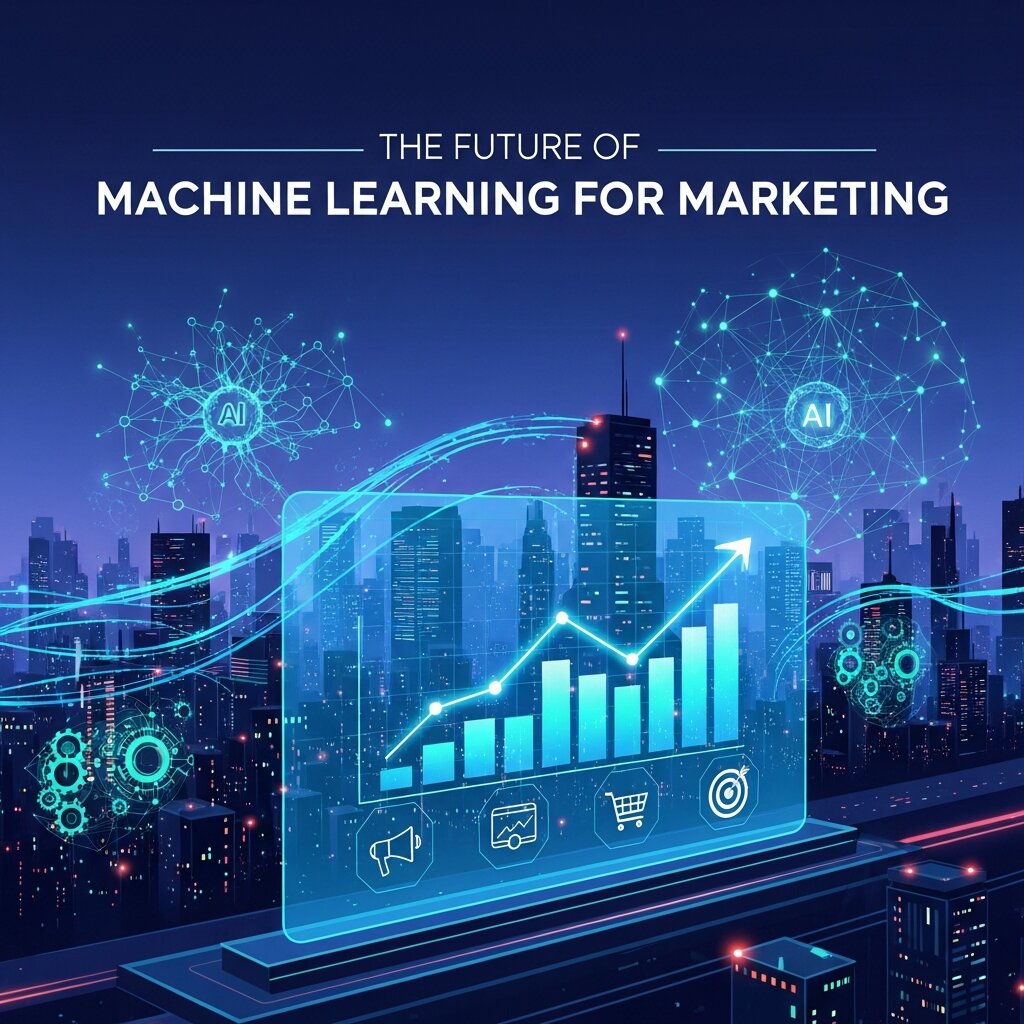
The future of marketing will likely involve deeper integration between machine learning, automation, customer data, and AI-powered tools. Businesses will increasingly use intelligent systems to understand customers and personalize experiences.
Real-time personalization may become more common as businesses gain access to faster customer insights. Marketing systems could adjust recommendations, messages, and offers based on current behavior.
Machine learning may also become more closely connected with workflow automation and marketing automation platforms. This could create more adaptive customer journeys with less manual intervention.
However, human creativity and strategic thinking will remain essential. Technology can analyze information and automate processes, but marketers are still responsible for developing meaningful strategies and authentic customer experiences.
Frequently Asked Questions
1. What is machine learning for marketing?
Machine learning for marketing uses algorithms to analyze customer and campaign data, identify patterns, predict behavior, and support marketing decisions. It can improve personalization, segmentation, targeting, automation, and campaign optimization.
2. How does machine learning improve marketing?
Machine learning improves marketing by analyzing large amounts of data and identifying customer behavior patterns. Marketers can use these insights to personalize campaigns, predict conversions, optimize advertising, improve retention, and make data-driven decisions.
3. Can machine learning automate marketing tasks?
Yes, machine learning can support the automation of many marketing tasks. Combined with marketing automation and workflow automation, it can help automate segmentation, lead scoring, recommendations, customer communications, and campaign optimization.
4. What is the difference between machine learning and marketing automation?
Marketing automation primarily automates predefined tasks and workflows, while machine learning analyzes data to identify patterns and make predictions. Combining both technologies can create more intelligent and adaptive marketing processes.
5. How does machine learning help with customer segmentation?
Machine learning analyzes customer characteristics and behavioral information to identify groups with similar patterns. Marketers can use these insights to create more accurate segments and deliver content, offers, and campaigns that match customer interests.
6. Can machine learning improve email marketing?
Yes, machine learning can improve email marketing by analyzing customer engagement, purchasing behavior, and preferences. Businesses can use these insights to improve segmentation, content recommendations, campaign timing, and personalization.
7. How does AI content generation work with machine learning?
AI content generation can use machine learning technologies to assist with producing marketing content. Customer and performance data can help identify relevant topics and formats, while AI tools can support drafting and content production.
8. Is machine learning useful for small businesses?
Machine learning can be useful for small businesses when it is applied to practical problems such as lead scoring, customer segmentation, personalization, advertising optimization, or automated workflows. Businesses should begin with a focused use case and measurable goals.
9. What data does machine learning need for marketing?
Machine learning can use website interactions, purchase history, email engagement, advertising performance, customer profiles, campaign results, and other relevant data. Reliable, accurate, and responsibly managed information is essential for useful results.
10. What is the future of machine learning in marketing?
The future of machine learning in marketing will likely include greater personalization, predictive analytics, intelligent automation, real-time customer insights, and adaptive campaigns. Human creativity and strategic oversight will remain important as these technologies develop.
Conclusion
Machine learning for marketing is changing how businesses analyze data, understand customers, optimize campaigns, and improve marketing efficiency. Its ability to identify patterns and make predictions gives businesses opportunities to make more informed decisions.
When combined with workflow automation, AI content generation, and marketing automation, machine learning can create more efficient and personalized marketing operations. Businesses can use these technologies to improve segmentation, lead scoring, advertising, customer retention, analytics, and content planning.