Modern customers expect fast, relevant, and personalized interactions throughout their buying journey. Businesses that deliver the right message at the right time can build stronger relationships and improve their chances of converting visitors into customers. This is where Customer journey automation can make a major difference.
Customer journey automation uses technology and automated workflows to guide customers through different stages of their interaction with a business. Instead of manually managing every email, follow-up, recommendation, or engagement activity, businesses can create automated journeys based on customer behavior, preferences, and interactions.
When implemented strategically, automation can improve customer experience, reduce repetitive marketing tasks, and increase conversion opportunities. It can also work alongside Business process automation, AI content generation, and Automated brand creation to create a more connected and efficient digital marketing system.
What Is Customer Journey Automation?
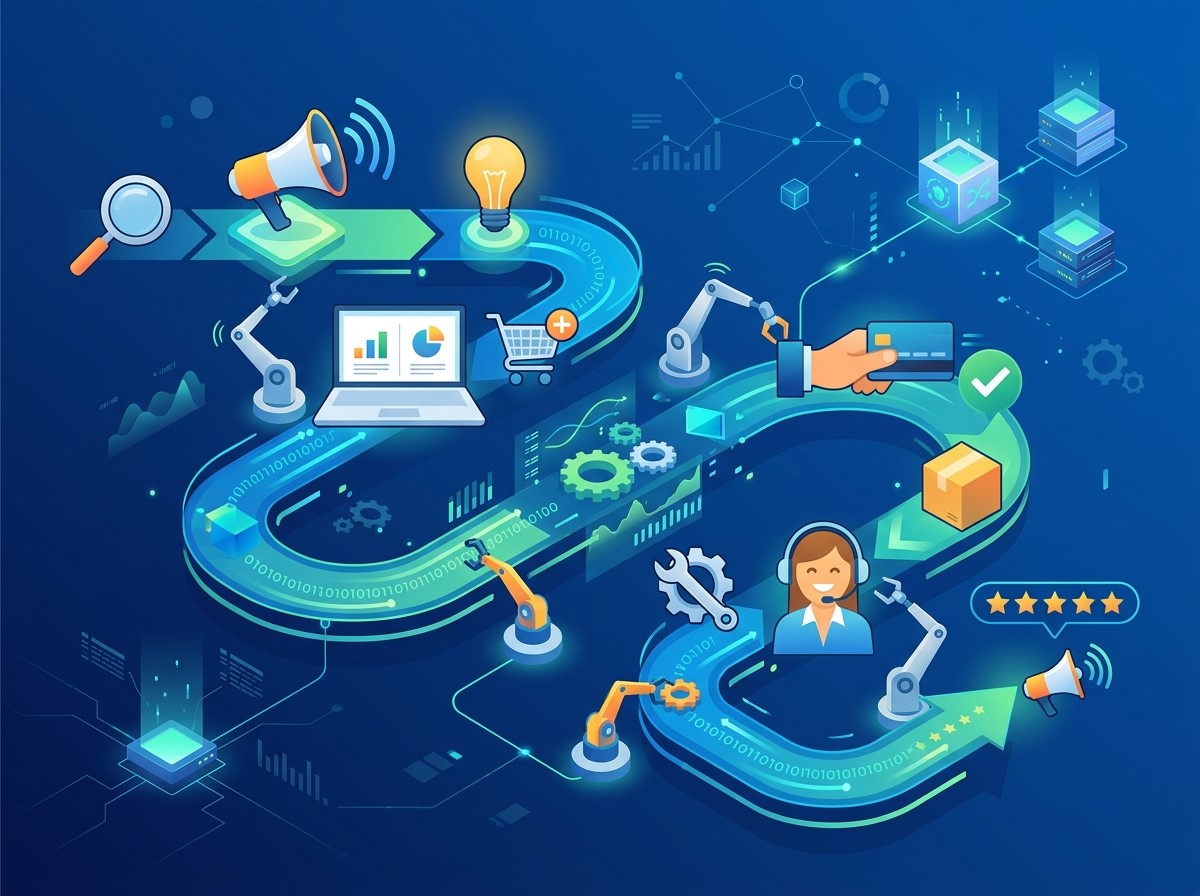
Customer journey automation is the process of using technology to automatically manage customer interactions across different stages of the buying journey. These stages can include awareness, consideration, conversion, retention, and advocacy.
For example, a visitor may discover a website through search, read an article, subscribe to an email list, browse a product page, and eventually make a purchase. Automation can connect these interactions and trigger relevant actions based on what the customer does.
Instead of treating every visitor in the same way, automated customer journeys can respond to individual behaviors. This makes communication more relevant and can create a smoother experience from the first interaction to the final conversion.
Why Customer Journey Automation Matters
Customers interact with businesses through websites, search engines, social media, email, mobile devices, and other digital channels. Managing these interactions manually can become difficult as the audience grows.
Customer journey automation helps businesses maintain consistent communication while reducing the workload associated with repetitive tasks. It allows marketing teams to create predefined workflows that respond automatically when customers complete specific actions.
For example, someone who downloads a guide may receive educational content, while someone who abandons a shopping cart may receive a reminder. These automated interactions can help move customers toward the next stage of the journey.
Understanding the Customer Journey
Before creating an automated workflow, businesses need to understand how customers move from awareness to conversion.
Awareness Stage
At the awareness stage, customers are discovering a problem, need, or potential solution. They may find a business through search engines, social media, advertisements, or educational content.
Automation can help capture these early interactions by encouraging visitors to subscribe, download resources, or explore related content.
Consideration Stage
During consideration, potential customers are comparing solutions and looking for more detailed information. This is an important stage because customers may not be ready to purchase immediately.
Automated follow-ups can provide educational content, product information, case studies, and relevant resources based on previous interactions.
Conversion Stage
The conversion stage is where the customer takes a valuable action, such as making a purchase, requesting a consultation, booking a service, or submitting a form.
Automation can reduce friction by delivering timely reminders, personalized offers, product recommendations, or follow-up messages.
How Customer Journey Automation Increases Conversions
Delivering Personalized Experiences
Personalization can significantly influence how customers respond to marketing messages. Generic communication may not address the specific needs or interests of every visitor.
Customer journey automation allows businesses to personalize interactions based on customer behavior. A visitor who repeatedly views a particular service page can receive information related to that service rather than unrelated promotional messages. This relevance can increase engagement and help customers feel that the business understands their needs.
Improving Lead Nurturing
Not every lead is ready to buy immediately. Some prospects need additional information before making a decision.
Automated lead nurturing workflows can keep potential customers engaged over time. Educational emails, helpful resources, product information, and timely follow-ups can gradually build trust. This reduces the possibility of losing leads simply because there was no immediate follow-up.
Reducing Response Delays
Speed can have a major impact on conversions. When customers submit a form, request information, or complete another important action, a delayed response may cause them to lose interest.
Automation can trigger an immediate confirmation or follow-up message. This creates a faster customer experience and keeps the business connected with prospects while their interest is still high.
Using Business Process Automation With Customer Journeys
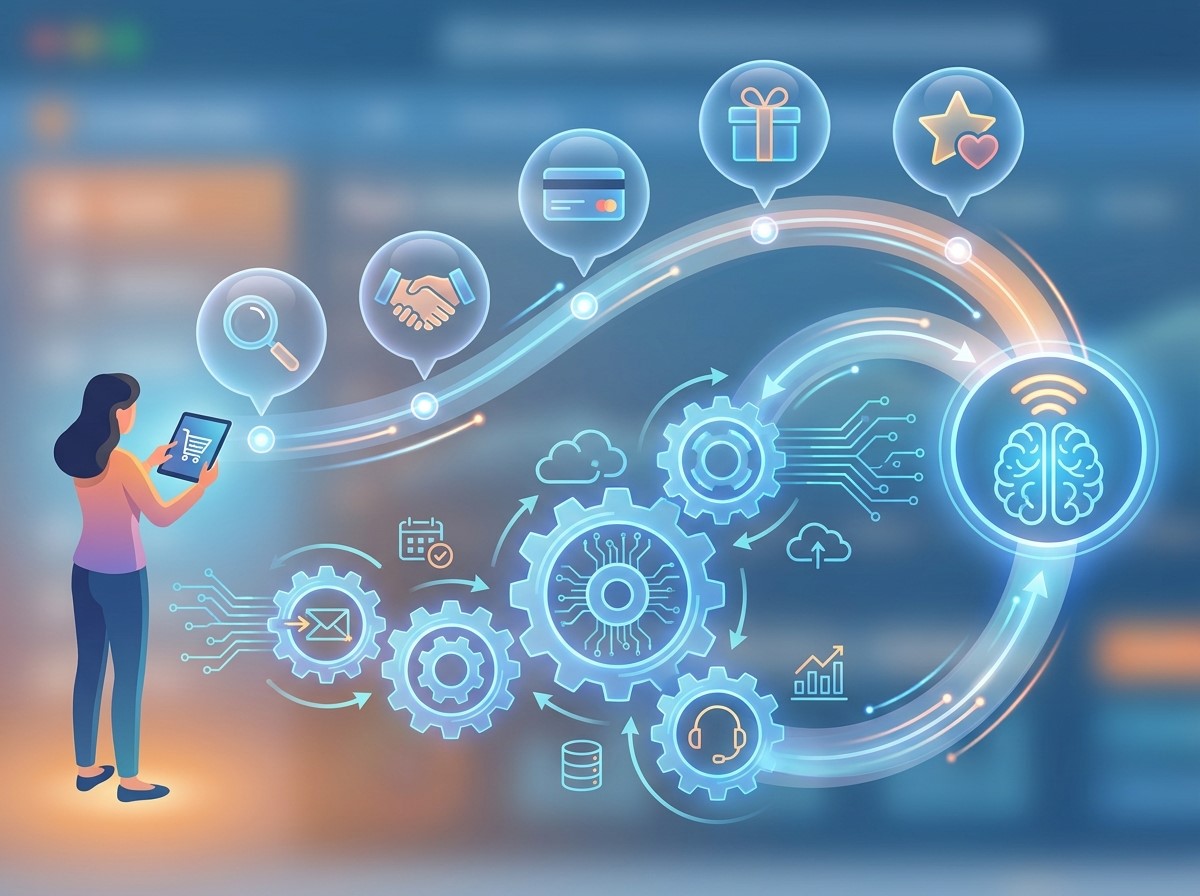
Business process automation can strengthen customer journey automation by improving the internal processes that support customer interactions.
For example, when a customer submits a form, an automated workflow can record the information, assign the lead to the appropriate team, update a CRM, and trigger a personalized communication.
This reduces manual work and helps ensure that customer information moves efficiently between different departments. When marketing, sales, and customer service processes are connected, businesses can create a more consistent customer experience.
The Role of AI Content Generation
Content is an important part of customer journeys because customers need useful information at different stages of the buying process. AI content generation can support businesses by helping produce drafts, ideas, variations, and personalized communication more efficiently.
For example, an automated customer journey may require different messages for new visitors, returning customers, and prospects who have already shown strong purchase intent.
AI content generation can help marketing teams develop these variations faster. However, human review remains important to ensure that the content is accurate, relevant, natural, and aligned with the brand voice. The goal should be to use AI as a productivity tool rather than allowing automation to replace strategic content decisions.
How Automated Brand Creation Supports Customer Journeys
A consistent brand identity can make customer interactions more recognizable and trustworthy. Automated brand creation can help businesses streamline certain aspects of brand development and maintain consistency across digital channels.
Brand elements such as messaging, visual direction, content themes, and communication styles can be incorporated into automated workflows.
When customer journey messages consistently reflect the same brand identity, customers receive a more unified experience across emails, landing pages, social platforms, and website interactions.
Automating Abandoned Cart and Incomplete Actions
Customers often begin an action without completing it. They may add products to a cart, start filling out a form, or begin a registration process before leaving the website.
Customer journey automation can identify these incomplete actions and trigger appropriate follow-ups.
For example, an abandoned cart workflow may remind customers about the products they considered. A form abandonment workflow could encourage visitors to return and complete their inquiry. These automated reminders can recover potential conversions that might otherwise be lost.
Creating Behavior-Based Customer Journeys
The most effective automated journeys respond to customer behavior rather than simply following a fixed schedule.
A customer who frequently visits product pages may need a different message from someone who only reads educational articles. Similarly, an existing customer should not receive the same introductory communication as a first-time visitor.
Behavior-based automation allows businesses to create more relevant experiences. Website visits, downloads, purchases, email engagement, and other interactions can be used to determine the next step in the journey.
Connecting Multiple Marketing Channels
Customers rarely interact with a brand through only one channel. They may discover a business through search, visit the website, interact with social media, receive an email, and eventually make a purchase. Customer journey automation can connect these different touchpoints into a more coordinated experience.
For example, website behavior can influence email communication, while previous purchases can influence future recommendations. This creates a more connected customer experience instead of treating every channel separately.
Measuring Customer Journey Automation Performance
Automation should always be measured against clear business objectives. Simply creating automated workflows does not guarantee better conversions.
Businesses should monitor metrics such as conversion rates, engagement, lead progression, customer retention, and revenue generated from automated campaigns. Analyzing these results can reveal which parts of the customer journey are performing well and where improvements are necessary.
For example, if many customers open an automated email but few click through, the message or call to action may need improvement. If customers click but do not convert, the landing page or offer may require further optimization.
Common Mistakes in Customer Journey Automation
One common mistake is creating overly complicated workflows. Too many conditions, messages, and triggers can make journeys difficult to manage and may create confusing customer experiences.
Another problem is sending irrelevant messages. Automation should be based on meaningful customer behavior and preferences rather than simply sending frequent promotional communication.
Businesses should also avoid relying entirely on automated content. Human oversight is important for maintaining quality, empathy, accuracy, and brand consistency. Finally, automation should be reviewed regularly. Customer expectations, products, campaigns, and business goals can change, so automated workflows should evolve with them.
How to Build an Effective Customer Journey Automation Strategy
The first step is understanding the customer journey and identifying the key interactions that influence conversion. Businesses should determine where customers typically enter the journey, what information they need, and where they tend to leave. The next step is defining meaningful triggers. These could include form submissions, content downloads, product views, purchases, email engagement, or abandoned actions.
After that, businesses can create personalized workflows for different customer segments. Each workflow should have a clear purpose and a relevant next step.
Testing is also essential. Businesses should review automated messages, timing, triggers, and conversion results regularly. Small improvements to individual stages can produce significant improvements across the entire customer journey.
The Future of Customer Journey Automation
Customer journey automation is becoming increasingly connected with artificial intelligence, analytics, CRM platforms, and marketing technologies. As these systems become more sophisticated, businesses will be able to create increasingly personalized customer experiences. AI can help analyze customer behavior, identify patterns, and support more relevant communication. Automation can then use these insights to deliver messages at appropriate moments.
However, successful automation will continue to depend on strategy and customer understanding. Technology can manage interactions, but businesses still need to understand what customers value and how they make decisions.
Frequently Asked Questions
1. What is Customer journey automation?
Customer journey automation uses technology and automated workflows to manage customer interactions throughout different stages of the buying journey. It helps businesses deliver relevant communication based on customer actions and preferences.
2. How can customer journey automation increase conversions?
It can increase conversions by delivering personalized messages, improving follow-up speed, nurturing leads, recovering abandoned actions, and guiding customers toward relevant next steps.
3. Is customer journey automation suitable for small businesses?
Yes. Small businesses can use automation to reduce repetitive marketing work and maintain consistent communication without requiring a large marketing team.
4. How does Business process automation support customer journeys?
Business process automation connects internal workflows such as lead management, CRM updates, sales notifications, and customer follow-ups. This helps businesses respond more efficiently to customer actions.
5. What is the role of AI content generation in customer automation?
AI content generation can help create content variations, email drafts, recommendations, and other communication faster. Human review should still be used to ensure accuracy, quality, and brand consistency.
6. What does Automated brand creation mean?
Automated brand creation involves using technology to streamline certain aspects of developing and maintaining brand elements, messaging, and communication consistency across digital channels.
7. Can automation improve customer retention?
Yes. Automated onboarding, personalized follow-ups, customer education, reminders, and post-purchase communication can help maintain engagement and encourage customers to continue interacting with a brand.
8. Can customer journey automation recover abandoned carts?
Yes. Automated workflows can identify abandoned carts and trigger timely reminders or relevant follow-up messages. These campaigns can help bring customers back and recover potential sales.
9. Does customer journey automation replace marketers?
No. Automation handles repetitive processes, while marketers remain responsible for strategy, creative decisions, customer understanding, content quality, and campaign optimization.
10. How can businesses measure automated customer journeys?
Businesses can measure automated journeys through conversion rates, engagement, lead progression, retention, revenue, and customer behavior. These metrics help identify which workflows need improvement.
Conclusion
Customer journey automation provides businesses with a practical way to create more personalized, timely, and consistent customer experiences. By responding to customer behavior automatically, businesses can reduce delays, improve lead nurturing, recover missed opportunities, and guide prospects toward conversion.
Its impact becomes even stronger when combined with Business process automation, AI content generation, and Automated brand creation. These technologies can connect internal operations, content workflows, and brand communication into a more efficient marketing system.