Marketing has always been about understanding people. But the sheer volume of data modern businesses generate—customer behaviors, campaign metrics, purchase patterns, competitive signals—has long outpaced what any human team can meaningfully process. AI marketing tools are changing that equation, and fast.
This post breaks down exactly what AI marketing tools are, how they work across key marketing functions, and what to look for when choosing the right ones for your business. By the end, you’ll have a clear picture of how automated marketing and AI-powered branding can move your strategy from reactive to genuinely data-driven.
What Are AI Marketing Tools?
AI marketing tools are software platforms that use artificial intelligence—machine learning, natural language processing, and predictive analytics—to automate, optimize, or enhance marketing tasks. These range from content generation platforms like Jasper and Copy.ai to customer analytics engines like Salesforce Einstein and HubSpot’s AI features.
What separates them from traditional marketing software is their ability to learn. Rather than executing fixed rules, AI marketing tools adapt based on data. They surface patterns, generate predictions, and make recommendations that improve over time. That’s the core value proposition: not just speed, but intelligence.
The global AI in marketing market was valued at approximately $15.84 billion in 2021 and is projected to reach over $107 billion by 2028, according to Fortune Business Insights. Those numbers reflect a fundamental shift in how businesses think about marketing operations—not as a creative-only function, but as a discipline where data and strategy are inseparable.
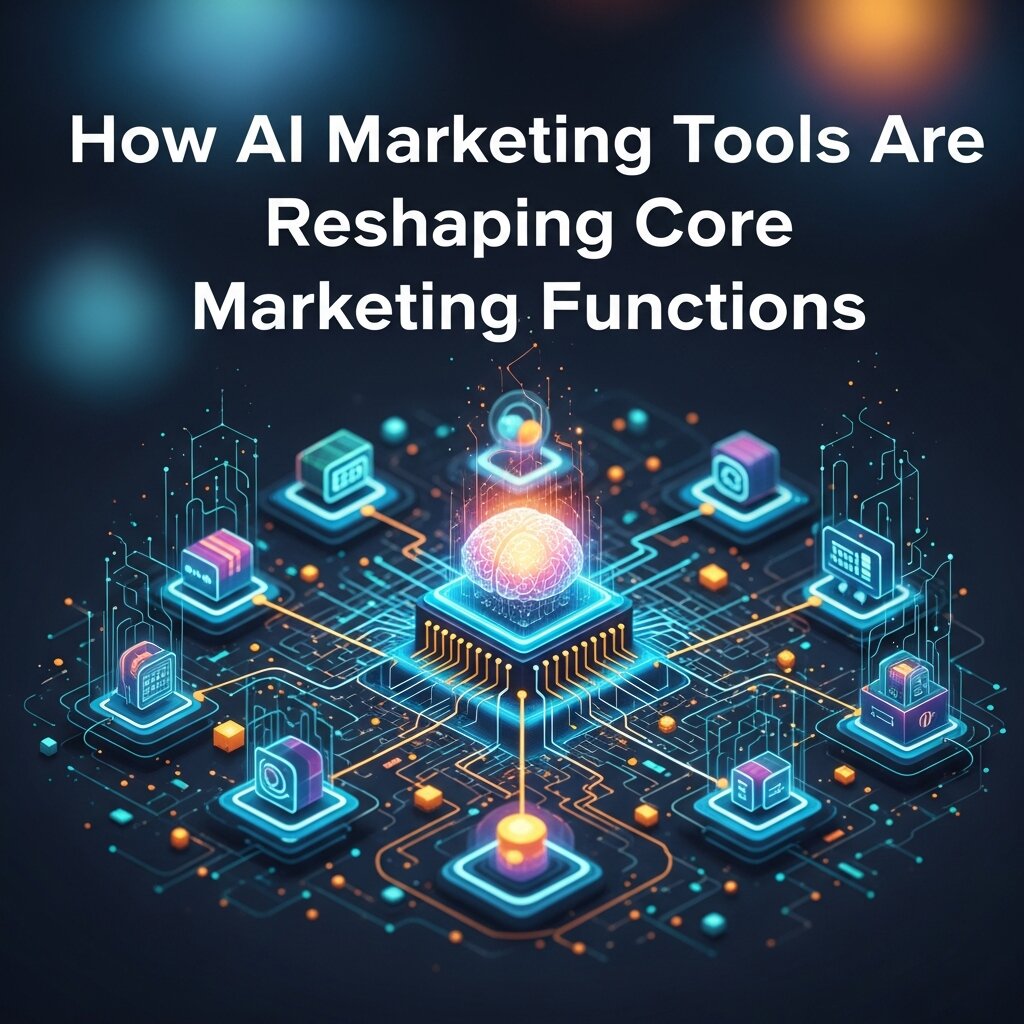
How AI Marketing Tools Are Reshaping Core Marketing Functions
Content Creation and Optimization
Content marketing demands consistency, volume, and relevance—three things that are difficult to sustain manually at scale. AI writing platforms like Jasper, Writesonic, and Copy.ai help marketing teams generate first drafts, repurpose content across formats, and maintain brand voice without bottlenecks.
But it’s not just generation. Tools like Clearscope and MarketMuse use AI to analyze top-performing content in any niche and recommend topics, subtopics, and keyword coverage that improve SEO performance. The result is content that’s not only well-written but strategically aligned with what search engines and readers actually want.
For teams building an AI brand strategy, consistency of voice across channels—emails, ads, blog posts, social—becomes far more achievable when AI tools are part of the workflow. Brand guidelines can be embedded directly into AI writing tools, so every piece of content reflects the same tone and messaging, regardless of who wrote it.
Customer Segmentation and Personalization
Traditional segmentation groups customers by broad demographics. AI-driven segmentation goes deeper, clustering audiences by behavioral signals, purchase intent, engagement patterns, and predictive lifetime value.
Platforms like Klaviyo, Braze, and Salesforce Marketing Cloud use machine learning to dynamically segment audiences and trigger personalized communications at the right moment. Instead of sending the same email to 50,000 subscribers, these tools allow marketers to send 50,000 slightly different emails—each one tailored to where that individual is in their journey.
The business case is clear. According to McKinsey, personalization can deliver five to eight times the ROI on marketing spend and lift sales by 10% or more. AI marketing tools make that level of personalization operationally feasible for businesses that don’t have thousands of staff.
Paid Advertising and Campaign Optimization
Running paid campaigns manually—adjusting bids, testing ad copy, reallocating budget across channels—is time-consuming and prone to human delay. Automated marketing platforms like Google’s Smart Bidding, Meta Advantage+, and Albert AI handle these tasks in real time, processing more variables than any human analyst could track simultaneously.
These tools optimize toward specific outcomes: conversions, cost-per-acquisition, return on ad spend. They learn from campaign data continuously, which means performance typically improves over time rather than plateauing. For growth-focused marketing teams, this kind of automated optimization frees up bandwidth for higher-level strategic work.
Social Media and Brand Monitoring
AI-powered branding tools like Brandwatch, Sprout Social, and Mention monitor brand sentiment across social media, news outlets, and forums in real time. They use natural language processing to categorize mentions as positive, negative, or neutral and flag emerging trends before they become crises—or opportunities.
For companies investing in a deliberate AI brand strategy, this kind of monitoring is invaluable. It grounds brand decisions in actual audience perception rather than assumptions, and enables faster, more confident responses to shifts in the market.
SEO and Search Intelligence
AI has significantly changed how marketers approach search engine optimization. Tools like Semrush, Ahrefs, and Surfer SEO use machine learning to analyze competitor strategies, identify content gaps, and forecast keyword opportunities. They turn what was once a largely intuitive craft into a data-informed process.
More recently, platforms like BrightEdge have introduced AI features specifically designed to help marketers adapt to the rise of AI-generated search results—ensuring content is structured and positioned to appear in both traditional rankings and AI-powered search summaries.
Building a Data-Driven AI Brand Strategy
Using individual AI marketing tools is one thing. Building a coherent AI brand strategy is another. The distinction matters.
A data-driven brand strategy connects customer insights directly to brand decisions—positioning, messaging, creative direction, channel prioritization. AI marketing tools provide the data and analytical capacity to make those connections explicit. But the strategy still requires human judgment to interpret the data and make choices aligned with long-term brand vision.
The most effective approach treats AI marketing tools as infrastructure, not replacements. They handle the analytical heavy lifting—processing customer data, monitoring brand health, optimizing campaigns—while human marketers focus on creative direction, strategic framing, and relationship-building.
Several principles define a strong AI-enabled brand strategy:
Lead with data, but define your north star first: AI tools are exceptionally good at telling you what’s happening and predicting what might happen next. They’re less useful at telling you what your brand should stand for. Establish your brand’s core positioning, values, and audience clearly before deploying AI tools to support it.
Integrate tools across the funnel: Fragmented tool stacks create fragmented data. When your AI marketing tools share data—your CRM feeding your ad platform, your content tool informed by your SEO tool—the intelligence compounds. Integration is what separates a collection of tools from a genuine system.
Treat automation as a starting point, not an endpoint: Automated marketing reduces manual work, but the outputs still need human review, especially for brand-critical communications. Build quality checks into your workflows so automation improves speed without compromising standards.
Measure what matters: AI marketing tools generate enormous amounts of data, which can easily lead to analysis paralysis. Define the metrics that directly connect to your business goals—revenue, customer lifetime value, brand awareness among target segments—and use AI tools to report against those, rather than chasing every available data point.
What to Look for When Choosing AI Marketing Tools
The market for AI marketing tools is crowded, and not all platforms deliver on their promises. Here’s what to evaluate when making decisions:
Accuracy and reliability: AI-generated recommendations are only as good as the data and models behind them. Look for platforms with transparent methodologies, strong customer case studies, and active product development. Tools with proven track records in your industry are generally a lower-risk starting point.
Integration capabilities: Before committing to any AI marketing tool, map out your existing tech stack. Tools that integrate cleanly with your CRM, analytics platform, and content management system will generate far more value than standalone solutions requiring manual data exports.
Ease of use vs. depth of features: Some platforms prioritize accessibility; others offer deep customization for technical users. Match the tool’s complexity to your team’s capabilities and the time available for onboarding. The most powerful tool in the world creates no value if your team doesn’t use it.
Data privacy and compliance: AI marketing tools process significant amounts of customer data. Ensure any platform you adopt complies with relevant regulations—GDPR, CCPA, and others—and has clear data governance policies.
Scalability: Your marketing needs today are probably different from what they’ll be in two years. Choose platforms built to scale: ones that offer advanced features you can grow into, rather than tools you’ll outgrow quickly.
The Practical Reality of Automated Marketing
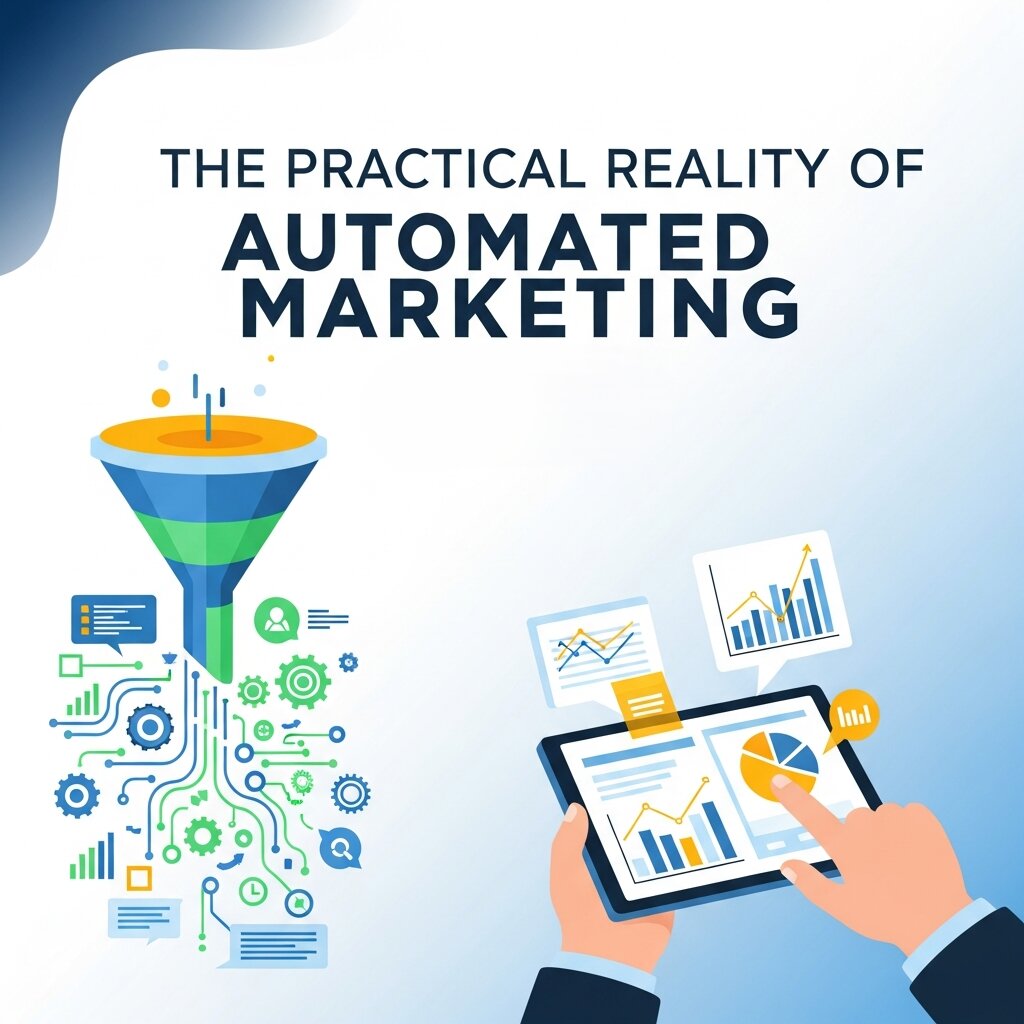
Automated marketing promises efficiency. The practical reality is that it also requires investment—in setup, integration, team training, and ongoing optimization. Businesses that see the strongest results from AI marketing tools tend to share a few characteristics: they have clean, well-organized data; they’ve defined clear goals; and they treat automation as a long-term capability, not a short-term fix.
It’s also worth being honest about limitations. AI marketing tools are powerful pattern-recognizers, but they don’t understand culture, nuance, or brand equity the way experienced marketers do. The best outcomes come from combining AI’s analytical strength with human strategic and creative judgment.
Frequently Asked Questions (FAQs)
1. What are AI marketing tools?
AI marketing tools are software applications that use artificial intelligence, machine learning, and automation to improve marketing activities such as content creation, customer segmentation, campaign optimization, email marketing, SEO, and performance analysis. They help businesses work more efficiently while making data-driven decisions.
2. How do AI marketing tools benefit businesses?
AI marketing tools help businesses automate repetitive tasks, personalize customer experiences, improve marketing efficiency, analyze large datasets, optimize advertising campaigns, generate content, and increase return on investment (ROI). They also allow marketing teams to focus more on strategy and creativity.
3. Can AI marketing tools replace human marketers?
No. AI marketing tools are designed to assist marketers, not replace them. While AI can automate workflows and provide valuable insights, human expertise is still essential for strategic planning, creative storytelling, brand management, and relationship building.
4. Which marketing activities can AI automate?
AI can automate a wide range of marketing tasks, including email campaigns, social media scheduling, customer segmentation, chatbot interactions, content generation, keyword research, PPC bid management, lead scoring, campaign reporting, and personalized product recommendations.
5. Are AI marketing tools suitable for small businesses?
Yes. Many AI marketing tools offer affordable plans specifically designed for startups and small businesses. These tools help smaller teams save time, reduce manual work, improve productivity, and compete more effectively with larger organizations.
6. What are some popular AI marketing tools?
Popular AI marketing tools include ChatGPT, Jasper, Copy.ai, HubSpot AI, Salesforce Einstein, Semrush, Surfer SEO, Grammarly, Canva AI, Adobe Firefly, Mailchimp AI, Klaviyo, and Google Ads AI-powered bidding features. The best choice depends on your business goals and marketing needs.
7. How do AI marketing tools improve customer personalization?
AI analyzes customer behavior, browsing history, purchase patterns, demographics, and engagement data to deliver personalized emails, product recommendations, advertisements, and website experiences. This creates more relevant interactions that increase engagement and conversions.
8. Are AI marketing tools safe to use?
Most reputable AI marketing platforms prioritize data security and comply with regulations such as GDPR and CCPA. However, businesses should carefully review each platform’s privacy policies, security features, and data handling practices before implementation.
9. How can businesses choose the right AI marketing tool?
Businesses should evaluate AI marketing tools based on their objectives, ease of use, integration capabilities, automation features, scalability, reporting functions, customer support, pricing, and compatibility with their existing marketing technology stack.
10. What is the future of AI marketing tools?
The future of AI marketing tools includes more advanced predictive analytics, hyper-personalized customer experiences, AI-generated creative assets, conversational AI, voice search optimization, autonomous campaign management, and deeper integration across marketing platforms. Businesses that adopt AI strategically will be better positioned to improve efficiency, strengthen customer relationships, and achieve sustainable long-term growth.
The Future of AI-Powered Branding Is Already Here
The gap between businesses using AI marketing tools effectively and those relying on traditional methods is widening. AI-powered branding is no longer an emerging concept—it’s a competitive reality. The companies gaining ground right now are those treating AI tools as core infrastructure, not optional upgrades.
The good news is that meaningful adoption doesn’t require a massive budget or a data science team. Start with one or two tools that address your most pressing marketing challenges, build familiarity, and expand from there. The learning curve is real, but the compounding benefits of a well-integrated AI marketing stack make it worth the effort.