
Every day, businesses generate enormous volumes of data. Customer transactions, website interactions, inventory updates, social media mentions—the list goes on. The challenge isn’t collecting this data. The challenge is making sense of it, fast enough to act on it.
That’s exactly where automated data processing comes in. Rather than relying on teams of analysts to manually sort, clean, and interpret data, automated systems handle these tasks with speed and consistency that humans simply can’t match at scale. The result? Faster decisions, fewer errors, and more time spent on work that actually moves the needle.
This post breaks down what automated data processing is, how it works, where it’s being used, and why more organizations—from enterprise software companies to home automation brands—are building it into their core operations.
What Is Automated Data Processing?
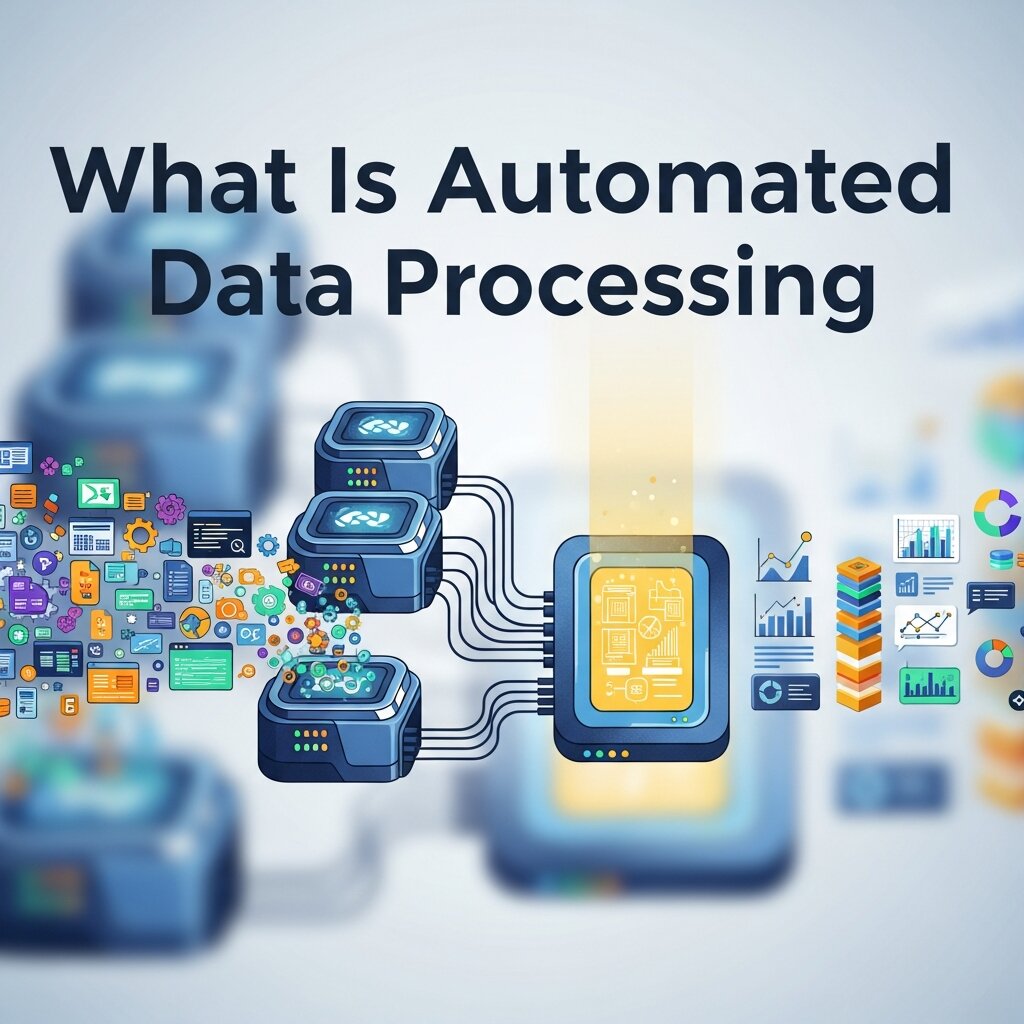
Automated data processing (ADP) refers to the use of software, algorithms, and computing systems to collect, transform, analyze, and store data with minimal human intervention. Instead of manually entering and reviewing data, automated systems execute predefined rules or machine learning models to process information continuously and at scale.
The concept isn’t new. Businesses have used batch processing systems since the early days of computing. What has changed dramatically is the sophistication and accessibility of these systems. Cloud infrastructure, AI, and low-code tools have made automated data processing available not just to Fortune 500 companies, but to startups and mid-sized organizations as well.
At its core, automated data processing involves three fundamental stages: input, processing, and output. Raw data enters the system, gets transformed according to specified logic, and exits as structured, usable information. What happens in between can range from simple rule-based filtering to complex machine learning inference—depending on the use case.
How Does Automated Data Processing Work?
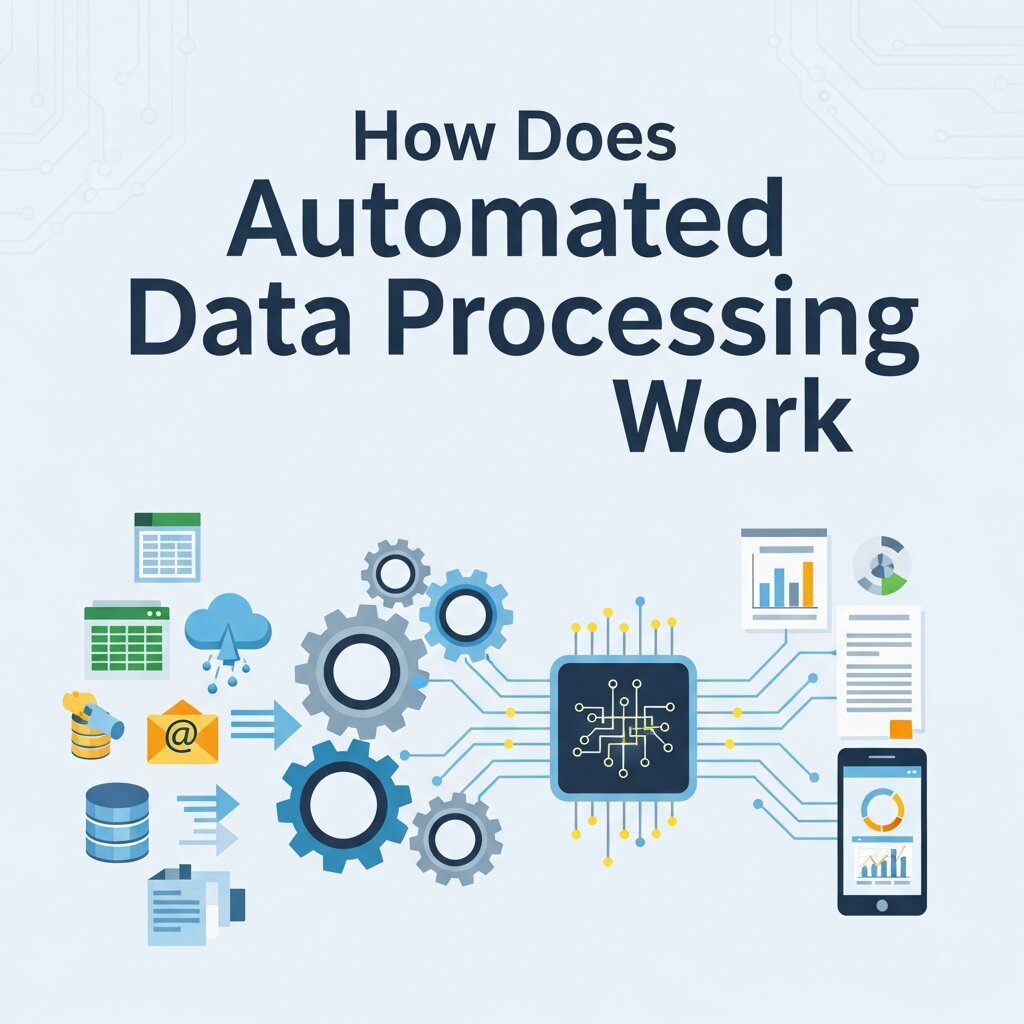
Understanding the mechanics of automated data processing helps clarify both its power and its limitations. Here’s how a typical pipeline operates:
Data collection and ingestion
The process starts with gathering data from one or more sources. These might include APIs, databases, IoT sensors, CRM systems, web scrapers, or file uploads. Automated ingestion tools pull this data into a centralized location—often a data warehouse or data lake—on a scheduled or real-time basis.
The volume and variety of data sources has expanded significantly in recent years. A retail company, for example, might ingest point-of-sale data, website analytics, social media feeds, and supply chain logs all at once, feeding them into a single processing pipeline.
Data cleaning and transformation
Raw data is rarely clean. It arrives with missing values, formatting inconsistencies, duplicates, and errors. Automated processing systems apply transformation logic to standardize this data—removing duplicates, filling gaps, converting formats, and flagging anomalies.
This stage, often called ETL (Extract, Transform, Load), is where much of the heavy lifting occurs. Automation ensures that cleaning rules are applied consistently, eliminating the variability that comes with manual data preparation.
Analysis and enrichment
Once data is clean and structured, it can be analyzed. Automated systems apply statistical models, machine learning algorithms, or business rules to extract meaningful patterns. Some systems go further by enriching data—appending external information such as geographic data, demographic profiles, or market signals to deepen the analysis.
This is particularly valuable in automated brand tracking, where companies monitor how their brand is perceived across digital channels in real time. Rather than manually combing through thousands of mentions, automated systems categorize sentiment, identify trends, and surface anomalies without human involvement.
Output and storage
Processed data is then stored, visualized, or pushed downstream to other systems. Dashboards update in real time, reports generate automatically, and alerts fire when thresholds are breached. The output is designed to be immediately actionable, reducing the lag between data generation and decision-making.
Key Types of Automated Data Processing
Not all automated data processing works the same way. Depending on the business need, different processing models are used.
Batch processing handles large volumes of data at scheduled intervals. Payroll systems, nightly database updates, and monthly reporting pipelines are classic examples. It’s efficient for non-urgent, high-volume tasks.
Real-time (stream) processing analyzes data as it’s generated. Fraud detection systems, live inventory tracking, and real-time customer personalization engines all rely on stream processing. Latency is measured in milliseconds, making it essential for time-sensitive decisions.
Distributed processing spreads workloads across multiple machines or nodes, enabling organizations to process datasets too large for a single server. Apache Hadoop and Apache Spark are foundational tools in this space, widely used by companies managing petabyte-scale data.
AI-driven processing uses machine learning models to handle tasks that rule-based systems can’t. Image recognition, natural language processing, predictive analytics—these capabilities rely on models trained on historical data to make inferences about new inputs.
Where Automated Data Processing Is Being Applied
The applications of automated data processing are broad and expanding rapidly. Here’s a look at where it’s creating the most impact.
Marketing and brand intelligence
Marketers use automated data processing to track campaign performance, segment audiences, and monitor brand perception across social media, review platforms, and news sources. Automated brand tracking tools process thousands of data points daily to surface shifts in sentiment or share of voice that would be impossible to catch manually.
This kind of continuous monitoring gives marketing teams an early warning system. If a product issue is generating negative social buzz, automated systems can detect the pattern hours before it escalates—giving teams time to respond proactively.
Finance and accounting
Automated data processing has fundamentally changed how finance teams operate. Invoice processing, expense categorization, fraud detection, and financial reporting can all be automated with high accuracy. Banks use real-time processing to evaluate transaction risk on every card swipe, applying predictive models to flag suspicious activity within seconds.
Healthcare
Hospitals and clinics use automated processing to manage patient records, process medical images, monitor vital signs, and flag clinical anomalies. Automated systems can cross-reference patient data against clinical guidelines, surfacing potential risks faster than any manual review process.
Smart home and IoT
Home automation brands rely heavily on automated data processing to make their products work intelligently. Devices like smart thermostats, security systems, and appliances generate continuous streams of sensor data. Automated processing interprets this data locally or in the cloud to trigger actions, learn preferences, and adapt behavior over time.
Leading home automation brands such as Google Nest, Amazon Echo, and Apple HomeKit all build automated data processing into their ecosystems. The “smart” behavior these devices exhibit—adjusting temperature before you wake up, recognizing familiar voices, learning your lighting preferences—is the result of continuous, real-time data processing running in the background.
For businesses evaluating the best brands for automation, the processing capabilities underlying these platforms matter as much as the hardware itself. Reliable, low-latency data processing is what separates responsive smart home experiences from frustrating ones.
Supply chain and logistics
Supply chain operations depend on accurate, timely data. Automated processing enables real-time inventory tracking, demand forecasting, route optimization, and supplier performance monitoring. When disruptions occur, automated systems can model alternative scenarios and recommend adjustments faster than manual analysis allows.
The Business Case for Automated Data Processing
Speed is the obvious benefit. Automated systems process data in seconds or milliseconds—timescales that are simply out of reach for human analysts working at any scale. But speed is only part of the story.
Consistency matters just as much. Manual data processing introduces variability. Different analysts apply different interpretations, make different formatting choices, and catch different errors. Automated systems apply the same logic every time, producing outputs that are predictable and auditable.
Cost efficiency follows naturally from both. Fewer manual hours are required, error-related rework is minimized, and the marginal cost of processing additional data is negligible once a pipeline is built.
There’s also the compounding effect. Automated systems improve over time. Machine learning models refine their predictions as more data flows through them. Pipelines that once required weekly maintenance runs become more self-sufficient. The longer an automated processing system is in place, the more value it tends to generate.
What to Consider Before Implementing Automated Data Processing
Automation doesn’t eliminate complexity—it relocates it. Before investing in automated data processing, organizations should be clear about a few things.
Data quality at the source matters enormously: Garbage in, garbage out. Automated systems amplify whatever patterns exist in the input data, including errors. Establishing strong data governance practices before automating is essential.
Integration requirements can be significant: Automated processing pipelines need to connect with existing systems—CRMs, databases, cloud platforms, third-party APIs. The complexity of these integrations is often underestimated.
Maintenance and monitoring are ongoing: Automated pipelines break when underlying data structures change, when APIs update, or when model drift occurs. Treating automation as a “set it and forget it” solution leads to silent failures. Building monitoring and alerting into pipelines from the start is non-negotiable.
Security and compliance must be built in: Processing data at scale increases exposure to privacy and security risks. Organizations operating under GDPR, HIPAA, or other regulatory frameworks need to ensure that automated processing pipelines comply with data handling requirements.
Frequently Asked Questions (FAQs)
1. What is automated data processing in simple terms?
Automated data processing is the use of software and computer systems to collect, organize, analyze, and store data automatically. It reduces manual work, increases accuracy, and helps businesses process large amounts of information quickly and efficiently.
2. How does automated data processing benefit businesses?
Automated data processing helps businesses save time, reduce human errors, improve productivity, and make faster decisions. It streamlines repetitive tasks and provides accurate insights, allowing organizations to focus more on growth, strategy, and customer satisfaction.
3. What industries use automated data processing the most?
Many industries use automated data processing, including finance, healthcare, retail, manufacturing, logistics, and marketing. These sectors rely on automation to manage large datasets, improve operational efficiency, and make real-time decisions based on accurate information.
4. What is the difference between manual and automated data processing?
Manual data processing requires human effort to enter, organize, and analyze information, which can be time-consuming and error-prone. Automated data processing uses software to perform these tasks quickly, consistently, and with minimal human intervention.
5. Is automated data processing expensive to implement?
The cost depends on the size of the business and the complexity of the system. However, many cloud-based solutions are affordable and scalable, allowing businesses to start small and expand their automated data processing capabilities as they grow.
6. Can small businesses use automated data processing?
Yes, small businesses can benefit greatly from automated data processing. Affordable software solutions help automate tasks like invoicing, customer management, and reporting, enabling small teams to work more efficiently and compete effectively in the marketplace.
7. Is automated data processing secure?
Automated data processing can be highly secure when businesses implement proper safeguards such as encryption, access controls, regular software updates, and data backups. Security measures help protect sensitive information from cyber threats and unauthorized access.
8. What technologies are used in automated data processing?
Automated data processing relies on technologies such as artificial intelligence, machine learning, cloud computing, databases, APIs, and data analytics tools. These technologies work together to collect, process, analyze, and store information efficiently and accurately.
9. Can automated data processing work in real time?
Yes, many automated data processing systems operate in real time. They analyze and process incoming data instantly, allowing businesses to detect fraud, monitor inventory, track customer behavior, and respond quickly to changing situations and opportunities.
10. What should businesses consider before adopting automated data processing?
Before implementing automated data processing, businesses should evaluate data quality, system compatibility, security requirements, scalability, and maintenance needs. A clear strategy and reliable technology partner can help ensure a smooth implementation and long-term success.
Automated Data Processing Is Now a Competitive Baseline
Five years ago, sophisticated automated data processing was a differentiator. Today, it’s closer to a baseline expectation. Companies that rely on manual data workflows are operating at a structural disadvantage—slower to spot opportunities, slower to detect problems, and slower to respond.
The organizations that pull ahead aren’t necessarily those with the most data. They’re the ones that process it fastest, cleanest, and most consistently. Whether that’s a global enterprise running petabyte-scale pipelines or a growing brand using automated brand tracking to monitor its reputation across digital channels, the underlying logic is the same: automate the data work so your people can focus on the thinking that actually requires human judgment.