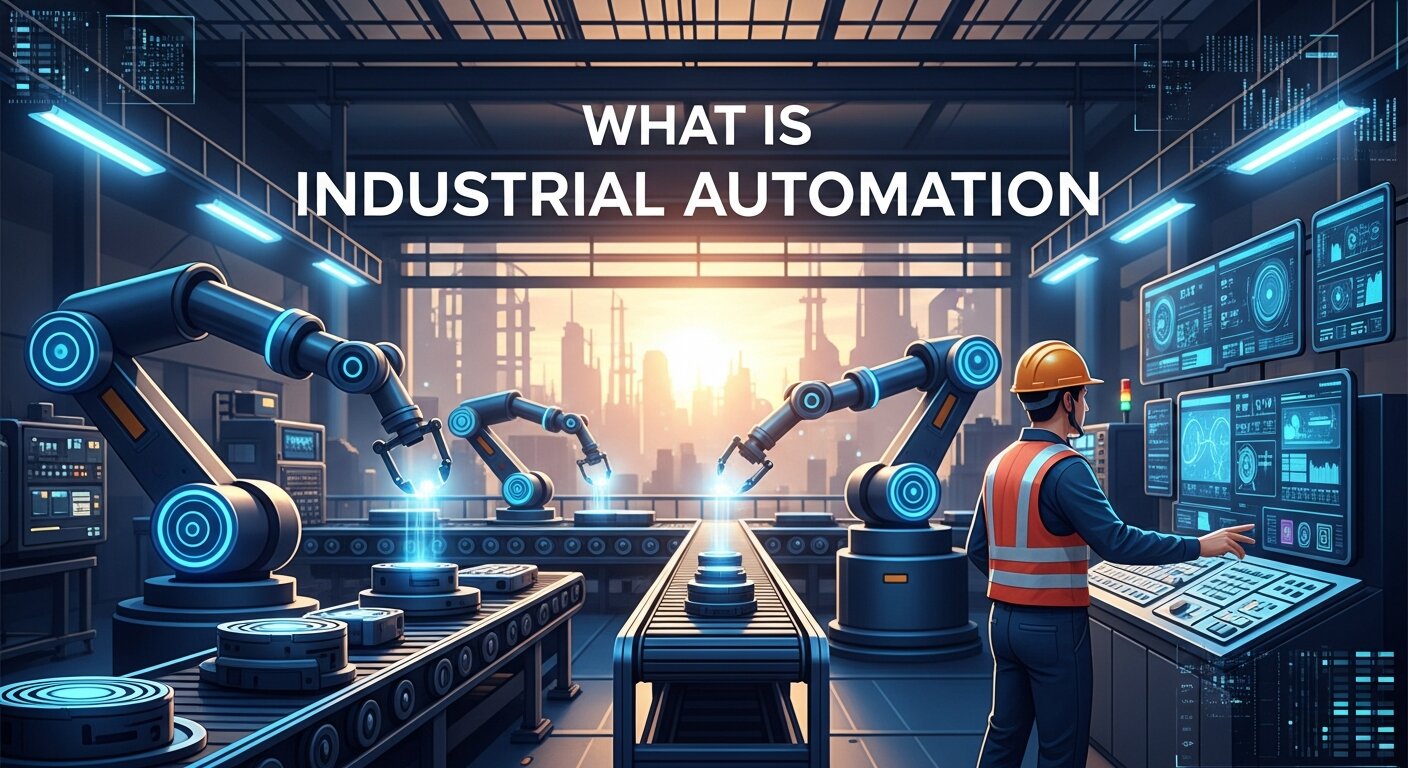
Factories today look nothing like they did 50 years ago. Where rows of workers once performed repetitive tasks by hand, robotic arms now weld, assemble, and package products around the clock. This shift didn’t happen by accident—it’s the result of industrial automation, one of the most transformative forces in modern manufacturing.
If you’ve ever wondered what industrial automation actually involves, you’re in the right place. This guide breaks down the basics, explores the different types, and explains why companies across every sector are investing heavily in automated systems. By the end, you’ll understand how automation works, what benefits it delivers, and which technologies are shaping the future of production.
Whether you run a small workshop or oversee a sprawling production line, understanding industrial automation can help you make smarter decisions about your operations. Let’s dig in.
What Is Industrial Automation?
Industrial automation is the use of control systems—such as computers, robots, and software—to operate machinery and processes with minimal human intervention. Instead of relying on people to manually run equipment, automated systems handle tasks like assembly, quality checks, material handling, and packaging.
The goal is simple: make production faster, safer, and more consistent. Machines don’t get tired, they rarely make mistakes, and they can work nonstop. This makes industrial automation especially valuable in industries where precision and volume matter, like automotive manufacturing, food processing, and electronics.
At its core, industrial automation combines hardware and software. Sensors collect data, controllers process that data, and actuators carry out physical actions. Together, these components form a system that can monitor and adjust operations in real time.
How Did Industrial Automation Evolve?
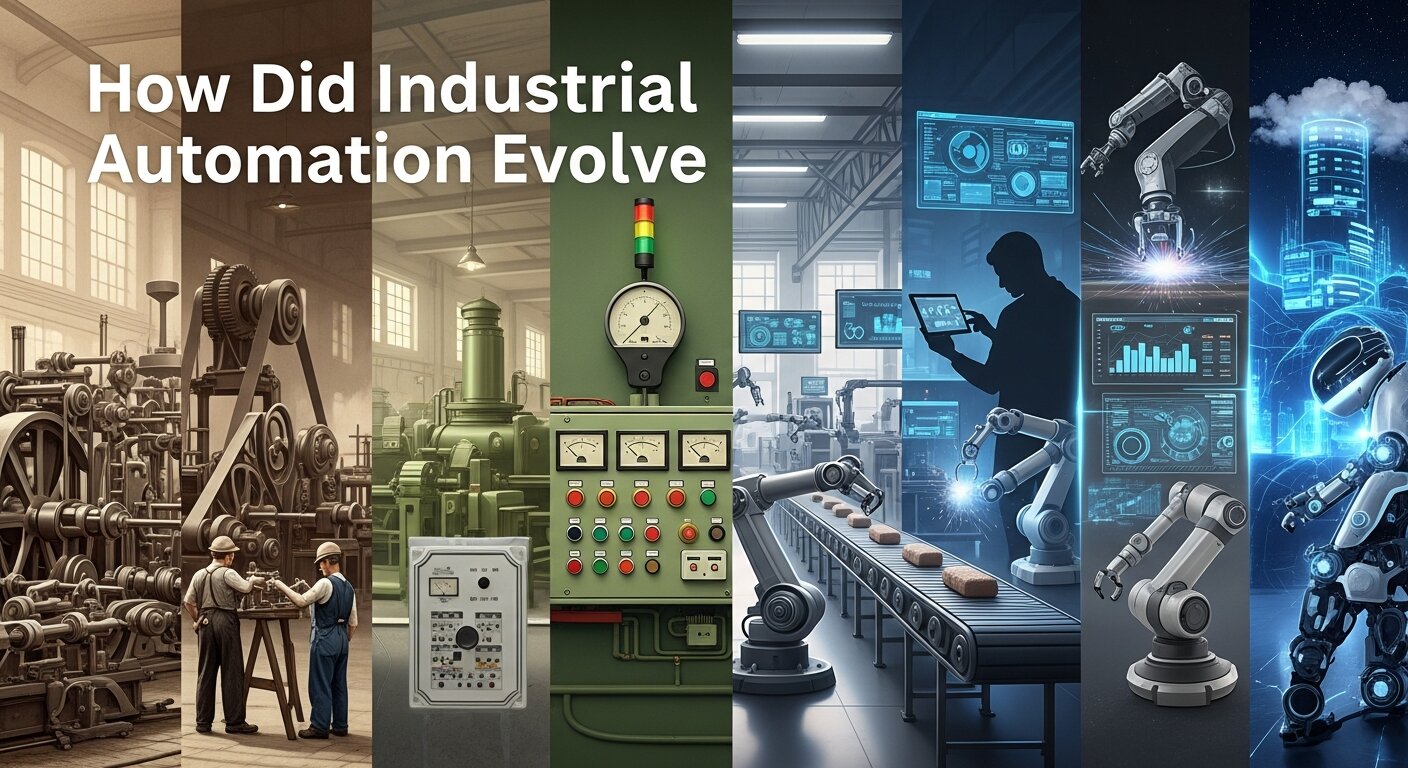 Automation isn’t a new idea. Its roots stretch back to the Industrial Revolution, when steam-powered machines first replaced manual labor. But the version we recognize today began taking shape in the 20th century.
The introduction of the assembly line by Henry Ford in 1913 marked a major turning point. It showed how breaking production into smaller, repeatable steps could dramatically boost output. Decades later, the arrival of programmable logic controllers (PLCs) in the late 1960s gave factories a way to control machines with electronic precision.
From there, progress accelerated. Computers, robotics, and networking technologies pushed automation to new heights. Today, smart factories use artificial intelligence and the Internet of Things (IoT) to create systems that practically run themselves.
What Are the Main Types of Industrial Automation?
Not all automation works the same way. Different systems suit different needs, depending on how flexible or fixed a production process needs to be. Here are the four main types.
Fixed Automation
Fixed automation, also called hard automation, is built for high-volume production of a single product. Once the system is set up, it performs the same sequence of operations over and over. Think of a bottling plant that fills thousands of identical containers every hour.
This type is highly efficient but lacks flexibility. Changing the product or process often requires significant time and money. Fixed automation works best when demand is steady and product designs rarely change.
Programmable Automation
Programmable automation allows for more variety. Operators can reprogram the equipment to handle different products or tasks. This makes it ideal for batch production, where companies produce moderate quantities of various items.
The trade-off is downtime. Switching between products requires reprogramming and reconfiguring the system, which can slow things down. Still, it offers a solid balance between efficiency and adaptability.
Flexible Automation
Flexible automation takes programmability one step further. These systems can switch between different products with little to no downtime. A central computer controls the entire operation, allowing quick changes without manual reprogramming on the factory floor.
This type shines in industries where customization matters. Manufacturers can produce small batches of customized goods without sacrificing speed or efficiency.
Integrated Automation
Integrated automation ties everything together. In this setup, machines, computers, and software work as one connected system, often with minimal human involvement. Data flows seamlessly between departments, from design to production to shipping.
This is the foundation of the modern smart factory. Integrated automation enables companies to coordinate complex operations and respond quickly to changing demands.
What Technologies Power Industrial Automation?
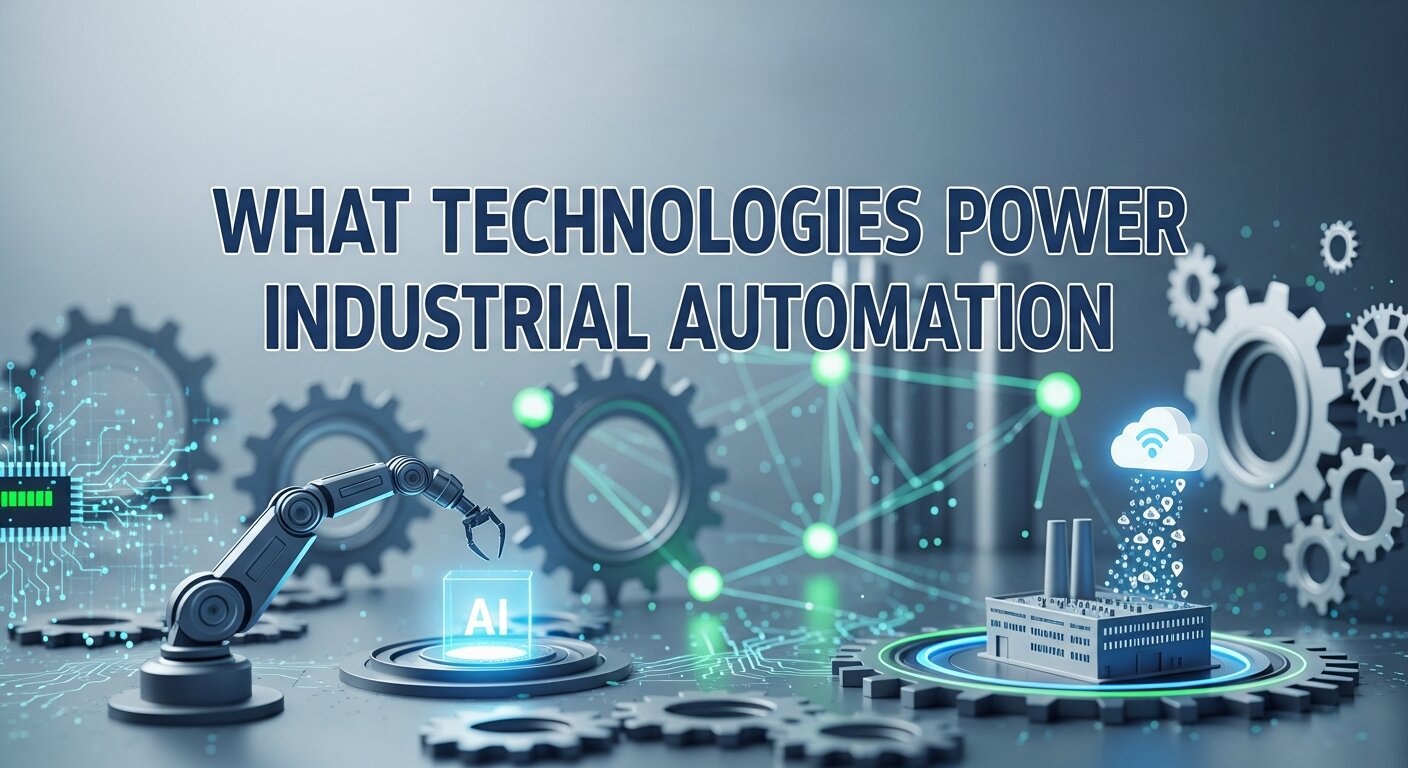 Several key technologies make industrial automation possible. Understanding these building blocks helps clarify how automated systems function.
- Programmable Logic Controllers (PLCs): These rugged computers control machinery and processes. They’re the brains behind many automated systems.
- Robotics: Industrial robots handle tasks like welding, painting, and assembly with speed and precision.
- Sensors: These devices collect data on temperature, pressure, position, and more, feeding information back to control systems.
- SCADA Systems: Supervisory Control and Data Acquisition systems monitor and control processes across entire facilities.
- Artificial Intelligence: AI helps systems learn, predict failures, and optimize performance over time.
- Internet of Things (IoT): Connected devices share data, enabling smarter, more responsive operations.
Each technology plays a specific role, but they work best when combined. A modern automated factory might use all of these tools at once.
What Are the Benefits of Industrial Automation?
Companies invest in automation for good reason. The benefits touch nearly every part of a business, from the production line to the bottom line.
Increased productivity tops the list. Automated systems run continuously without breaks, holidays, or shift changes. This means more output in less time.
Improved quality comes next. Machines perform tasks with consistent precision, reducing defects and waste. When every product meets the same standard, customer satisfaction tends to rise.
Enhanced safety is another major advantage. Automation takes over dangerous tasks, keeping workers away from hazardous environments. Fewer accidents mean a safer workplace and lower costs.
Cost savings follow naturally. While the upfront investment can be steep, automation reduces labor costs and minimizes errors over time. Many companies see strong returns within a few years.
Better data rounds out the list. Automated systems generate detailed information about every step of production. This data helps managers spot inefficiencies, predict maintenance needs, and make smarter decisions.
What Are the Challenges of Industrial Automation?
Automation isn’t without hurdles. Companies considering it should weigh the challenges alongside the benefits.
The biggest barrier is cost. Setting up automated systems requires significant capital. Equipment, software, and installation add up quickly, which can be tough for smaller businesses.
Then there’s the skills gap. Automated systems need skilled technicians to install, program, and maintain them. Finding and training these workers takes time and money.
Finally, automation can disrupt the workforce. As machines take over routine tasks, some jobs disappear. Companies must plan carefully to retrain employees and manage this transition responsibly.
How Does Industrial Automation Compare to Home Automation?
People often confuse industrial automation with consumer-focused systems. While both use technology to reduce manual effort, they serve very different purposes.
Home automation brands focus on convenience and comfort. Products from popular home automation brands let you control lighting, temperature, security, and appliances from your phone. The goal is to make daily life easier.
Industrial automation, by contrast, focuses on production and efficiency at scale. The systems are far more complex, built to handle heavy machinery and high-volume operations. The best brands for automation in industrial settings prioritize reliability, precision, and safety above all else.
It’s also worth noting how automation extends beyond machinery. Many companies now use automated branding solutions to streamline marketing and maintain consistency across channels. While different from factory automation, these tools reflect the same underlying principle—using technology to do more with less.
Which Industries Rely on Industrial Automation?
Automation has spread across nearly every sector. Some industries depend on it more heavily than others.
Automotive manufacturing was an early adopter and remains a leader. Car factories use robots for welding, painting, and assembly on a massive scale.
Food and beverage companies rely on automation for processing, packaging, and quality control. Speed and hygiene make automated systems essential here.
Electronics manufacturers use precision automation to assemble tiny components. The accuracy required would be nearly impossible by hand.
Pharmaceuticals depend on automation for consistent quality and strict regulatory compliance. Even small errors can have serious consequences in this field.
Logistics and warehousing increasingly use automated systems to sort, store, and ship goods. Companies like Amazon have pushed warehouse automation to new levels.
What Does the Future of Industrial Automation Hold?
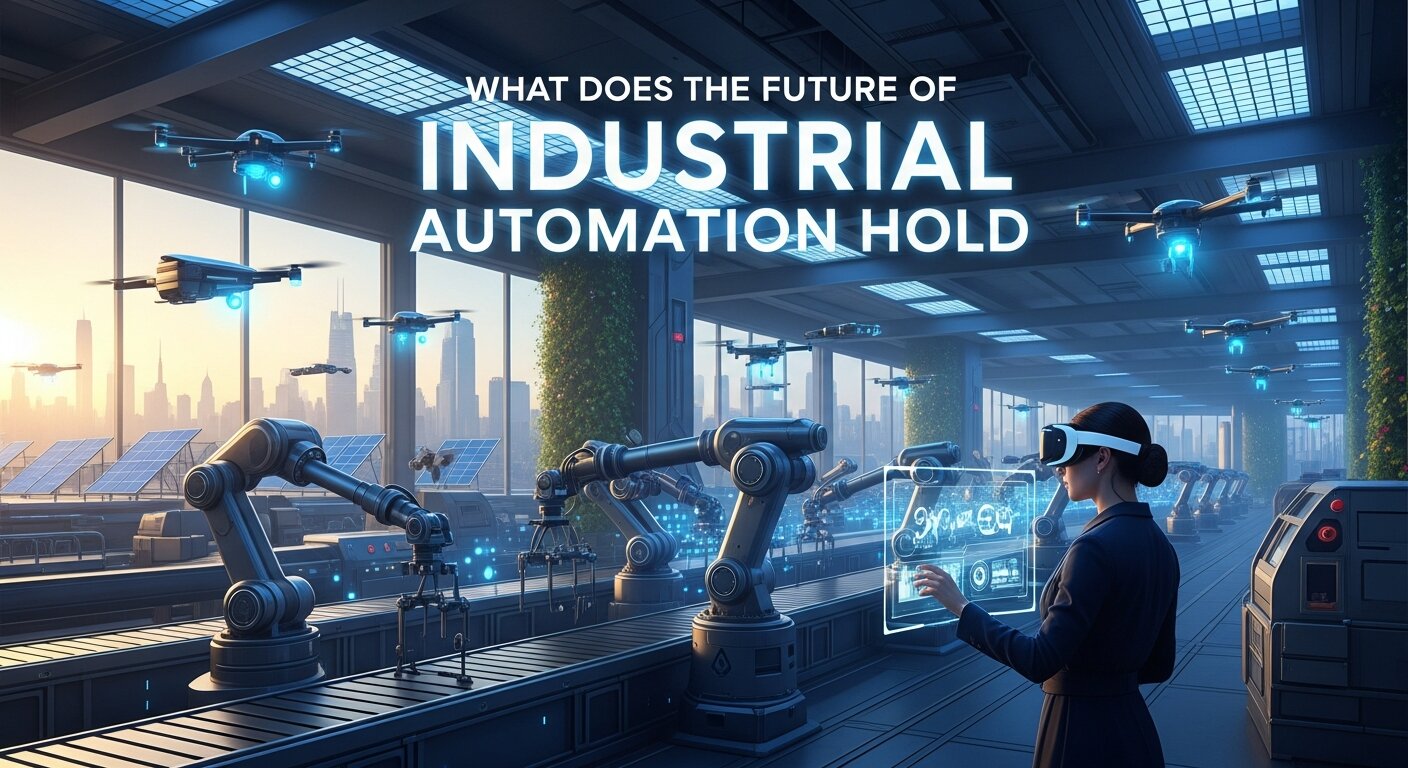
The pace of change shows no sign of slowing. Several trends are shaping where industrial automation is headed.
Artificial intelligence will play a growing role. Smarter systems will predict problems before they happen and optimize processes automatically. This shift toward predictive operations could save companies billions.
Collaborative robots, or cobots, are also on the rise. Unlike traditional robots that work in isolation, cobots work alongside humans safely. They combine human judgment with machine precision.
The smart factory concept continues to expand, too. As more devices connect through IoT, factories will become fully integrated ecosystems. Every machine, sensor, and system will share data in real time, creating operations that adapt instantly to change.
Frequently Asked Questions
1. What is industrial automation?
Industrial automation is the use of computers, control systems, software, and machinery to perform manufacturing and production tasks with minimal human intervention. It helps businesses improve efficiency, consistency, productivity, and operational safety across various industrial processes.
2. What are the main types of industrial automation?
The four primary types are fixed automation, programmable automation, flexible automation, and integrated automation. Each serves different production needs, ranging from high-volume manufacturing to customized production environments that require greater adaptability and control.
3. What industries benefit most from industrial automation?
Industries such as automotive, food processing, pharmaceuticals, electronics, logistics, and manufacturing benefit significantly from automation. These sectors rely on automated systems to improve product quality, increase output, reduce errors, and maintain operational consistency.
4. How do PLCs contribute to industrial automation?
Programmable Logic Controllers (PLCs) act as the control center for automated systems. They receive information from sensors, process data, and send commands to machinery, ensuring production processes operate accurately, efficiently, and safely.
5. What are the key benefits of industrial automation?
Industrial automation increases productivity, improves product quality, enhances workplace safety, reduces operational costs, minimizes human error, and provides valuable production data. These advantages help businesses remain competitive and achieve long-term growth.
6. Is industrial automation expensive to implement?
The initial investment can be significant due to equipment, software, installation, and training costs. However, many businesses recover these expenses through increased productivity, lower labor costs, reduced waste, and improved operational efficiency over time.
7. How does automation improve workplace safety?
Automation reduces the need for workers to perform dangerous or repetitive tasks. By allowing machines and robots to handle hazardous operations, businesses can lower workplace accidents, protect employees, and create safer working environments.
8. What role does artificial intelligence play in automation?
Artificial intelligence helps automated systems analyze data, predict equipment failures, optimize production processes, and make smarter operational decisions. AI enables businesses to improve efficiency, reduce downtime, and enhance overall system performance.
9. What is a smart factory?
A smart factory is a highly connected manufacturing environment where machines, sensors, software, and systems communicate in real time. This integration allows businesses to automate processes, monitor performance, and respond quickly to changing conditions.
10. How can a business get started with industrial automation?
Businesses should begin by identifying repetitive or inefficient processes that can benefit from automation. Evaluating operational needs, consulting industry experts, and implementing automation gradually can help ensure a successful and cost-effective transition.
Getting Started With Industrial Automation
Industrial automation has reshaped how the world makes things. From boosting productivity to improving safety, the benefits are clear and far-reaching. As technologies like AI and IoT mature, automation will only become more powerful and accessible.
If you’re considering automation for your operations, start small. Identify one repetitive, time-consuming process and explore how automation might improve it. Research providers carefully, weigh the costs against the expected returns, and consult experts who understand your industry.